






Carved Wood Display Table
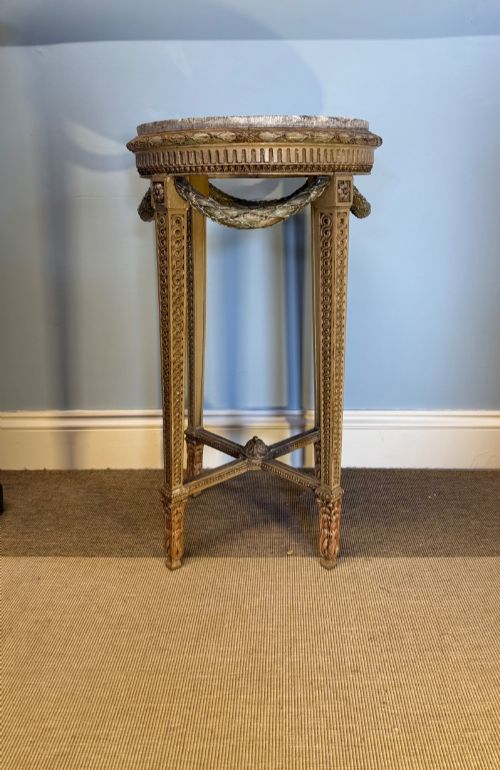
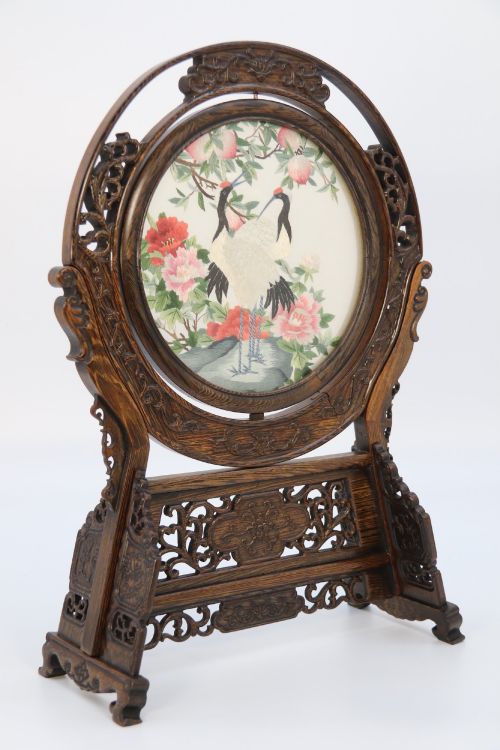
These carved wood display tables serve to elevate ornaments, plants and porcelain, offering both practical surface area and sculptural form.
Carved Wood Display Table
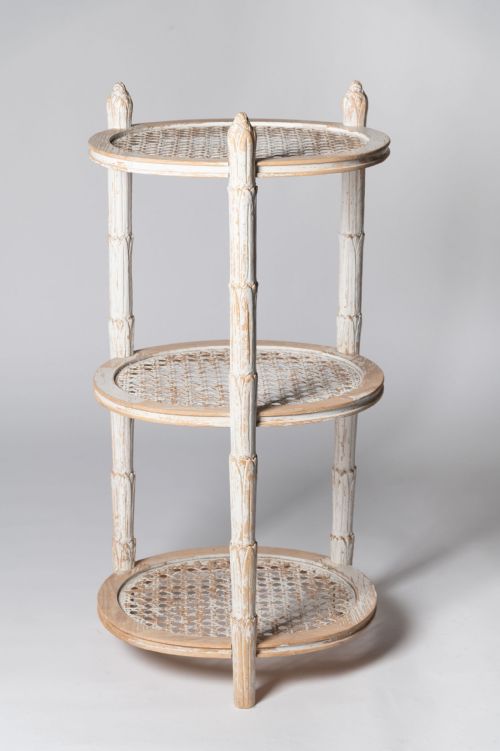
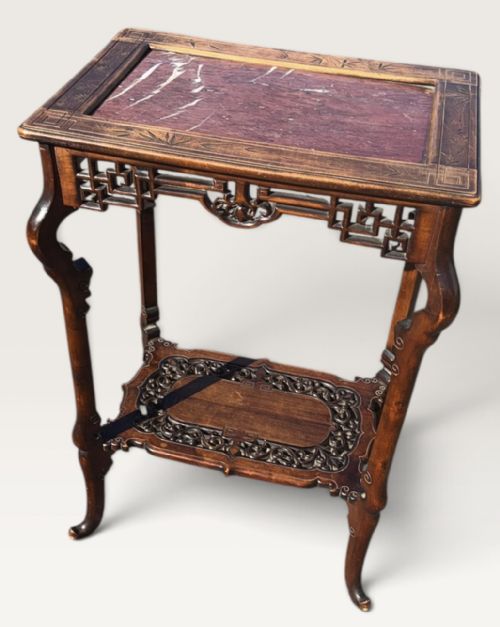
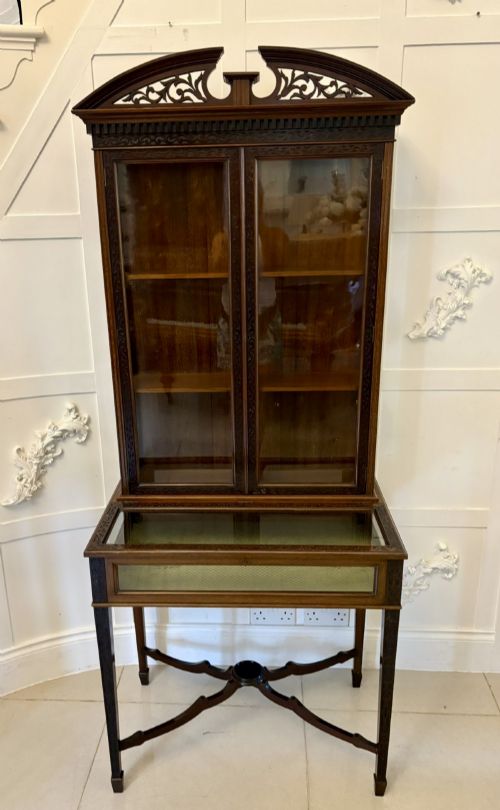
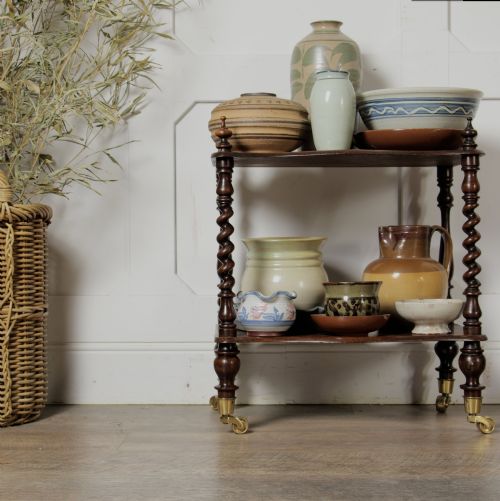
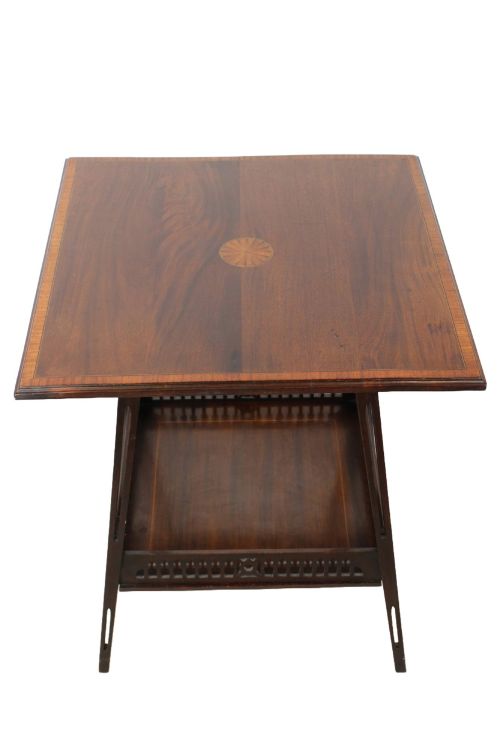
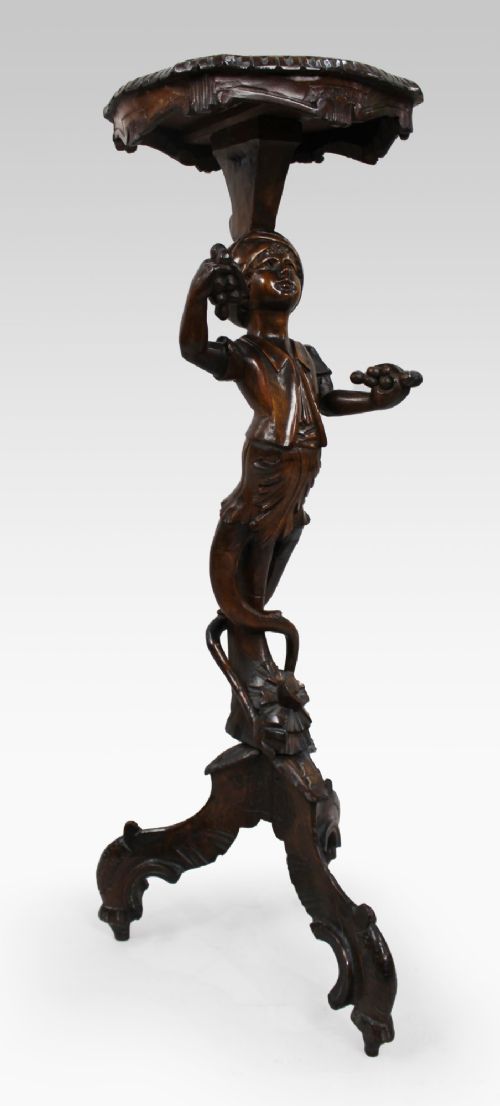
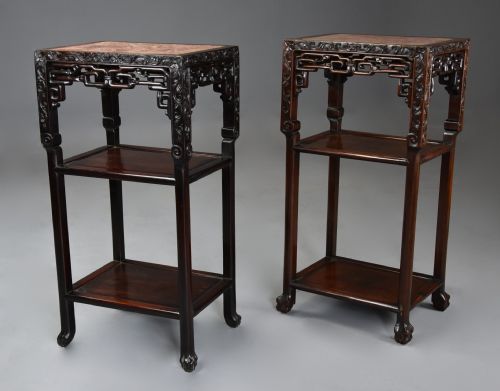
A carved wood display table encompasses plant stands, jardiniere stands, pedestals, and small occasional tables designed to showcase decorative objects. These pieces range from compact Chinese pot stands with marble inserts to British Victorian burr walnut whatnots and side tables.
Buyers encountering this selection will frequently find nineteenth-century examples alongside early twentieth-century designs. Forms extend from low centre tables and altar tables to tall pedestals and multi-tiered etagères.
Origins span British and European workshops as well as Chinese Export and Anglo-Indian traditions. The common thread is a timber frame shaped by carving to support objects of curiosity.
Materials and construction
Makers utilised dense Asian hardwoods such as hongmu, padouk, and rosewood alongside European timbers like mahogany, walnut, and oak. These heavy woods provided the structural integrity required for intricate relief carving without splitting.
Insets of white or rouge marble frequently form the central surface of jardiniere and vase stands, offering a cool, water-resistant plateau for plants and ceramics. Secondary materials include brass fittings and delicate amboyna veneers.
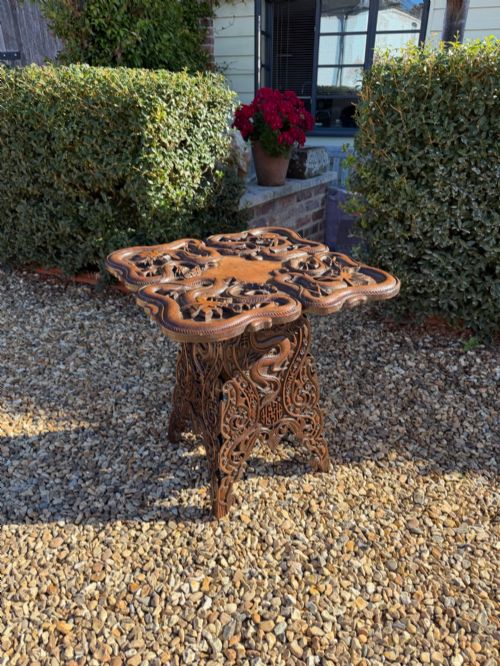
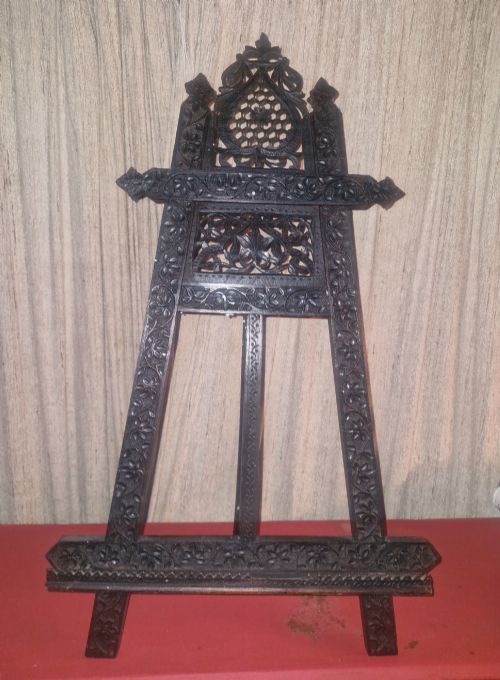
Joinery methods combined traditional mortise and tenon framing with deep hand-chisselled surface ornament. Figural motifs, scrolling foliage, and barley twist turnings were executed directly into the solid timber.
Carved Wood Display Table Retail Price Guide 2026
Typical asking prices for carved wood display table among the pieces listed under this phrase on Sellingantiques today, from the lower quarter to the upper quarter. They describe what is for sale here now, not the wider market.
Listings demonstrate a strong presence of nineteenth-century Chinese hardwood stands alongside British Victorian walnut and mahogany examples.
Distinctions in quality
The depth and crispness of the hand carving separate standard production from exhibition pieces. Superior examples display undercut foliage and sharply defined figural elements rather than shallow, mechanical stamping.
The selection of timber grain dictates visual hierarchy, particularly in burr walnut and figured mahogany surfaces. Matched grain patterns and the integration of genuine marble tops distinguish more ambitious workshops from simple utility tables.
Structural rigour in multi-tiered whatnots and tall plant stands marks the better workshop output. Firm joints and stable weight distribution ensure these slender forms support heavy porcelain without wobble.
Trevor Page & Co·Liberty of London·Gabriel Viardot
The Carved Wood Display Table Glossary
- Whatnot
- A set of open shelves used for displaying ornaments or books, developed in the nineteenth century. These multi-tiered pieces often incorporate turned supports and carved galleries.
- Jardiniere stand
- A tall, slender table designed specifically to hold a heavy plant pot or floral container. They frequently feature circular tops inset with marble to prevent water damage.
- Hongmu
- A traditional Chinese term translating to red wood, applied to dense and durable exotic hardwoods. Furniture from this material often displays rich natural hues and heavy carving.
- Étagère
- A French term for a piece of furniture consisting of a series of open shelves for displaying small objects. They appear in rosewood and walnut across the nineteenth century.
- Padouk
- A heavy tropical hardwood known for its strength and deep reddish-brown colouration. It provides a stable base for intricate nineteenth-century carving.
Carved Wood Display Table: Frequently Asked Questions
What were carved wood display tables used for?
These tables functioned as domestic stages for imported ceramics, bronzes, potted plants, and treasured curiosities. Their varied heights allowed Victorian and Edwardian interiors to create layered displays of decorative objects.
Lower forms served as centre tables or low stands for altar vessels, while taller pedestals lifted flowers and urns into the light. Each format was tailored to highlight specific possessions within the principal rooms of a house.
How do I identify a Chinese export stand?
Chinese export stands typically utilise dense Asian hardwoods like padouk or hongmu, paired with inset rouge or white marble tops. The carving often employs dragons, prunus blossoms, or interlocking geometric framing.
Many of these pieces date from the late nineteenth century and were produced specifically for Western markets. Their weight and the tightness of the timber joints distinguish them from later reproductions.
Where should I place a display table?
These pieces suit corners, window bays, or empty wall spaces where an elevated surface can showcase a single sculpture, lamp, or plant. Tall jardiniere stands work well in transitional spaces like hallways.
Lower occasional tables and whatnots pair effectively beside seating or against panels of the wall. The key is ensuring the carved silhouette has enough breathing room to be seen clearly.
How do I care for marble-topped stands?
Marble inserts require simple dusting with a soft cloth and immediate wiping of any liquid spills to prevent staining. Avoid harsh acidic cleaners that can etch the polished stone surface.
The surrounding wooden frame benefits from occasional waxing appropriate to the timber species. Keeping the table away from direct heat sources prevents the wood from shrinking around the rigid stone inset.