



Japanese Bronze Lighting
Japanese bronze lighting brings heavy Meiji period craftsmanship and rich patination into a room, offering functional illumination grounded in centuries of metalwork tradition.
Japanese Bronze Lighting
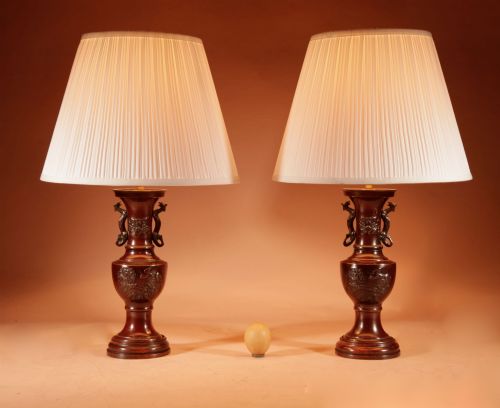
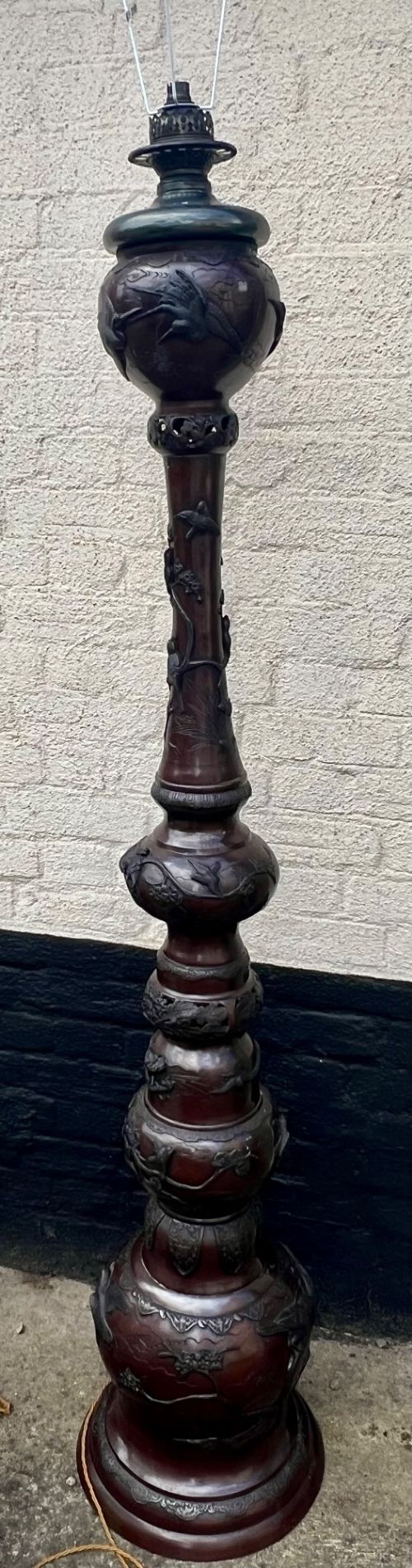
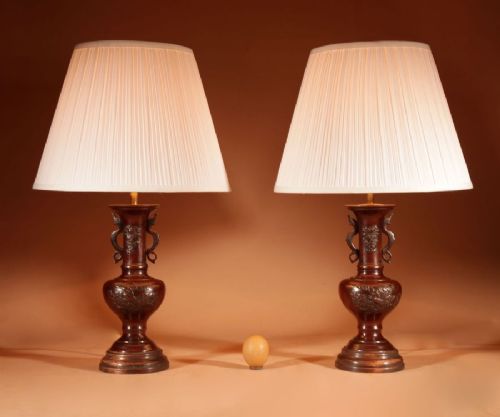
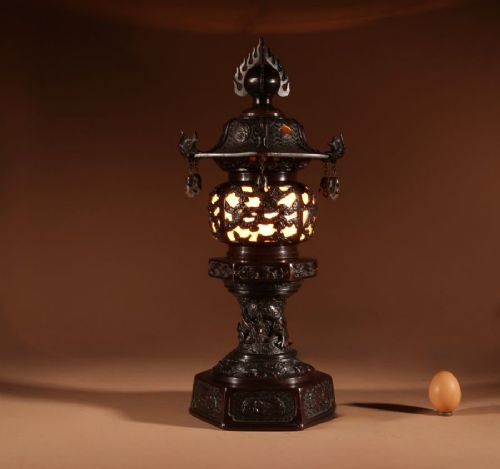
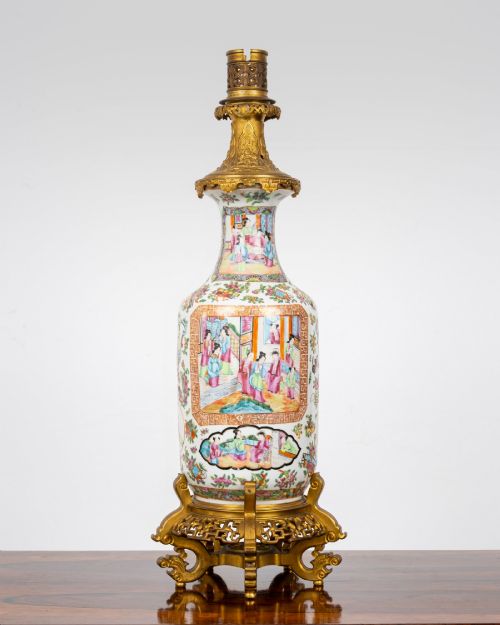
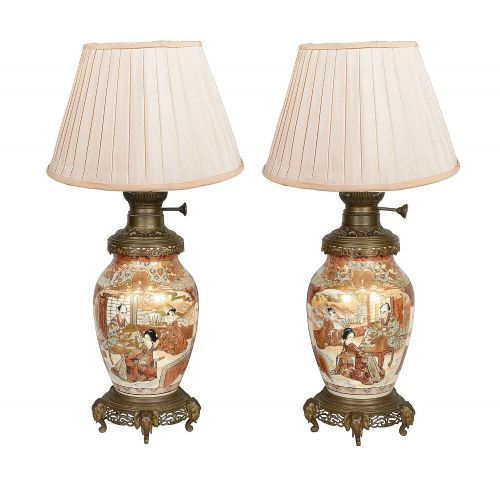
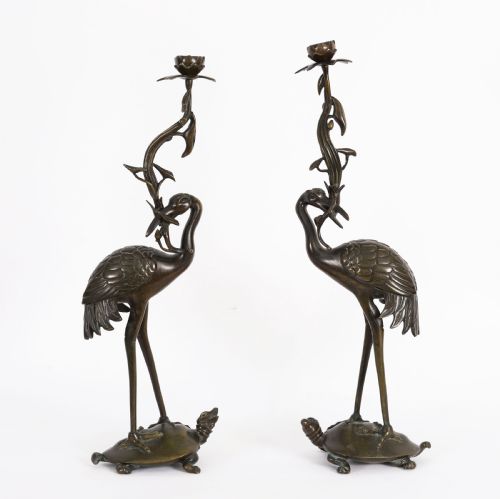
Japanese bronze lighting comprises heavier metal table lamps, floor lamps, pricket candlesticks, and hanging lanterns originating mostly from the nineteenth century and the Meiji period. Buyers look for substantial cast bronze bodies that often integrate older vases, vessels, or temple pieces adapted for domestic illumination.
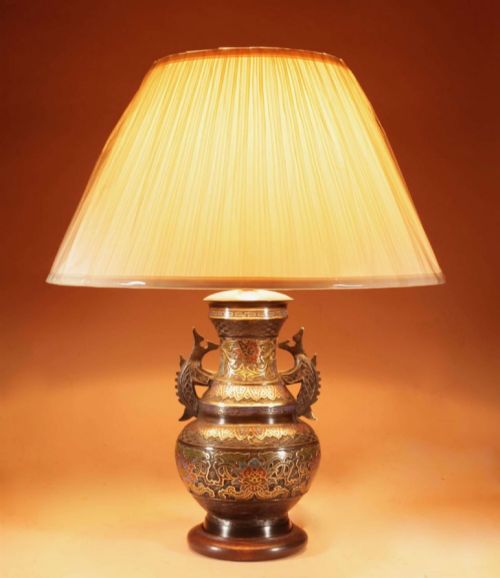
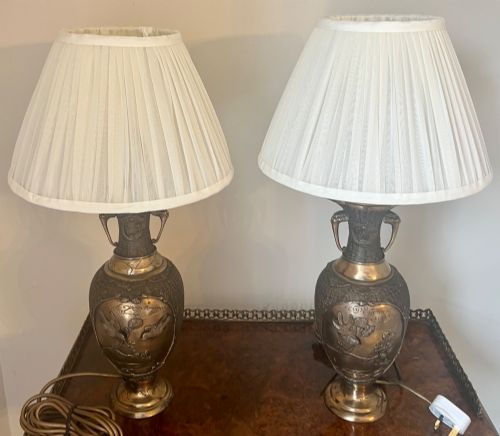
The most common forms on this page are table lamps and pairs of vases mounted or converted for electricity alongside older pricket candlesticks. These pieces frequently blend traditional Japanese metalworking techniques with Western wiring and mounting adaptations from the Victorian and Edwardian eras.
What varies in quality
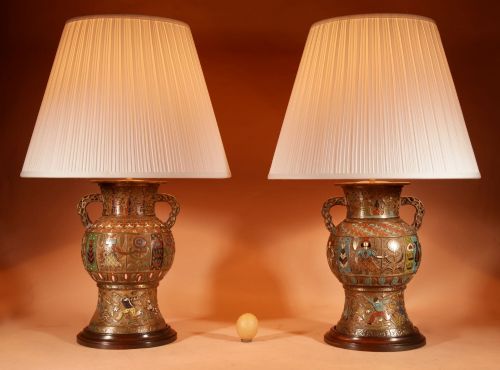
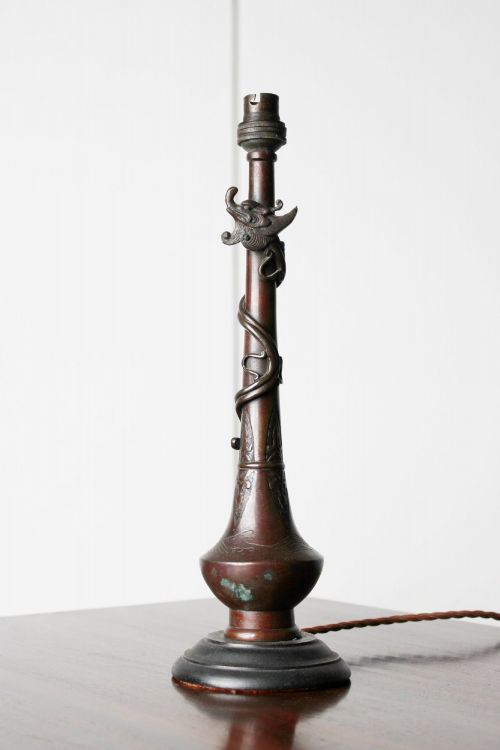
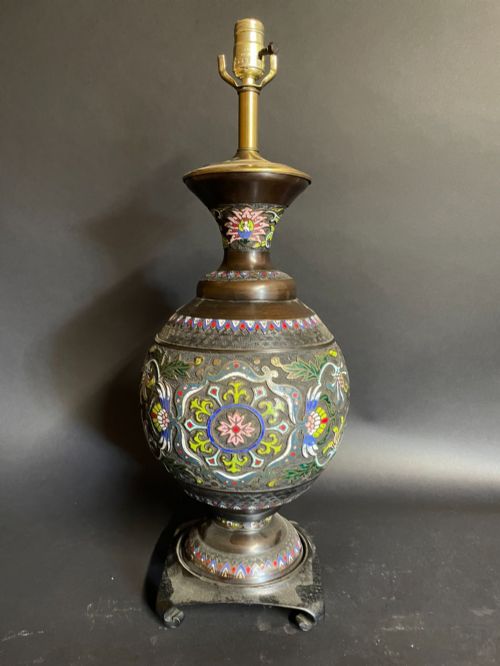
Quality rests in the crispness of the bronze casting and the precision of the enamel work, where finer pieces display deeply rendered details like scales on dragons or intricate floral cloisonné cells. The integration of mounts also matters, as superior conversions respect the original integrity of the bronze vessel rather than compromising the antique metal.
The weight and stability of the base dictate the functional quality of floor and table lamps, separating robust sculptural pieces from lighter domestic adaptations. Intact original patination and well-preserved enamel elevate certain items above heavily cleaned or polished examples.
Listings feature items from the 1880s through the 1920s, with a strong concentration of Meiji period bronze work and Edwardian conversions.
The Japanese Bronze Lighting Glossary
- Meiji Period
- The era in Japanese history spanning from 1868 to 1912, noted for metalwork exported to Western markets. Pieces from this time often show intricate casting and decorative enamel.
- Champlevé
- An enamelling technique where artists carve troughs into the bronze surface and fill them with vitreous enamel paste before firing. This creates coloured designs flush with the metal.
- Cloisonné
- A method of decorating metal objects by placing wire compartments on the surface and filling them with enamel. It produces detailed patterns defined by thin metal lines.
- Pricket Candlestick
- A candlestick featuring a sharp central spike designed to hold a candle in place rather than a socket. These items in bronze often date to the nineteenth century.
- Ormolu
- Gilt bronze mounted onto decorative objects, providing a bright golden finish against dark patinated bronze. The technique appears frequently on nineteenth-century European mounts.
Japanese Bronze Lighting: Frequently Asked Questions
How do I safely rewire an antique bronze lamp?
Rewiring should be handled by a qualified professional who can thread modern flex through historical bronze bodies without damaging the internal structure. Many pieces retain original threaded mounts that allow careful access for electrical updates.
Ensure the chosen cord and bulb holder match the weight and scale of the lamp, particularly for heavy floor lamps and large table lanterns.
Are these lamps converted from older vases?
Many examples began life as decorative bronze vases, temple vessels, or enamel pieces before being adapted into lamps during the Victorian and Edwardian periods. This conversion history is standard for antique lighting of this origin.
Examine the mounting points and base fittings to understand how the original vessel was adapted to house electrical components.
How do I clean patinated bronze lighting?
Dust the surface gently with a soft, dry cloth to remove daily accumulation without disturbing the aged metal patina. Avoid harsh chemical polishes that strip the historic finish from bronze and enamel.
Enamel sections require particular care to prevent moisture from seeping into older cracks or hairline fractures within the vitreous paste.
What is the difference between Meiji period and Victorian lighting?
Meiji period pieces originate from Japanese workshops and rely on traditional bronze casting, animal motifs, and cloisonné work. Victorian adaptations often incorporate these imported Japanese bronzes into European domestic settings using local brass mounts.
Examining the casting style and enamel pigments helps distinguish native Japanese decorative metalwork from contemporary Western imitation.