



Japanese Bronze Lamps
These japanese bronze lamps combine cast metalwork with period decorative arts, bringing character and warm illumination to interiors.
Japanese Bronze Lamps
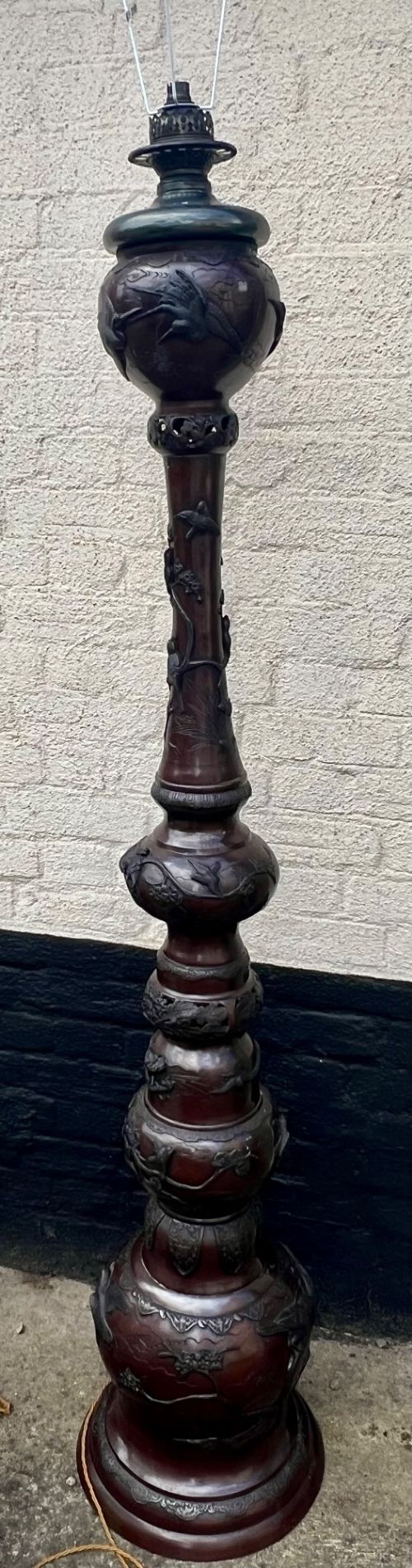
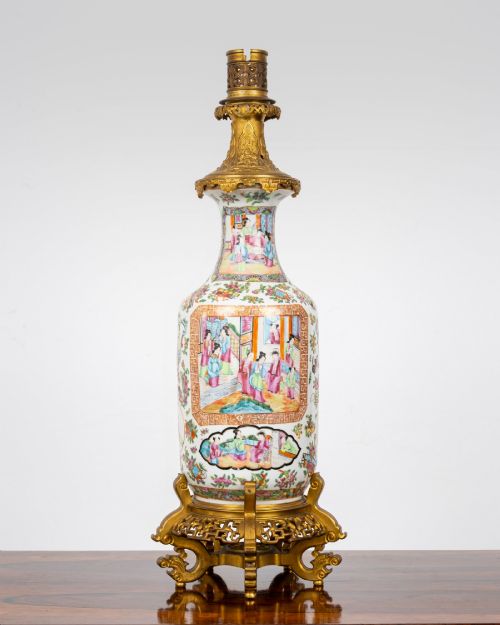
Japanese bronze lamps appear primarily as table lamps and floor lamps converted from earlier vessels, vases, and lanterns. Most examples date from the nineteenth century and the Meiji period, reflecting the decorative export trade of that era.
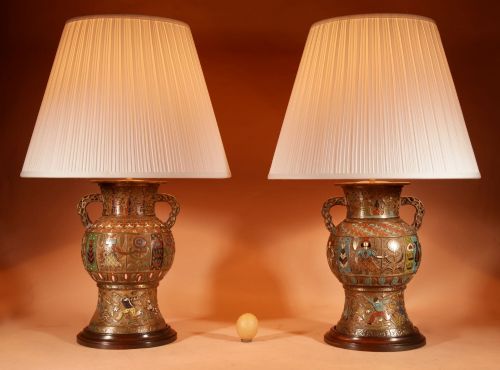
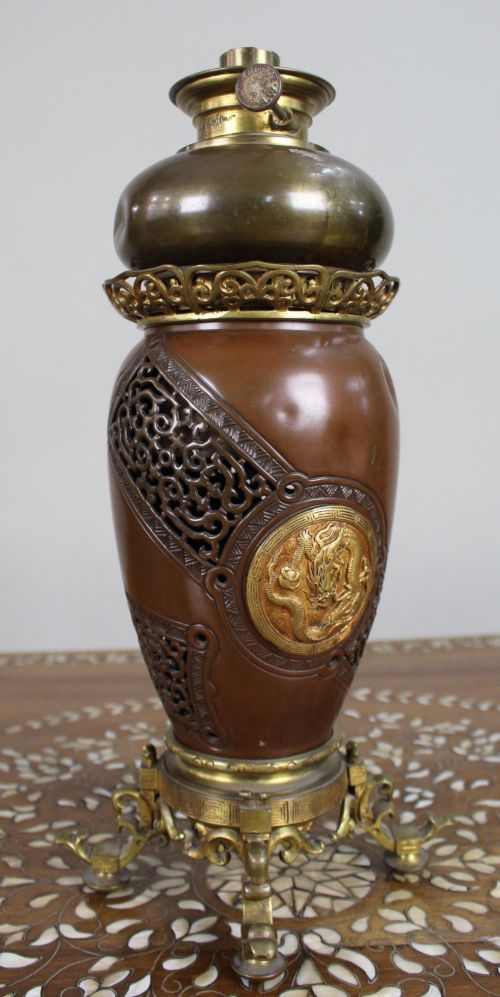
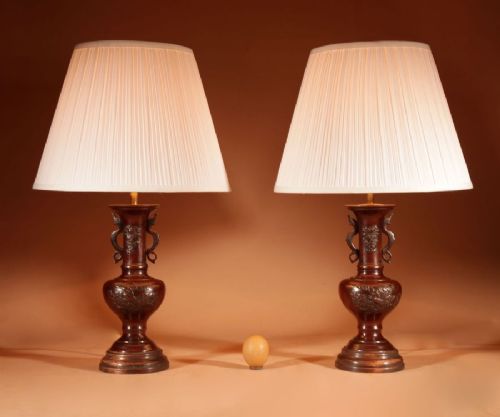
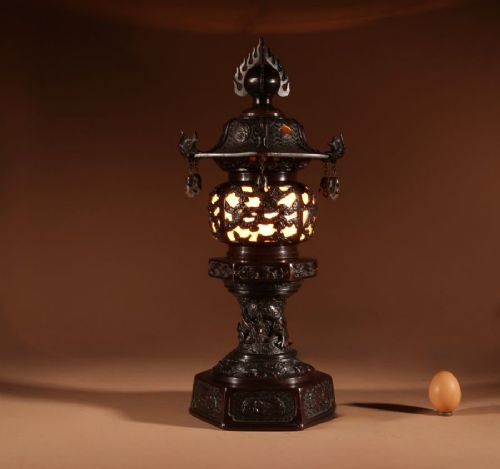
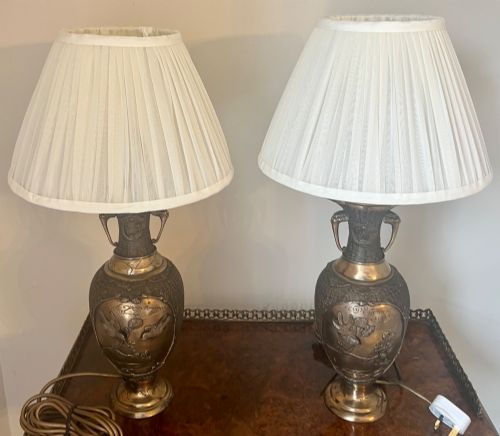
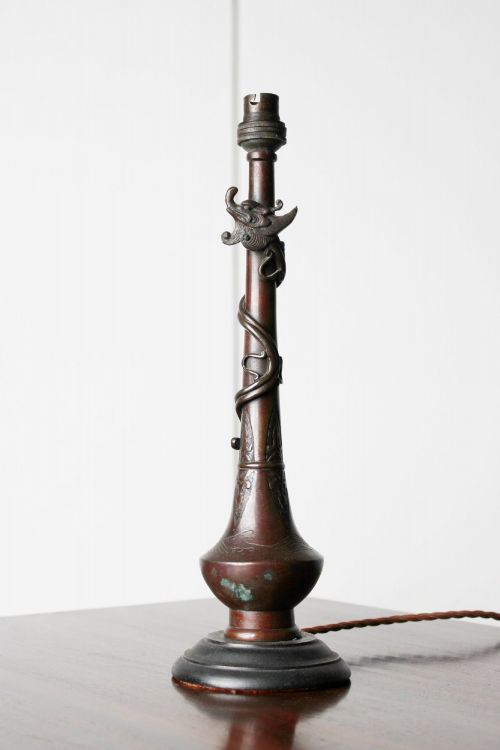
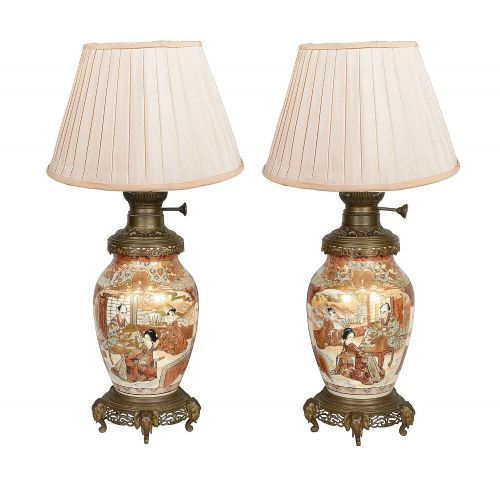
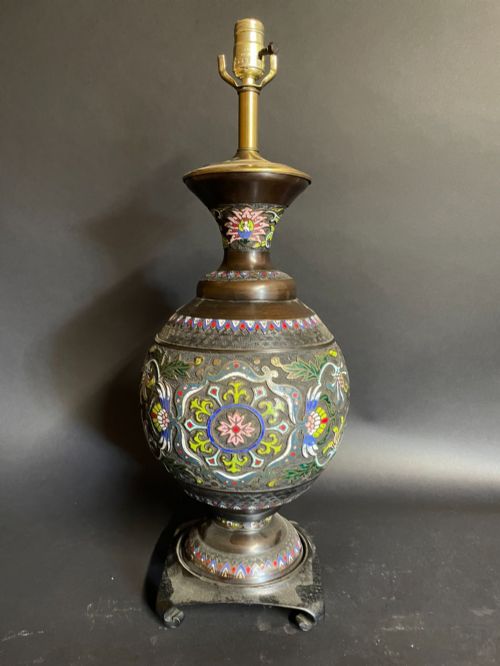
Buyers encounter single lights alongside matched pairs, often incorporating champlevé or cloisonné enamel detailing upon the bronze body. Certain pieces adopt animal forms such as elephants and dragons, or take the shape of hanging temple lanterns adapted for domestic rooms.
Materials and Construction
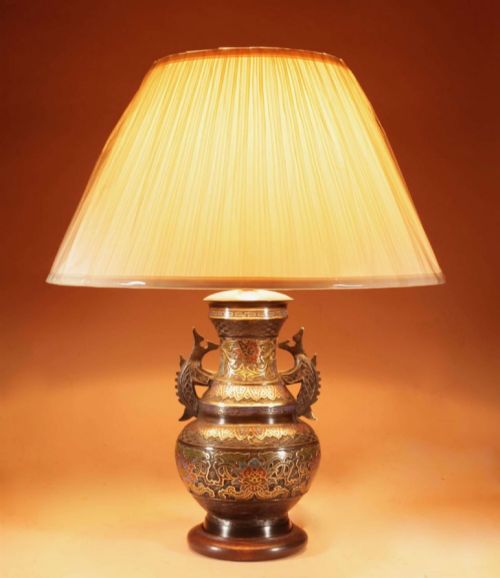
Makers utilised cast bronze, gilt bronze, and brass as the primary structural bodies, frequently mounting them upon wooden bases or integrating porcelain and Satsuma elements. Enamel work in champlevé and cloisonné decorates the surfaces with intricate patterns.
Many of these lighting pieces originate from earlier vases or vessels adapted during the Victorian and Edwardian periods for electrical or oil-burning use, combining traditional metal casting with contemporary wiring and fabric shades.
Japanese Bronze Lamps Retail Price Guide 2026
Typical asking prices for japanese bronze lamps among the pieces listed under this phrase on Sellingantiques today, from the lower quarter to the upper quarter. They describe what is for sale here now, not the wider market.
Listings feature items spanning the Victorian and Edwardian eras, alongside pieces specifically attributed to the Meiji period.
Judgement of Quality
Quality rests upon the crispness of the bronze casting and the precision of the enamel inlay, where finer examples display tighter cloisonné cells and deeper patination. The integrity of the original vessel determines the success of the conversion.
Matched pairs command greater attention than single lamps, particularly when the patination and enamel work align harmoniously across both pieces without heavy restoration to the metal structure.
The Japanese Bronze Lamps Glossary
- Bronze
- An alloy of copper and tin used widely for casting vessels and figures in nineteenth-century workshops. This metal forms the heavy base of most pieces listed here.
- Champlevé
- An enamel technique where troughs are dug into the bronze surface and filled with coloured vitreous paste before firing. This creates raised metal outlines between the decorative colour fields.
- Cloisonné
- A method using thin wire soldered to the bronze body to create small compartments that hold enamel colours. The piece is then fired and polished smooth.
- Meiji Period
- The historical Japanese era spanning from 1868 to 1912, noted for metalwork and decorative arts exported to Western markets. Much of the domestic lighting seen today originates from this timeframe.
- Satsuma
- A type of Japanese earthenware featuring a crackled pale glaze decorated with enamels and gilt. These ceramic bodies sometimes appear mounted with bronze as lighting fixtures.
Japanese Bronze Lamps: Frequently Asked Questions
Are these lamps originally wired for electricity?
Most pieces began life as nineteenth-century bronze vases, temple lanterns, or oil lamps before later conversion to electrical fittings. This adaptation process typically occurred during the Victorian or Edwardian periods, or more recently to meet modern safety standards.
Buyers should inspect the wiring arrangement to confirm whether the conversion preserves the original vessel structure without drilling or damaging the antique metalwork.
How do I identify a Meiji period piece?
Meiji period items generally date between 1868 and 1912, a time when Japanese metalworkers produced elaborate bronze and enamel goods for international export. Look for high-relief casting, detailed dragon or elephant motifs, and careful champlevé or cloisonné work.
While exact dates remain uncommon on unmarked lamps, the style of the casting and the characteristics of the bronze patination offer strong indicators of this era.
Can I find matched pairs?
Matched pairs appear frequently among the listings, often originating as sets of vases or temple lanterns converted simultaneously into table lights. These pairs provide symmetry for sideboards or mantelpieces.
Checking the height, patina, and enamel patterns side by side helps confirm that the two lamps were cast and decorated together rather than assembled as a matched set later.
What maintenance do bronze lamps need?
Bronze requires minimal upkeep beyond gentle dusting with a soft cloth to protect the patinated surface and any enamel inlays. Avoid chemical polishes, which can strip the aged finish and diminish the character of the metal.
Checking the stability of the base and ensuring the electrical components comply with current regulations keeps the lamp safe for daily use in the home.