





Japanese Bronze Enamel Urn
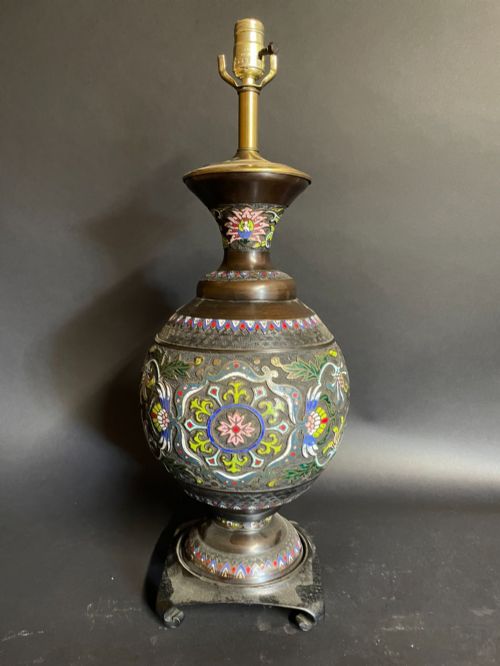
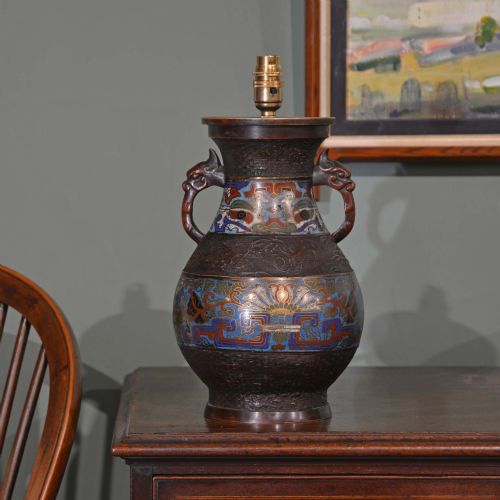
A Japanese bronze enamel urn brings intense colour and weight to a room through meticulous metalwork and vitreous paste.
Japanese Bronze Enamel Urn
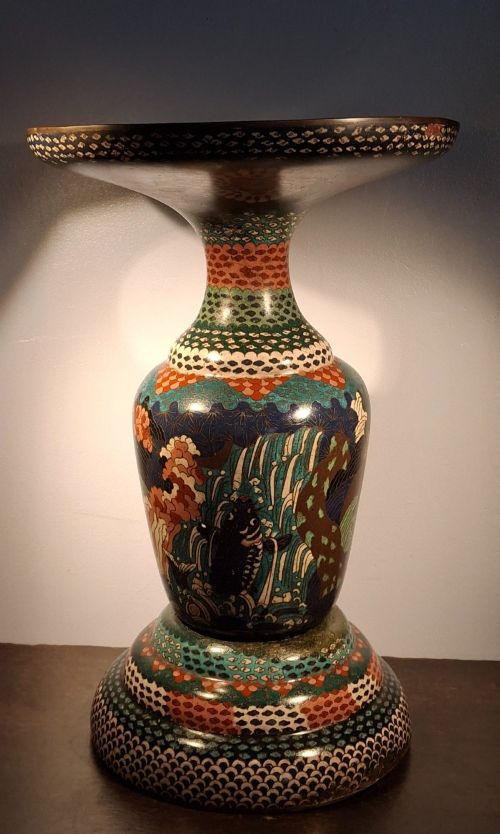
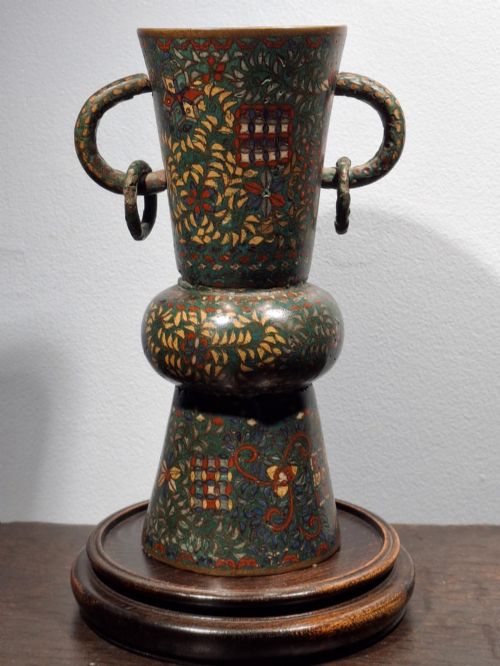
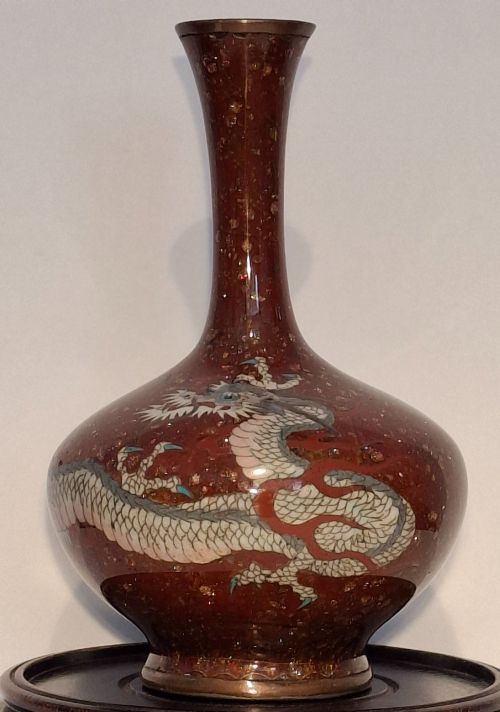
A japanese bronze enamel urn search leads you to heavy metal vessels decorated with vitreous glass pastes, spanning the nineteenth century into the twentieth century. These objects appear in forms such as ginger jars, ritual vases, and large decorative vessels.
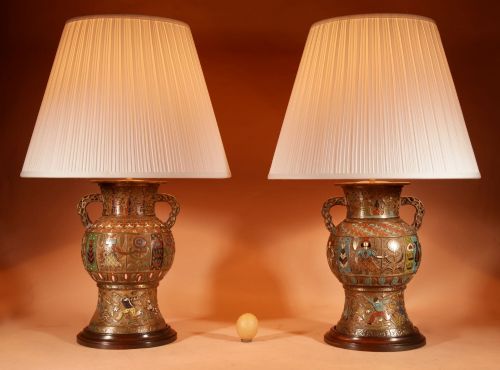
The pieces on this page frequently cross over into functional lighting, appearing as bronze and enamel table lamps wired for modern interiors. You will also encounter miniature vases alongside massive examples reaching substantial heights with detailed aquatic motifs like koi.
Materials and construction methods
Metalworkers cast heavy bronze, brass, and copper bodies to form the structural foundation of each vessel. These metal surfaces then receive detailed surface decoration using specialised enamel techniques.
Craftsmen applied enamel primarily through cloisonné, using thin wire partitions to contain the coloured pastes, and champlevé, where cells are carved directly into the bronze ground before firing.
Listings span the nineteenth century, Victorian era, and early twentieth century, incorporating materials like brass, copper, wood, and fabric alongside bronze and enamel.
Distinctions in craftsmanship and finish
Quality rests upon the precision of the wirework or the depth of the carved cells holding the enamel. Finer examples display perfectly uniform colour fields and flawless polishing across the metallic bronze substrate.
The scale and ambition of the design dictate the upper tier of these metalwares, separating simple decorative items from exceptional monumental pieces attributed to notable workshops.
Tsukamoto Hikokichi
The Japanese Bronze Enamel Urn Glossary
- Cloisonné
- An enamel technique where flat metal wires form small compartments on a bronze body to hold coloured glass paste before firing.
- Champlevé
- A method of enamelling where troughs or cells are hollowed directly into the bronze surface to receive the vitrified paste.
- Meiji Period
- The historical Japanese era spanning from eighteen sixty-eight to nineteen twelve, noted for exceptional decorative metalwork exports.
- Ginger Jar
- A globular storage jar with a domed lid, frequently rendered in bronze and enamel for decorative display.
Japanese Bronze Enamel Urn: Frequently Asked Questions
What is a japanese bronze enamel urn?
These items are heavy metal vessels cast in bronze, brass, or copper and decorated with coloured vitreous enamel. They were produced in Japan during the nineteenth and early twentieth centuries.
Many of these objects take the form of ginger jars or ritual vases, while others have been converted into table lamps. They serve as decorative focal points due to their intricate surface patterns.
How do I date a japanese bronze enamel urn?
Dating relies on stylistic markers, materials, and associated period classifications such as the Meiji era or the Victorian period. Nineteenth-century examples often display archaic influences or complex flora and fauna.
Later pieces extending into the Edwardian period show shifts in scale and conversion methods for electrical lighting. Examining the density of the bronze and the wiring helps confirm the timeline.
Where were these pieces made?
Production took place in Japanese workshops during a time of increased export to Western markets. The influence of these Asian antiques spread widely into British and European interiors.
Some examples show specific crossover appeal, such as items noted for Egyptian interest decorative motifs. This cultural exchange influenced how the bronzes were finished and mounted.
How should I clean a bronze and enamel lamp?
Dust the bronze body gently with a dry, soft cloth to prevent accumulation in the recesses of the champlevé or cloisonné work. Avoid harsh chemical cleaners that might strip the antique patina from the metal.
Take care around any electrical components if the vessel has been converted into a table lamp. Professional advice should be sought for deep conservation of delicate enamel surfaces.