




Japanese Boxwood Sculpture
These Japanese boxwood sculpture pieces are tactile carved objects, predominantly netsuke and okimono, offering miniature artisan detail from the nineteenth century.
Japanese Boxwood Sculpture
When you search for japanese boxwood sculpture, you encounter small decorative objects and portable carvings rooted in the Edo and Meiji periods. The forms include netsuke, okimono, paperweights, and small figurines depicting animals, wise men, and deities such as Ebisu and Fukurokuju.
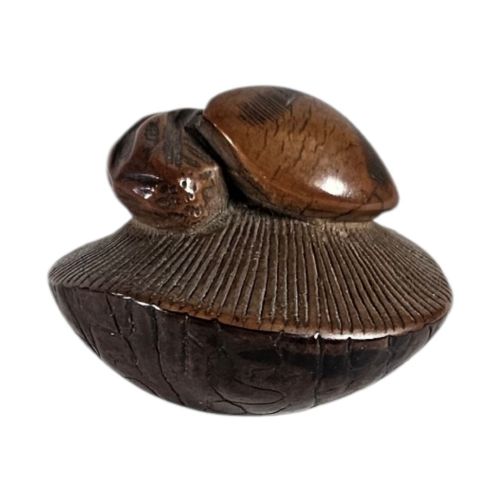
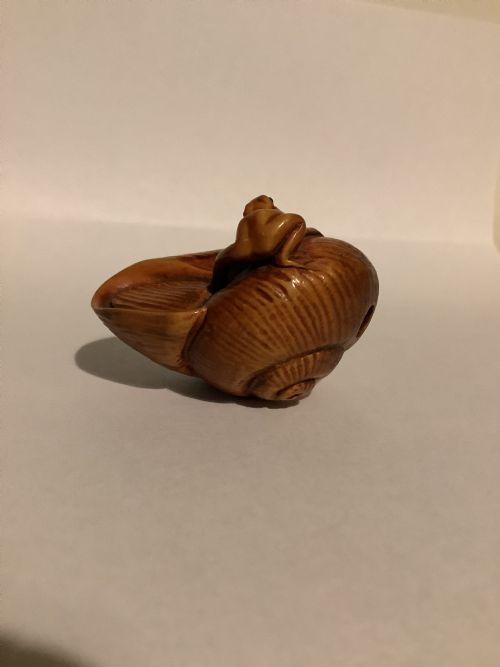
You are most likely to meet nineteenth-century pieces on this page, spanning the transition between traditional Edo craftsmanship and Meiji production. These works range from naturalistic depictions of snails and toads to human figures with expressive detail.
Materials and Carving Techniques
Carvers shaped the wood using hand tools to achieve smooth contours designed to be handled. Many examples bear signatures or artist attribution carved directly into the dense grain.
Several carvings depict ordinary toads and snails elevated to miniature art, proving that nineteenth-century artisans found profound charm in garden pests.
Assessing Quality and Execution
Quality rests upon the precision of the carving and the naturalism of the form. Superior examples demonstrate careful attention to anatomy, posture, and texture, such as the lifelike rendering of a toad skin or a horse's mane.
The presence of a clear signature by a known maker elevates a piece, as does the subtlety of the polish achieved through handling over generations. Softer definition and shallower tool marks distinguish simpler workshop output.
Tomochika·Masayuki
The Japanese Boxwood Sculpture Glossary
- Netsuke
- A small carved toggle fastened to the end of a cord attached to a small pouch or box worn on a traditional Japanese kimono sash. These practical fasteners evolved into highly detailed miniature sculptures.
- Okimono
- A standalone decorative figurine intended for display on a shelf or in a tokonoma alcove rather than for fastening clothing. These carvings portray deities, animals, and figures from folklore.
- Edo Period
- The historical period in Japan lasting from sixteen-thee to eighteen-sixty-eight, characterised by economic growth and strict social order. Carvings from this era reflect traditional motifs and urban culture.
- Meiji Period
- The era spanning from eighteen-sixty-eight to nineteen-twelve, marked by the modernisation of Japan and increased export of decorative arts. Sculptures from this time often show heightened realism.
Japanese Boxwood Sculpture: Frequently Asked Questions
What is a netsuke?
A netsuke is a small, carved toggle used historically to secure personal containers hanging from a kimono sash. They were shaped with smooth edges and through-holes for cords.
Over time, these practical items became miniature sculptures showcasing elaborate craftsmanship by skilled carvers.
How do I care for boxwood?
Boxwood benefits from stable indoor humidity and protection from direct sunlight, which can dry and split the dense timber. Dust gently with a soft, dry brush.
Handling the wood naturally transfers subtle oils that enhance the patina over time, provided hands are clean.
How do I tell Edo from Meiji?
Edo period carvings typically reflect traditional domestic aesthetics, focusing on functional practicality and customary motifs. They often display a restrained approach to miniature detail.
Meiji period pieces frequently exhibit greater naturalism, dynamic movement, and cater to international export markets following the opening of Japan.
What is an okimono?
An okimono is a decorative carving made purely for display rather than utility. They depict gods, animals, and everyday scenes in miniature.
Unlike netsuke, they lack cord holes and sit directly on flat surfaces.