


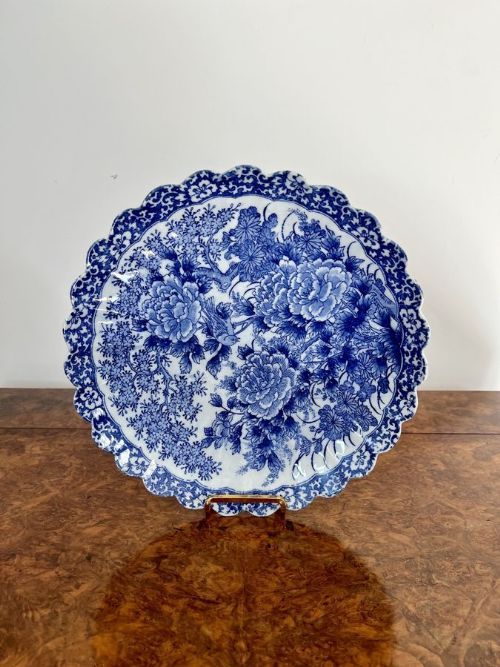


Japanese Blue White Porcelain
These pieces of japanese blue white porcelain bring hand-painted cobalt designs and centuries of kiln tradition directly to your table or shelf.

Japanese Blue White Porcelain
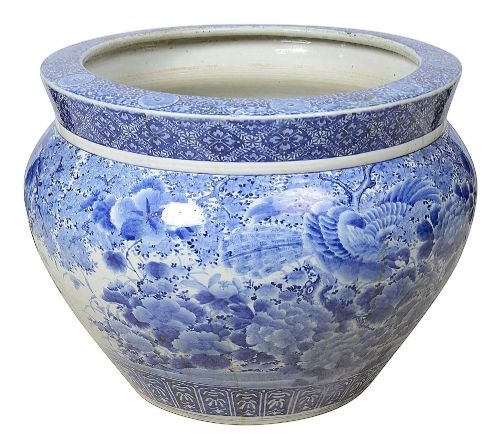
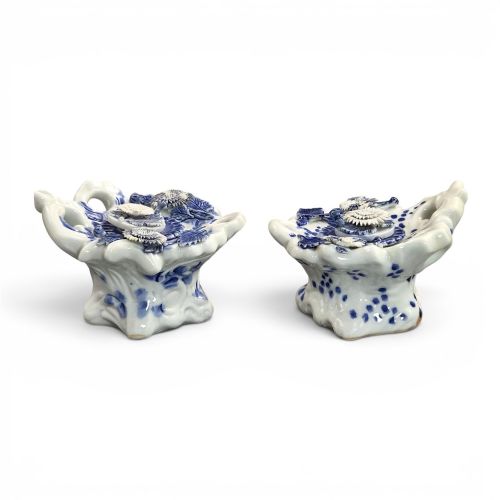
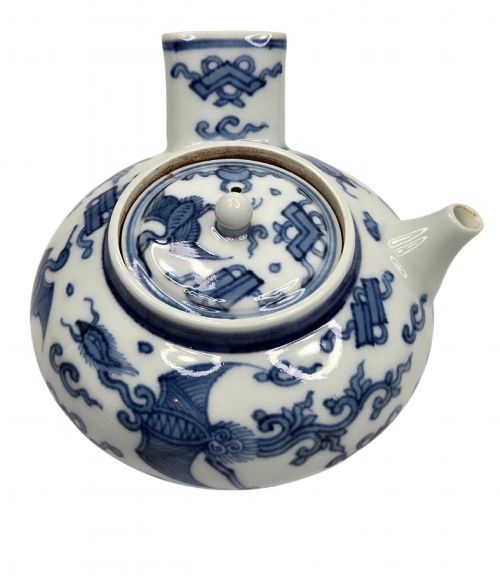
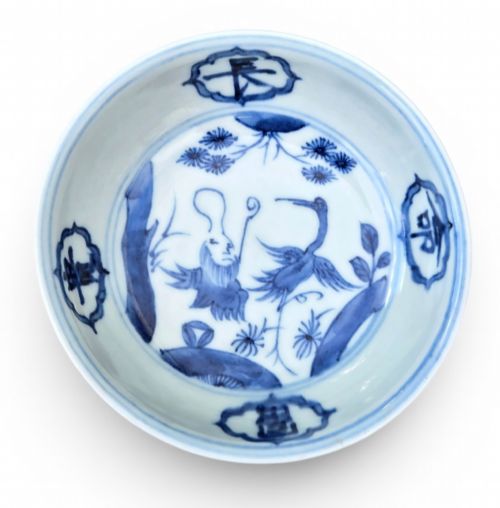
When you search for japanese blue white porcelain, you encounter items spanning the 17th century through the early 20th century, including the Edo and Meiji periods. The forms available range widely from large decorative chargers and jardiniere fish-bowls to delicate bowls, plates, bottles, and specialised vessels like the sometsuke yokode kyuusu.
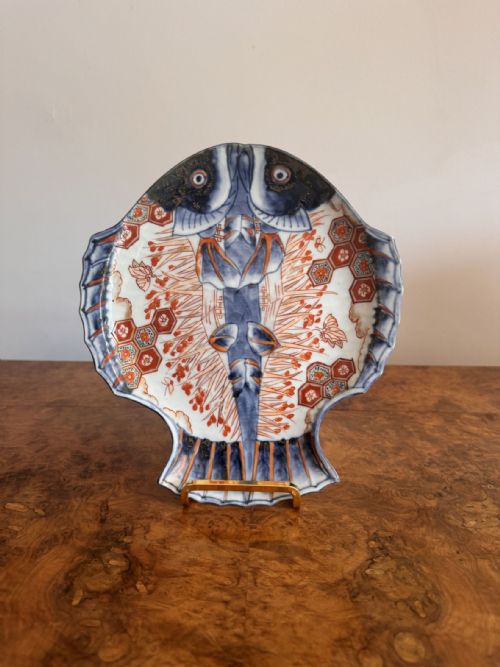
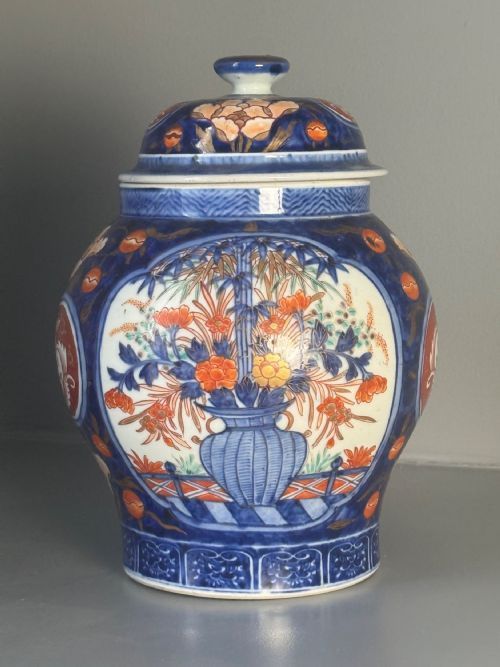
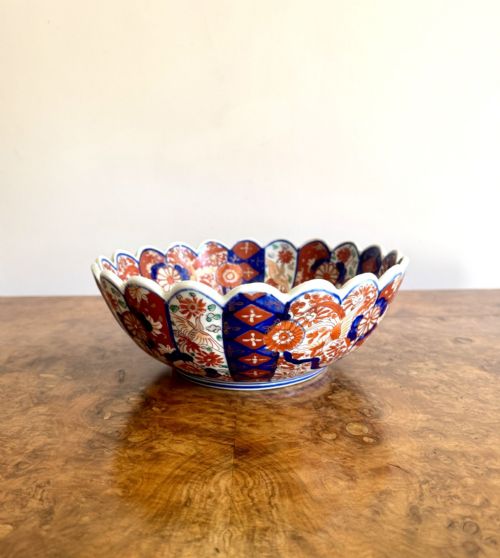
The objects most frequently met on this page are plates, chargers, and bowls created in the Arita kilns, often featuring traditional Japanese Imari patterns alongside cobalt blue pigments. You also find figurative examples such as carved guardian lion dogs and fish-form dishes originating from Hirado and other production centres.
Vessels from these periods served both utilitarian and decorative roles in daily life and ceremonial use, adapting over generations from classical forms to pieces intended for export. Each item reflects the specific aesthetic concerns of its era, whether the restrained blue and white palette of early Arita wares or the busier compositions of later Meiji production.

Materials and Technique
The foundation of these objects is porcelain clay shaped by hand or on the potter's wheel, often finished with precise carving, piercing, or moulding into specific organic forms like fans and fish. Potters applied cobalt pigment directly onto the unglazed ceramic body before coating the piece in a clear glaze and firing it at high temperatures in wood or coal-fuelled kilns.
Certain wares incorporate contrasting details such as enamel highlights or gold leaf applied over the glaze, while others rely entirely on cobalt underglaze variations to create depth and shadow within floral, animal, or landscape scenes. Some later decorative items also combine ceramic bodies with exterior elements like lacquer panels.
The interaction between the cobalt pigment and the kiln heat determines the exact tone of the blue decoration, which ranges from soft grey-blue to deep, vibrant indigo. Master potters controlled these firings to achieve clean white backgrounds that highlight the brushwork of the painted motifs.
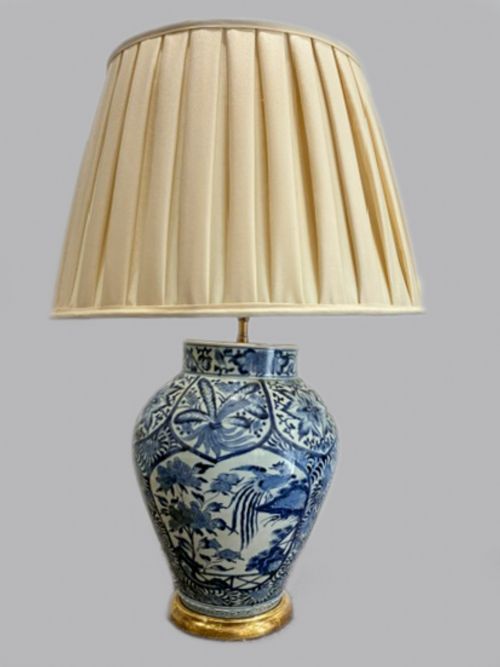
Listings feature porcelain forms ranging from 17th century dishes to 20th century table lamps, utilising cobalt glaze and gold leaf.
Assessing Quality
Quality in these pieces is dictated primarily by the control of the brushwork and the clarity of the cobalt underglaze decoration. Superior examples display confident, fluid lines in motifs like cranes, dragons, and floral arrangements, whereas lesser pieces show rushed or repetitive application without individual character.
The refinement of the porcelain body and the success of the glaze firing also distinguish finer items. A top-tier object maintains a smooth, even surface glaze free of heavy kiln grit or warping, allowing the painted details to remain sharp and prominent.
Makuzu Kozan
The Japanese Blue White Porcelain Glossary
- Arita
- A town in Saga Prefecture and the historic centre of Japanese porcelain production. Kilns in this area produced the bulk of the blue and white and Imari wares exported to the West.
- Imari
- A style of Japanese export porcelain originating from the Arita area, typically characterised by underglaze blue combined with iron red, gold, and other enamel colours.
- Meiji Period
- The era of Japanese history lasting from 1868 to 1912, marked by industrialisation and a surge in highly decorative porcelain made for international markets.
- Sometsuke
- Japanese term for underglaze blue porcelain. The cobalt pigment is applied directly to the clay body prior to glazing and firing.
- Koro
- A traditional Japanese incense burner, often featuring pierced covers and sculptural details such as lions or mythical beasts. These vessels are typically supported on three or more feet.
- Mukozuke
- A small, deep dish traditionally used in Japanese kaiseki dining to hold seasonal food courses. Collectors prize them for their diverse geometric and naturalistic forms.
Japanese Blue White Porcelain: Frequently Asked Questions
How do I date these porcelain pieces?
Dating relies on stylistic clues, potting techniques, and any accompanying marks stamped or painted on the base. Earlier pieces from the 17th and 18th centuries often feature simpler forms and subdued cobalt tones, whereas Meiji period items can exhibit heavier ornamentation and distinct export signatures.
Changes in clay purity and glaze formulation across different eras also help narrow down the decade of production. Comparing the motifs and potting weight to dated museum examples remains the most reliable method.
What is the difference between Arita and Imari?
Arita refers to the geographical region in Japan where the porcelain was actually manufactured, encompassing numerous individual kilns. Imari is the stylistic designation named after the port from which these ceramics were shipped.
While all Imari porcelain was produced in the Arita area, not all Arita porcelain is Imari style, as the kilns also produced plain blue and white wares without the additional red and gold enamels.
How were these vessels used originally?
Many of the chargers, plates, and bowls served practical functions in dining and food presentation, particularly within traditional Japanese households and tea ceremonies. Specialised forms like the koro held incense, while jardiniere fish-bowls housed aquatic life.
As European trade expanded, many larger plates and temple vases were acquired purely for display in Western drawing rooms and staterooms, shifting their purpose from utilitarian items to decorative showpieces.
Can I use these antiques for serving food?
Most antique porcelain pieces can handle light use, but collectors generally advise against regular dining or dishwasher cleaning due to the risk of damaging the historic glaze and delicate hand-painted surfaces. Wares with overglaze gold leaf or enamels are particularly vulnerable to scratching and fading over time.
If you choose to use plates or bowls for dining, wash them gently by hand in lukewarm water with mild soap and dry them immediately with a soft cloth.