



Japanese Blue White Charger
A Japanese blue white charger brings grand scale and cobalt depth to a room, offering centuries of ceramic artistry for display.
Japanese Blue White Charger
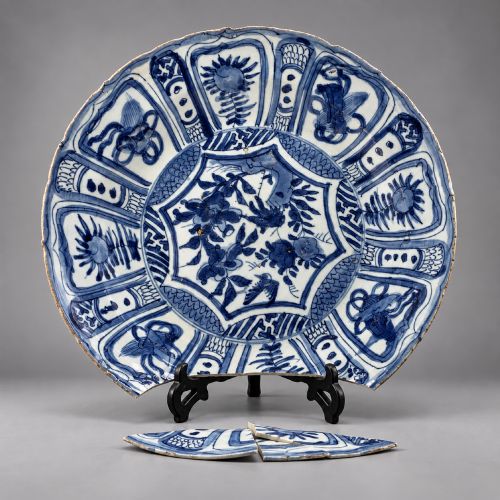
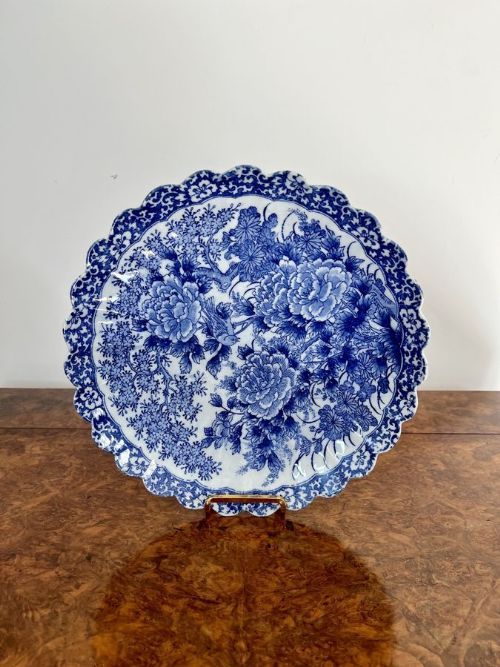
A Japanese blue white charger is a large decorative ceramic disc made for prominent display on walls or furniture. These pieces span centuries of production, originating from kiln centres such as Arita during the Edo period and continuing into the Meiji era.
Most examples encountered on this page date from the nineteenth and early twentieth centuries, reflecting the peak export periods. Alongside large chargers, the selection includes smaller plates, dishes and bowls sharing the same ceramic heritage.
Makers utilised traditional forms and motifs, painting cranes, koi carp, dragons and floral scrolls across the ceramic surface. Buyers find both matching pairs and single statement pieces suited for interior decoration.
Materials and construction
Potters shaped fine porcelain body clay by hand or upon a wheel before applying mineral pigments beneath the clear glaze. Cobalt glaze and cobalt underglaze supplied the characteristic deep blue tones during high-temperature kiln firing.
Selected works received additional enrichment through enamel and gold leaf or gold gilt details painted over the glaze. Hand-painted brushwork defines the ornamentation, ensuring individual character across every charger and plate.
Look closely at the hand-painted koi carp swimming across the porcelain surface; some appear ready to leap right off the plate.
Assessing quality
Quality rests upon the precision of the hand-painted brushwork and the clarity of the cobalt pigment against the porcelain body. Finer pieces display crisp botanical or animal subjects, such as cranes and koi carp, executed with notable control.
Scale and complexity also distinguish the range, as larger chargers with elaborate scrolling foliate borders demand greater technical skill from the potter. Well-preserved surfaces retaining clean glaze finishes represent the stronger examples.
The Japanese Blue White Charger Glossary
- Charger
- A large decorative plate or platter traditionally used for ceremonial display rather than dining. These substantial pieces provide a wide surface for complex painted scenes.
- Arita
- A Japanese town renowned for its long history of porcelain production. Kilns in this region created many of the blue and white wares destined for export.
- Imari
- A style of Japanese porcelain featuring cobalt blue underglaze combined with iron red, gold and other enamel colours. Pieces in this tradition often display intricate floral and geometric motifs.
- Meiji Period
- The era of Japanese history lasting from 1868 to 1912, marked by increased international trade and exports of decorative arts. Ceramics from this time often show exceptional hand-painted detail.
- Edo Period
- The period of Japanese history spanning from 1603 to 1867, characterised by internal peace and the flourishing of regional kiln traditions. Early porcelain forms originated during this foundational epoch.
Japanese Blue White Charger: Frequently Asked Questions
How do I hang a charger safely?
Large ceramic chargers require specialist wall-mounting brackets that distribute weight evenly across the base and rim. Avoid wire hangers that exert pressure on single points of the porcelain.
Ensure the wall fixing engages directly with structural support rather than plaster alone. Professional framing shops can supply secure display mounts tailored to large round platters.
What is the difference between Arita and Imari?
Arita refers to the geographical production centre in Japan where porcelain manufacturing began. Imari is the port town from which these ceramics were shipped, becoming synonymous with the distinctive decorative style.
While all Imari wares stem from the Arita region, not all Arita pieces utilise the multi-coloured Imari palette. Many focus purely on cobalt blue decoration upon white porcelain.
How do I date a blue and white piece?
Dating relies on stylistic markers, potting techniques and historical documentation associated with specific eras such as the Edo or Meiji periods. Cobalt tones and brushwork styles evolved across centuries, helping to narrow the manufacturing window.
Examining the unglazed foot rim provides clues regarding clay preparation and kiln technology. Comparing known archive examples assists in confirming a period.