


Jacobean Style Furniture
Jacobean style furniture brings heavy timber and formal carving into a room, offering sturdy tables, settles, and chests built to last generations.
Jacobean Style Furniture
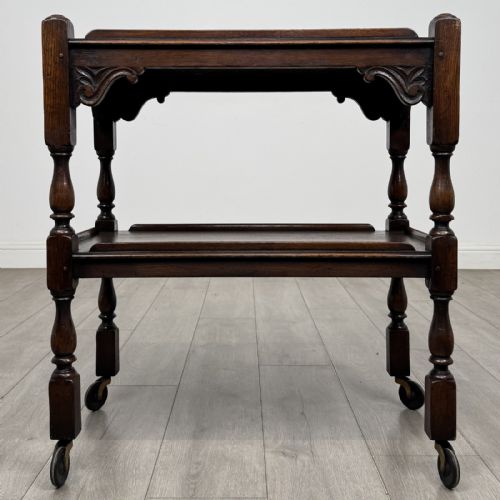
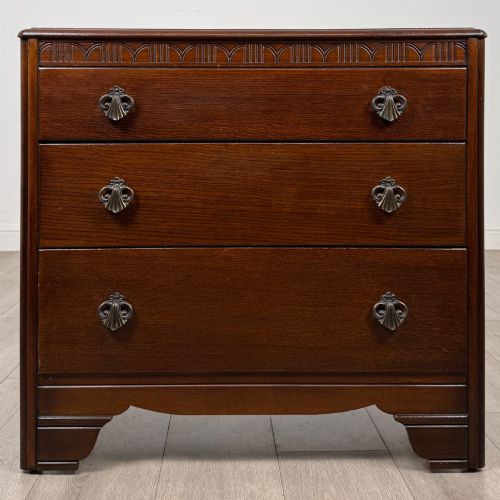
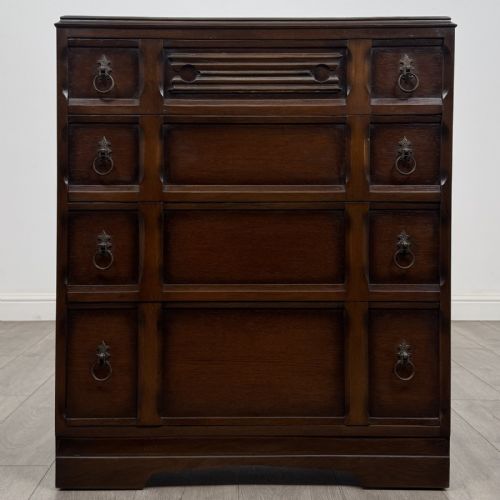
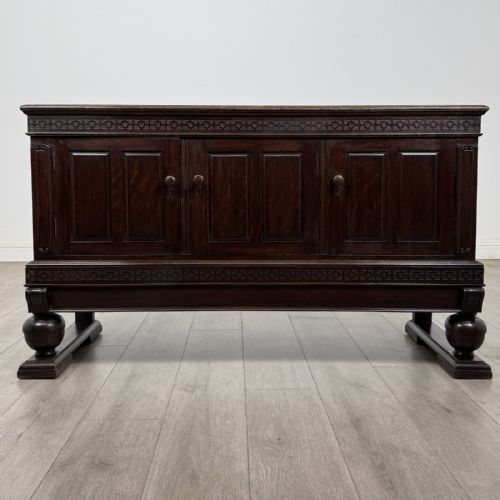
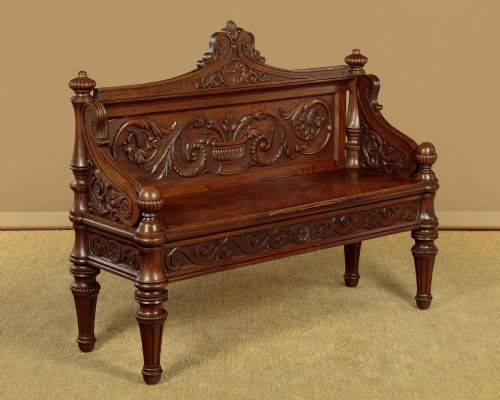
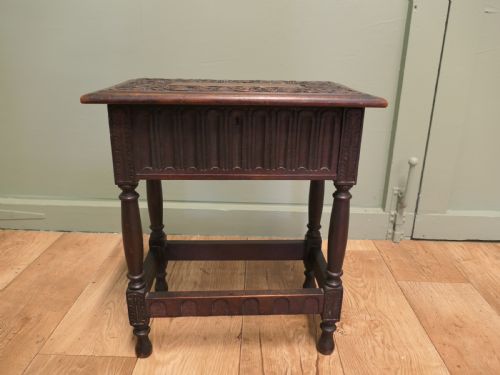
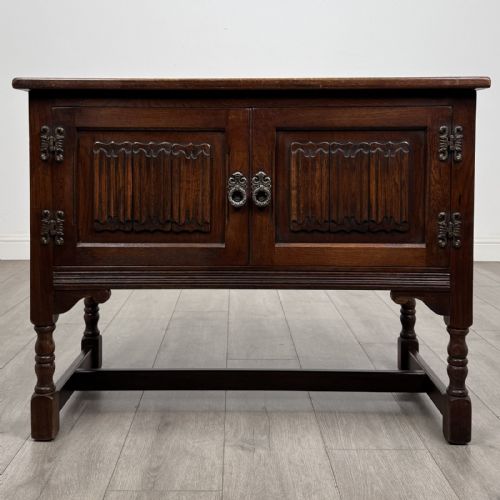
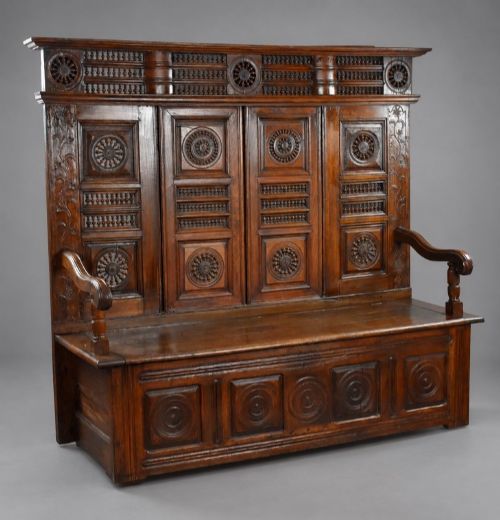
Jacobean style furniture encompasses robust wooden pieces made during the seventeenth century alongside later revival interpretations from the Victorian, Edwardian, and twentieth-century periods. Buyers searching this phrase meet everything from genuine seventeenth-century chests and dining tables to early twentieth-century oak sideboards, monk benches, and hall settles.
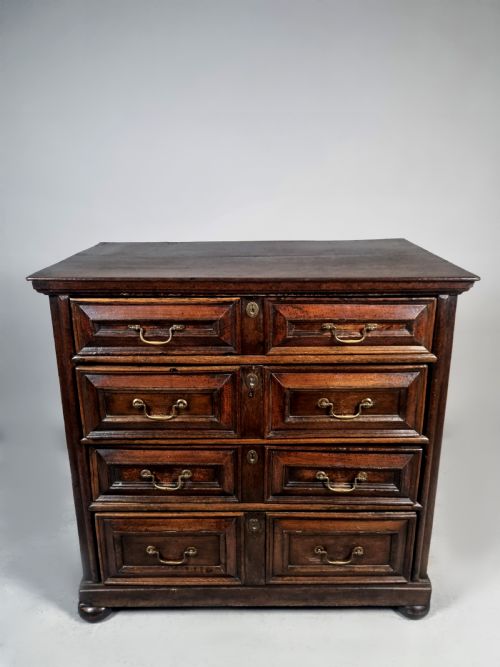
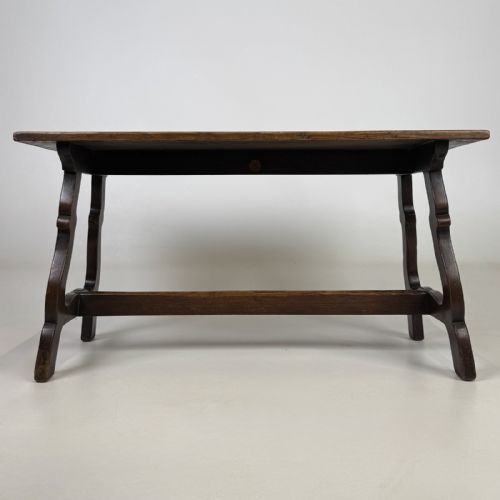
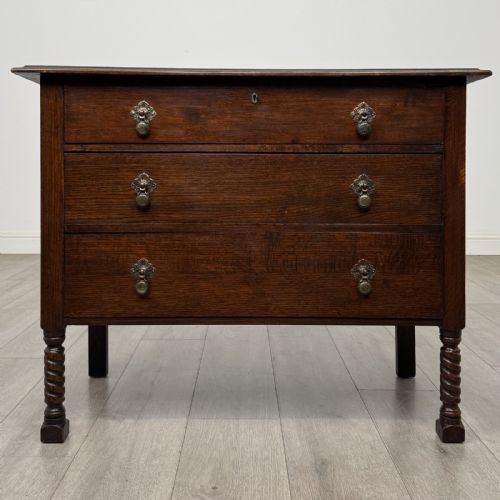
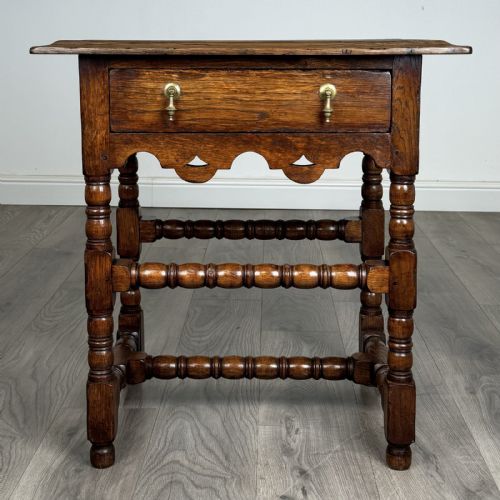
The forms span practical household items including chests of drawers, court cupboards, draw-leaf dining tables, side tables, and joint stools. Surviving examples demonstrate heavy structural forms and rectilinear shapes typical of early English domestic design.
Pieces originating from the seventeenth century sit alongside reproductions made in the 1900s, 1910s, 1920s, and 1930s. This mix allows homes to incorporate the historic aesthetic through either antique originals or later revival craftsmanship.
Materials and construction methods
Makers relied primarily on solid oak, supplemented by fruitwood and occasionally walnut for specific elements like drawer fronts or turnings. Joinery depended on pegged mortise and tenon joints, creating rigid frameworks without modern metal fasteners.
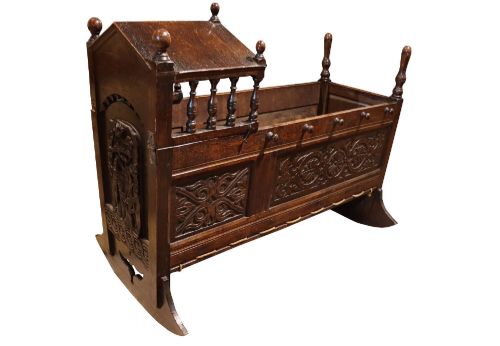
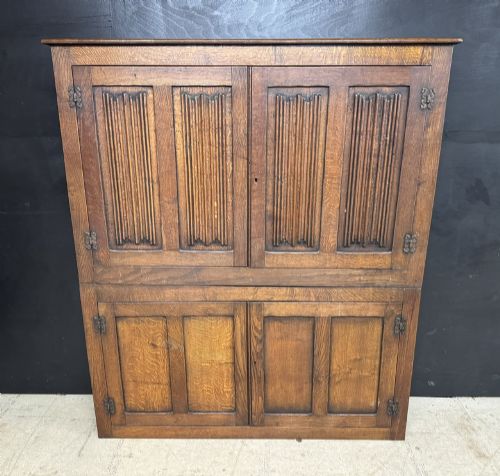
Surface decoration involved deep hand carving, geometric mouldings, and panelled construction. Iron and brass hardware such as hinges and drop handles secured doors and drawers while adding functional metallic contrast to the timber.
Jacobean Style Furniture Retail Price Guide 2026
Typical asking prices for jacobean style furniture among the pieces listed under this phrase on Sellingantiques today, from the lower quarter to the upper quarter. They describe what is for sale here now, not the wider market.
Listings span the seventeenth century alongside Edwardian and 1920s revival periods, using solid oak, fruitwood, brass, and iron.
Distinctions in quality
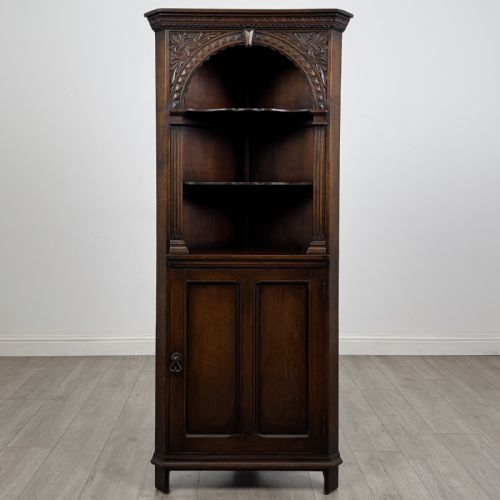
Quality rests heavily on the crispness of the hand carving and the selection of timber grain. Superior examples display deep relief work on panels and drawer fronts rather than shallow mechanical scoring.
Structural integrity depends on original joints remaining tight and timber retaining its natural colour without excessive modern chemical stripping. The weight of the solid oak and the precision of geometric mouldings differentiate finer items from standard revival pieces.
The Jacobean Style Furniture Glossary
- Joint stool
- A sturdy low wooden stool constructed with pegged joints and turned legs, used for seating or resting objects.
- Court cupboard
- A compact enclosed sideboard featuring two tiers, typically with cupboards and decorative turned supports.
- Monks bench
- A multifunctional furniture piece with a hinged back that folds down over the seat to form a small table.
- Draw-leaf table
- A dining table equipped with sliding extension leaves hidden beneath the main top surface.
- Geometric moulding
- Raised wooden profiling applied in repetitive symmetrical patterns to flat drawer fronts and cupboard doors.
Jacobean Style Furniture: Frequently Asked Questions
What is a Jacobean style settle?
A settle is a high-backed wooden bench with solid arms and a closed storage base or panelled back, designed to block draughts in large halls.
These pieces often feature carved oak panels and hinged seats that open for blanket storage.
How do I identify seventeenth century oak?
Seventeenth-century timber displays distinctive medullary rays running across the grain, visible as small silvery flecks in the wood.
Hand-cut joints secured with uneven wooden pegs further distinguish period originals from later revival furniture.
Where should I place a court cupboard?
Court cupboards suit dining rooms or large hallways where their compact proportions provide surface display space and concealed storage.
Keep them away from direct heat sources to prevent the dry oak from splitting.