


Jacobean Sideboard
A jacobean sideboard provides substantial storage and heavy timber presence, drawing buyers who want historic English character and robust utility in a dining room.
Jacobean Sideboard
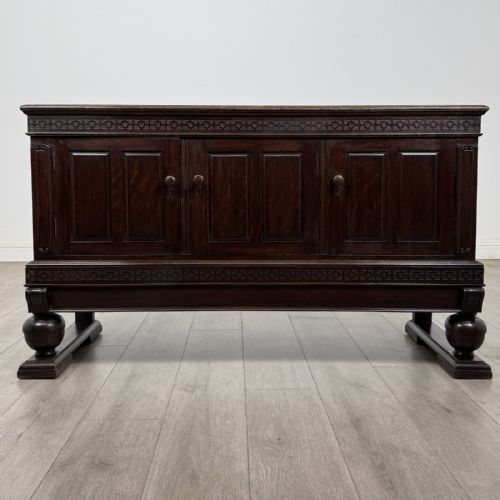
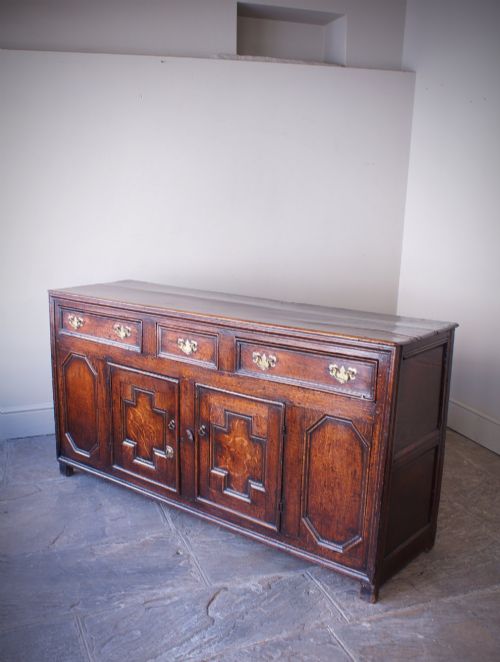
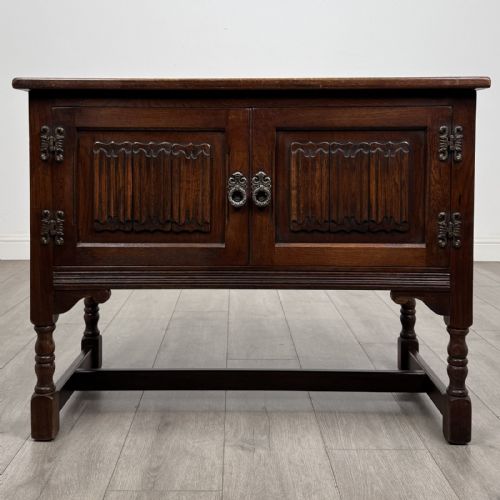
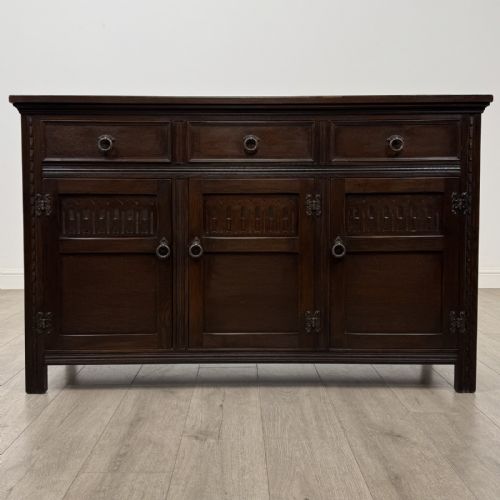
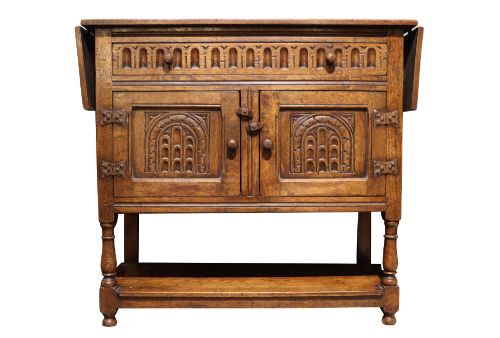
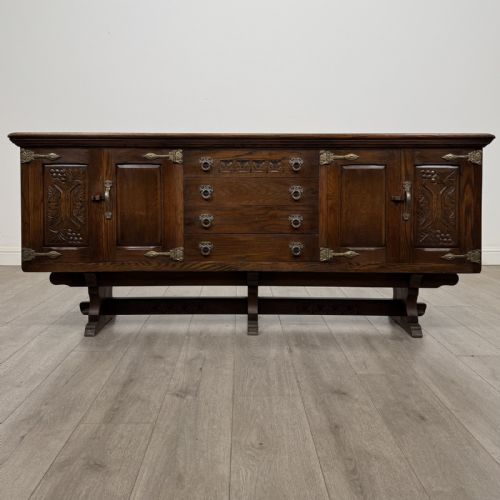
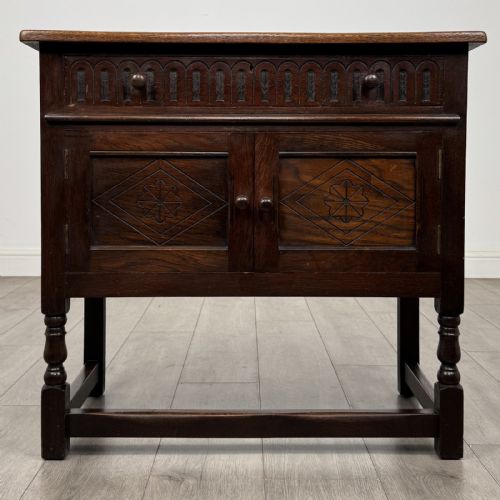
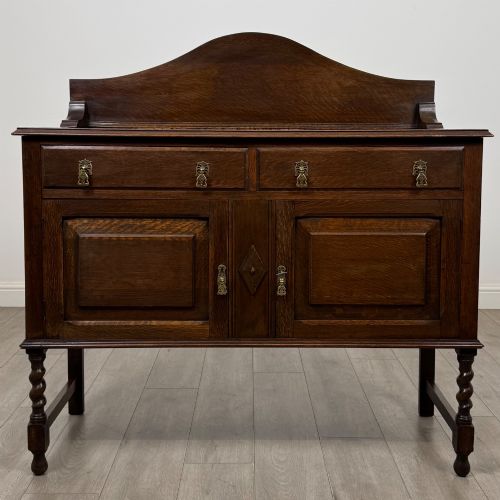
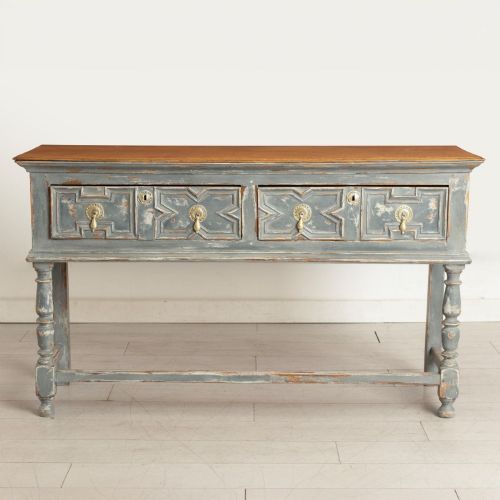
A jacobean sideboard encompasses low dresser bases, court cupboards, and carved side cabinets spanning from original seventeenth-century examples to later twentieth-century revivals. The selection on this page leans heavily into twentieth-century interpretations, Edwardian pieces, and nineteenth-century revivals alongside genuine seventeenth-century survivals.
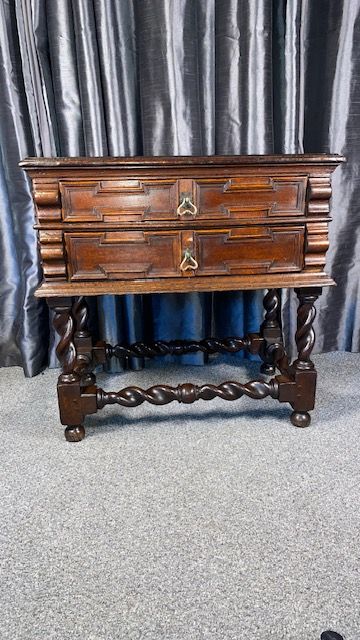
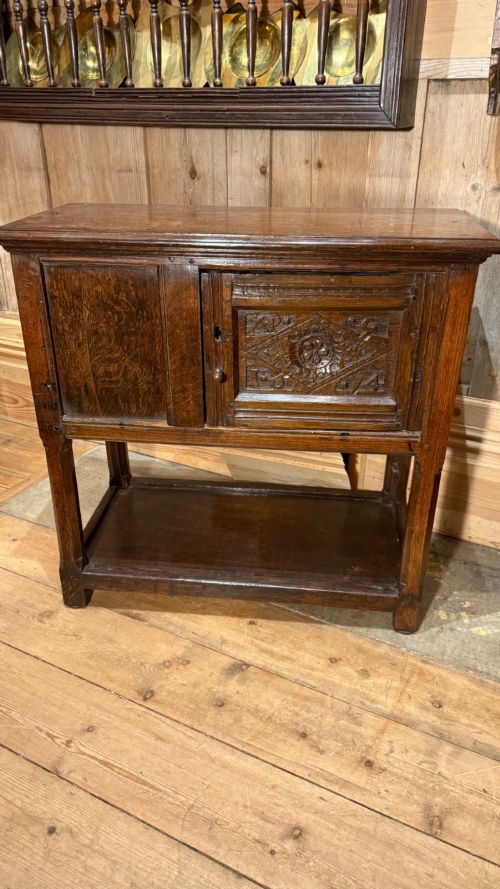
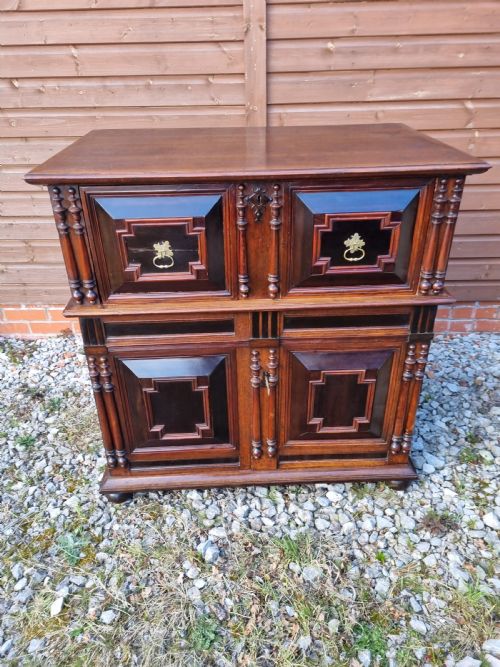
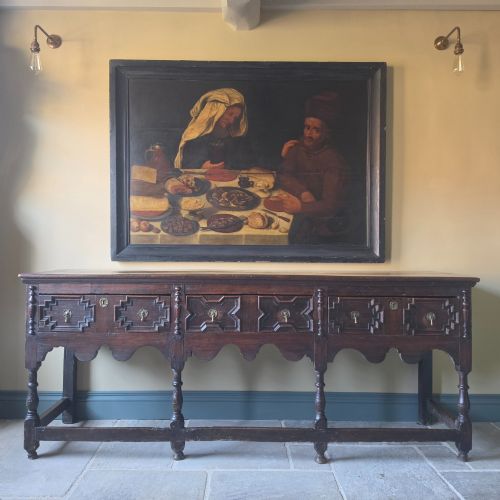
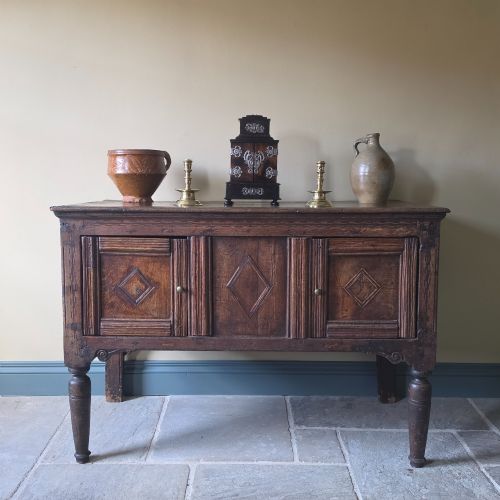
Forms range from simple three-drawer dresser bases and food hutches to elaborate press cupboards featuring geometric panels and stretcher bases. Buyers encounter sturdy low proportions designed for serving and storage, often incorporating potboards or enclosed lower cabinets.
Materials and construction
Oak dominates the construction, utilised alongside secondary elements of brass, iron, and glass for hardware and mirrors. Woodworkers employed joined and carved techniques, building rigid frameworks that supported heavy tops and panelled doors.
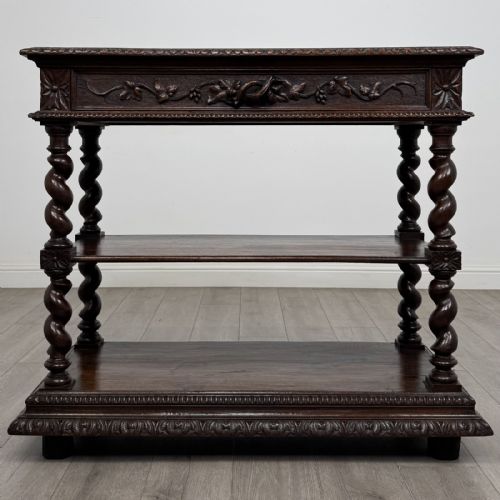
Surface articulation relies on hand carving, linenfold panelling, and geometric moulding rather than applied veneers. Structural stability is frequently enhanced by turned legs, stretcher bases, and barley-twist supports.
Jacobean Sideboard Retail Price Guide 2026
Typical asking prices for jacobean sideboard among the pieces listed under this phrase on Sellingantiques today, from the lower quarter to the upper quarter. They describe what is for sale here now, not the wider market.
Some seventeenth-century food hutches retain the original cross-ventilation slats once used to keep meat and cheese fresh before refrigeration.
Assessing quality
Quality rests in the crispness of the hand carving and the integrity of the timber, distinguishing confident seventeenth-century craftsmanship from later revival output. Original patination and untouched surfaces elevate an example far above pieces subject to heavy modern restoration.
Proportion and the balance of decorative elements dictate visual success, separating restrained country pieces from over-adorned revival work. The integration of period-appropriate brass handles or original wooden knobs completes a coherent build.
Jaycee
The Jacobean Sideboard Glossary
- Dresser base
- A low table form with drawers, often fitted with a potboard underneath for storing tableware. This form serves as a primary ancestor to the modern sideboard.
- Court cupboard
- A heavy enclosed storage piece with an upper section recessed or supported by columns. It functioned as a status symbol in seventeenth-century households.
- Linenfold
- A style of wood carving that mimics vertical folds of fabric. It appears frequently on panels of cupboards from the period and its later revivals.
- Barley-twist
- A turned column resembling a spiral strand of rope. This decorative support is characteristic of seventeenth-century joinery and later revival furniture.
- Stretcher base
- Horizontal wooden bars connecting the lower legs of a table or sideboard for stability. They often double as footrests in early seating and heavy case furniture.
Jacobean Sideboard: Frequently Asked Questions
Are these pieces from the seventeenth century?
The selection includes genuine seventeenth-century pieces alongside revival furniture made during the Edwardian era, the 1920s, and the 1930s.
Buyers find authentic period survivors sitting alongside twentieth-century interpretations that emulate the heavy carved aesthetic.
How do I care for solid oak furniture?
Solid oak requires stable indoor humidity levels to prevent timber movement and cracking over time. Regular dusting with a dry cloth maintains the surface without the need for heavy chemical polishes.
How do I identify a revival piece?
Revival pieces from the early twentieth century often display machine-assisted tooling alongside hand carving, paired with standardised interior fittings. Examining the timber grain, drawer construction, and wear patterns clarifies the age of the piece.