
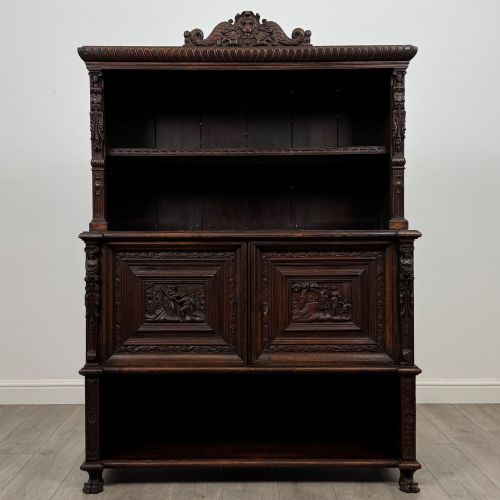
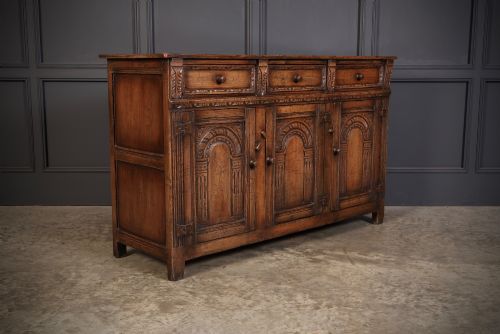
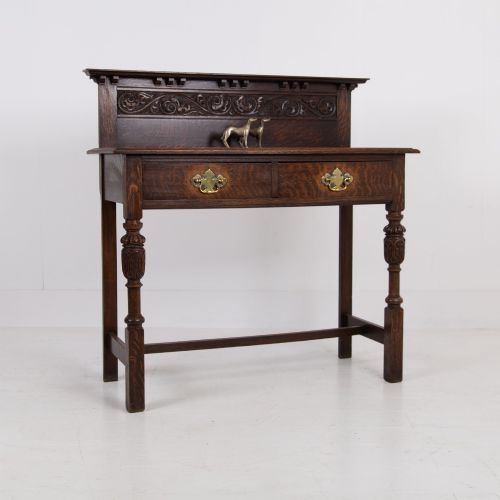

Jacobean Revival Dresser
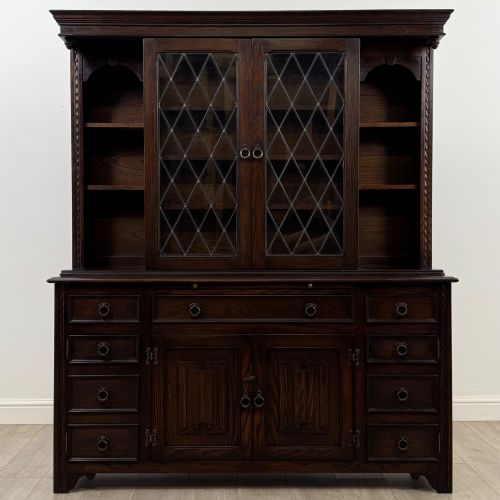
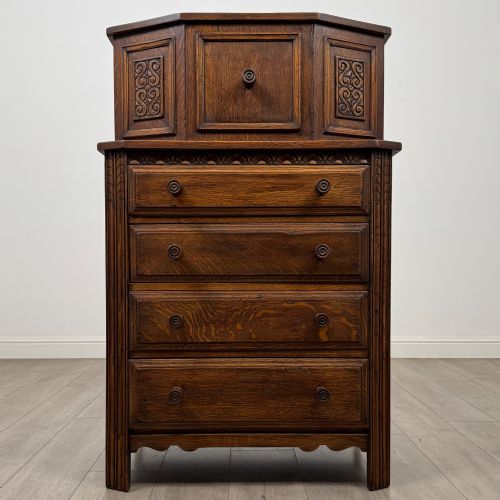
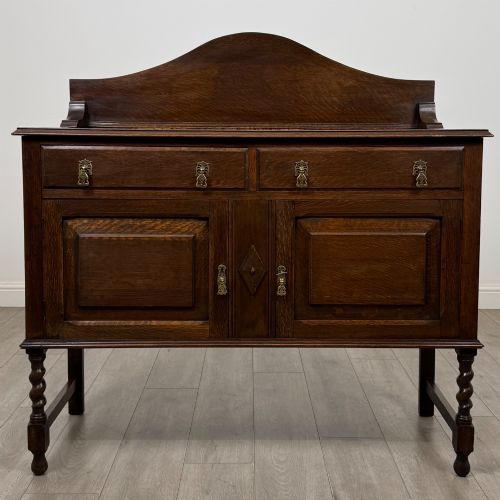
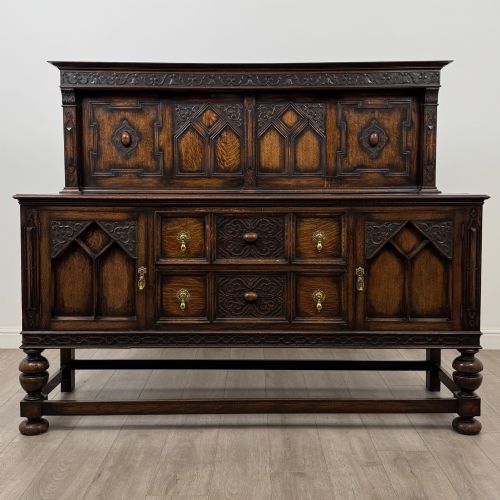
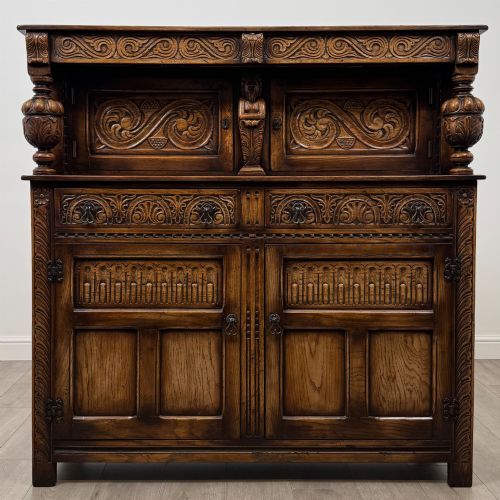
These jacobean revival dresser pieces capture centuries-old craft traditions in sturdy oak timber, offering storage and display for the home.
What a jacobean revival dresser is
A jacobean revival dresser brings heavy timber construction and historic forms into domestic interiors, acting as a functional storage piece and display focal point. These items bridge earlier seventeenth-century aesthetics with later production dates spanning the Victorian, Edwardian, and twentieth-century eras.
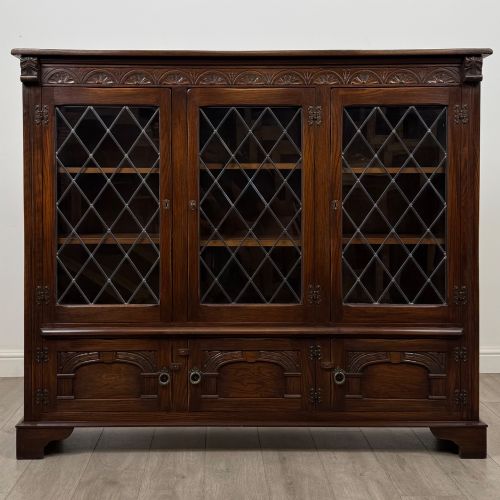
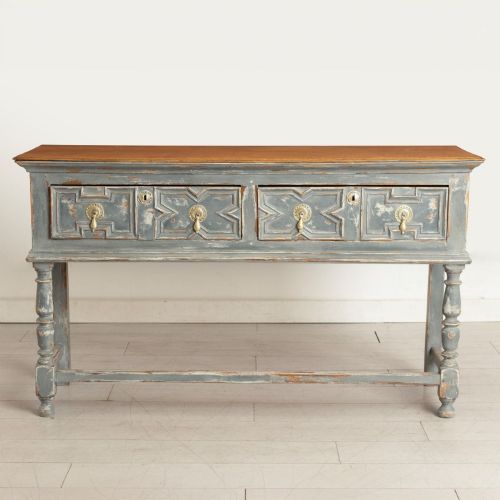
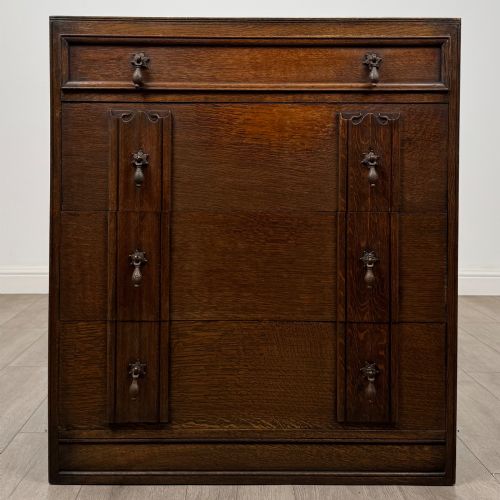
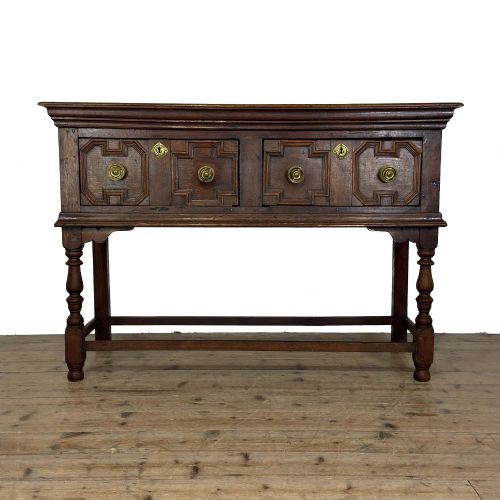
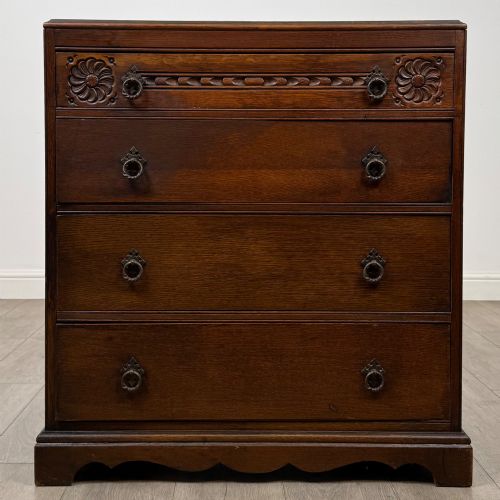
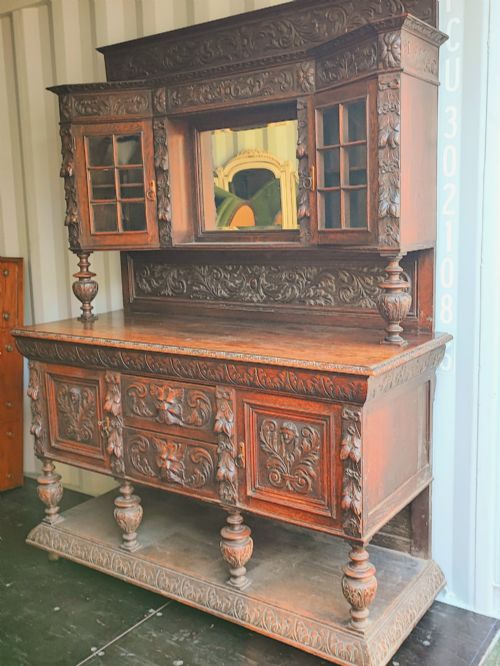
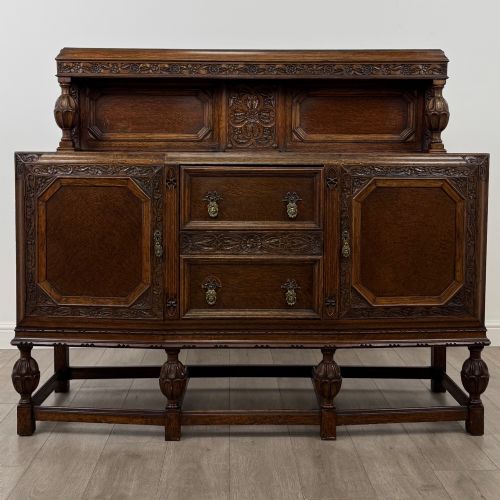
The versions most commonly met on this page include sturdy oak dresser bases, sideboards, and Welsh dressers featuring carved details. Pieces range from large Edwardian examples to compact Victorian designs in elm and walnut.
How they were made
Makers utilised solid oak, walnut, and elm as primary structural timbers, often turning to brass, iron, and glass for hardware and glazing. Surfaces display traditional hand-carved ornamentation that echoes seventeenth-century joinery methods.
Assembly relies on pegged mortise and tenon joints designed to support heavy loads over centuries of domestic use. Finishes range from polished wood grains to painted applications.
Retail Price Guide 2026
Typical UK retail prices for jacobean revival dresser, calculated from the Sellingantiques database of over a million retail prices indexed since 2003. This retail price guide relies exclusively on Sellingantiques data; no external sources or auction records are used, so the figures do not describe the wider market.
Listings feature oak, elm, and walnut materials across Victorian, Edwardian, and twentieth-century periods.
What varies in quality
Quality rests upon the depth and precision of the carved woodwork, distinguishing crisply executed motifs from softer, later machine-cut details. Timber selection also dictates grade, with dense figured oak marking superior examples.
Proportion and scale separate standard sideboard production from finer vernacular pieces, particularly in regional Welsh dressers and smaller elm variants. Original hardware and intact leaded glass panels further elevate a piece.
Heals
The Jacobean Revival Dresser Glossary
- Dresser base
- A low sideboard unit featuring drawers and cupboards without upper plate racks. This form provides substantial surface space for serving or display.
- Welsh dresser
- A traditional form combining a lower storage base with open upper shelving for ceramic display. These pieces originated in rural kitchens.
- Jacobean Revival
- A nineteenth and twentieth-century design movement mimicking seventeenth-century English styles. It utilises heavy proportions, geometric mouldings, and strapwork carving.
- Mortise and tenon
- A traditional woodworking joint where a projecting tenon fits snugly into a corresponding mortise hole. This method creates rigid, durable frames without relying on modern fasteners.
Frequently Asked Questions
What is a jacobean revival dresser?
A jacobean revival dresser is a piece of furniture built in later centuries that imitates the heavy, carved style of the seventeenth century.
These items serve as storage cabinets and display surfaces, constructed primarily in oak.
How do I date a jacobean revival dresser?
Dating relies on examining timber preparation, tool marks, and hardware styles alongside overall proportions. Pieces on this page span from Victorian and Edwardian periods up to the nineteen-thirties.
Construction methods inside drawers and carcases often reveal whether a piece dates to the nineteenth century or later.
Where were these dressers used?
These items belonged in dining rooms, kitchens, and hallways for storing tableware and displaying ceramics.
Their robust timber construction allowed them to handle heavy everyday domestic use.
Are these dressers made of solid oak?
Many examples utilise solid oak throughout the frame, drawers, and panels, though secondary woods like elm and walnut also appear.
Checking interior drawer linings and backboards helps identify the specific timbers employed by the maker.