


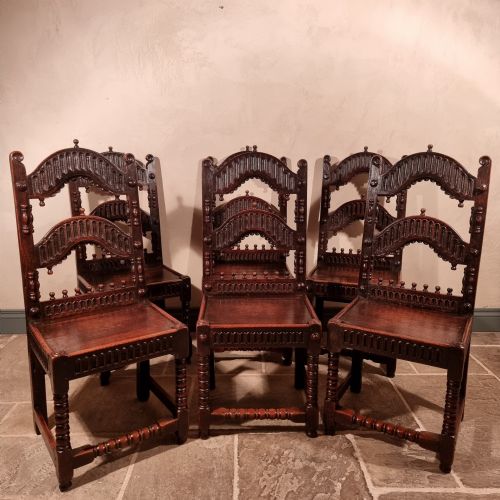


Jacobean Revival Chairs Set
When you search for a jacobean revival chairs set, you are looking at substantial oak dining suites built to echo seventeenth-century forms.
Jacobean Revival Chairs Set
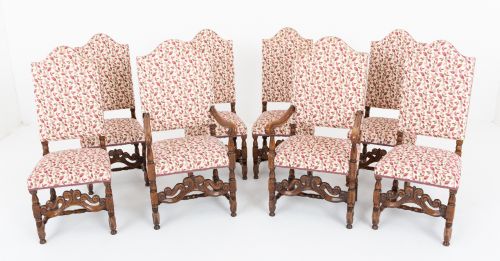
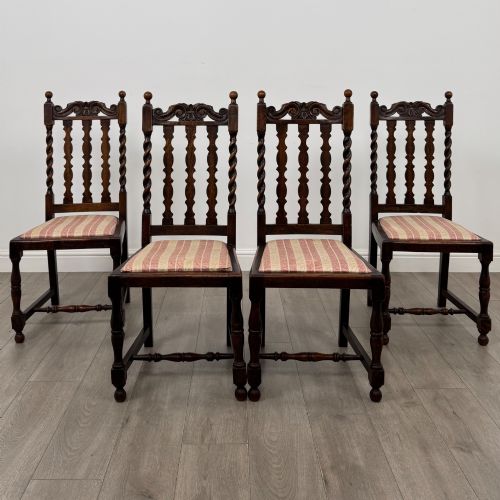
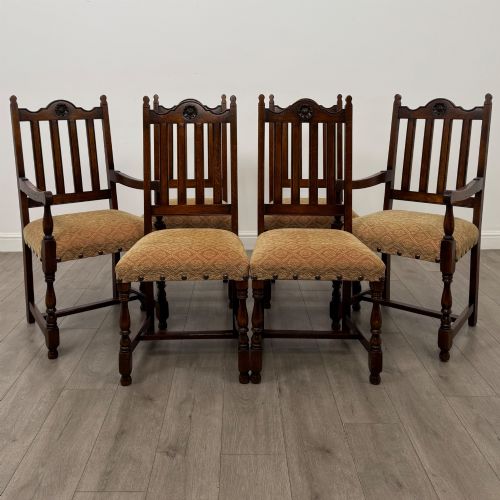
A jacobean revival chairs set brings heavy timber frames and high backs into a dining room, most frequently encountered in Edwardian or 1920s interpretations. These suites draw heavily on seventeenth-century aesthetics, incorporating high-backed seating designed to dominate a traditional dining space.
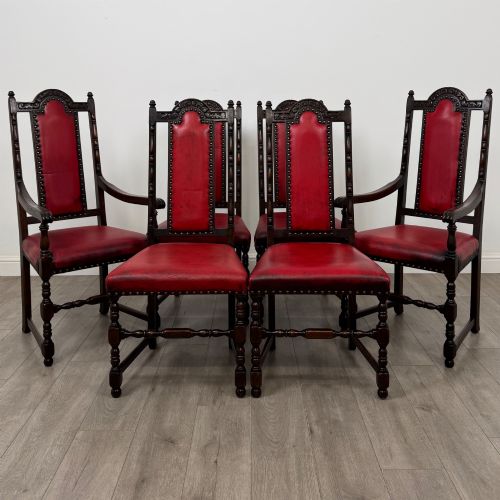
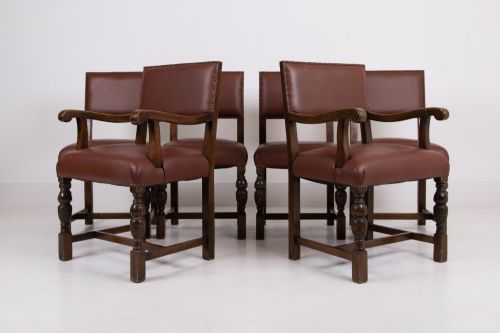
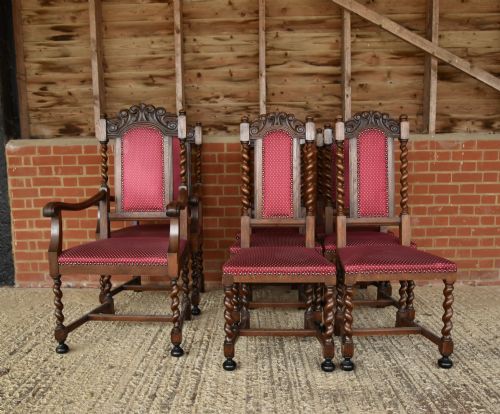
The configurations vary from modest sets of four up to grand gatherings of ten or twelve, sometimes accompanied by matching carvers with armrests. You will find dining chairs predominantly formed from oak, occasionally paired with leather or cane inserts to soften the rigid timber construction.
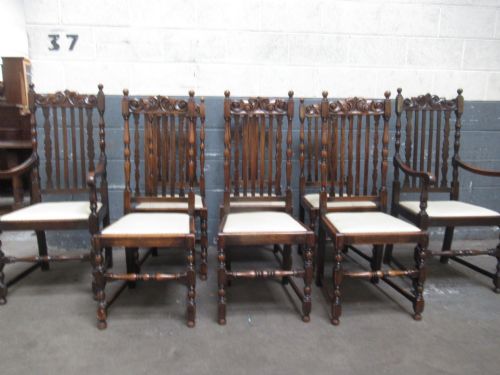
While Victorian examples lean into heavily carved and ornate embellishments, later twentieth-century iterations often favour the simplicity of barley twist legs and cleaner structural lines. This variation allows you to match the seating density and decorative weight to the scale of your interior.
Quality and Craftsmanship
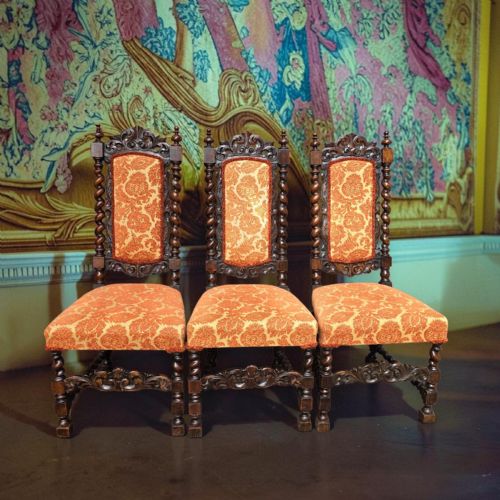
The distinction between ordinary and superior sets rests on the crispness of the hand-carved detailing and the thickness of the oak used in the uprights. Finer examples display deep, deliberate chisel work rather than shallow, mechanical pressing, giving the crest rails and splats a distinct sculptural presence.
Frame rigidity and the selection of well-seasoned timber dictate how well the seating withstands generations of use without loosening at the joints. Sets that retain matching grain patterns and uniform colour across all chairs command greater appreciation than assemblages gathered piecemeal.
Denby and Spinks Leeds
The Jacobean Revival Chairs Set Glossary
- Barley Twist
- A turned wood column resembling a twisted rope, frequently utilised on the legs and stretchers of revival seating. This decorative technique adds movement to otherwise solid oak frames.
- Carver
- An armchair designed with armrests, traditionally placed at the head of a dining table and matched to the surrounding side chairs. These pieces often feature more elaborate crest rails.
- Crest Rail
- The horizontal top member of a chair back, often shaped, carved, or arched in revival styles. It serves as the primary visual anchor for high-backed dining seating.
- Bergere
- A wooden-framed seat featuring woven cane panels on the backrest or seat base. This technique introduces lighter textures to heavy oak furniture.
- Derbyshire Chair
- A seventeenth-century style originating in the English Midlands, characterised by turned posts and intricately pierced back rails. Revival versions replicate this regional vernacular.
Jacobean Revival Chairs Set: Frequently Asked Questions
How do I date a jacobean revival chairs set?
Dating relies on examining the timber colour, tool marks, and the specific style of the revival movement, whether Victorian Gothic or Edwardian. Earlier nineteenth-century examples often feature darker, heavier hand-carved elements, while 1920s sets lean towards lighter oak and standard barley twists.
Hardware such as brass upholstery tacks and the type of secondary wood used underneath also provide clues. Comparing the wear patterns on the feet with the overall finish helps confirm whether the set dates to the Victorian era or the interwar period.
Can I mix carvers with standard chairs?
Historically, dining sets frequently included a pair of armchairs, known as carvers, to sit alongside four or six side chairs. This configuration was standard practice for large Edwardian and Victorian dining suites.
When living with these pieces, placing the carvers at the head and foot of the table maintains the traditional arrangement. Ensure the seat heights match if you are combining different pieces into a unified dining setting.
Are these chairs comfortable for modern dining?
High-backed timber chairs provide firm upright support, which suits formal dining but differs from modern cushioned seating. Many sets feature upholstered pads or leather inserts that offer a degree of give during extended meals.
If you intend to use them daily, consider the height of the backrest relative to your dining table and your preferred seating posture. Adding subtle, period-appropriate squab cushions can also increase comfort without altering the chair frames.