

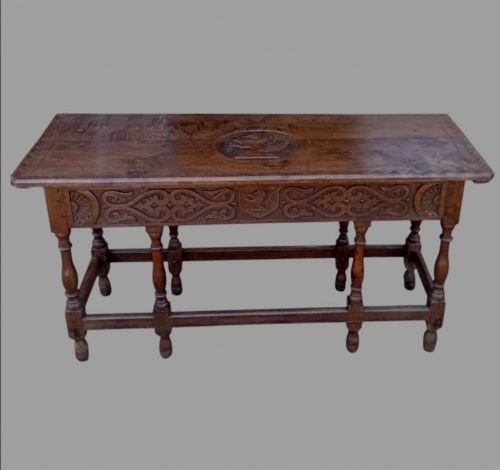
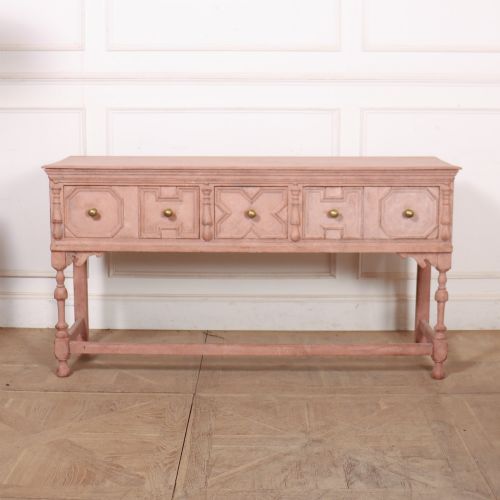
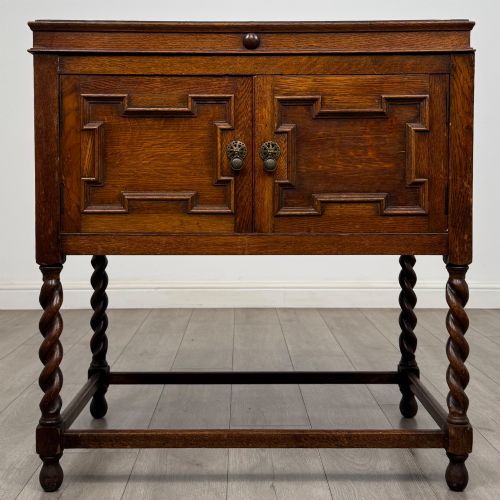
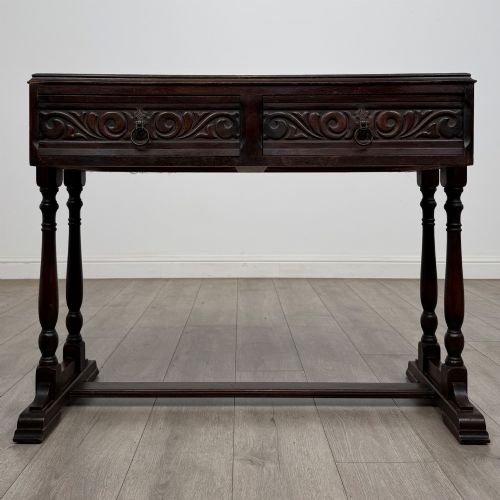
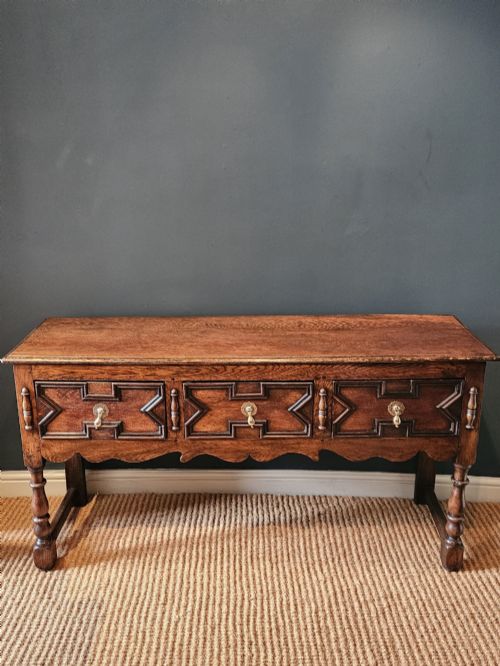
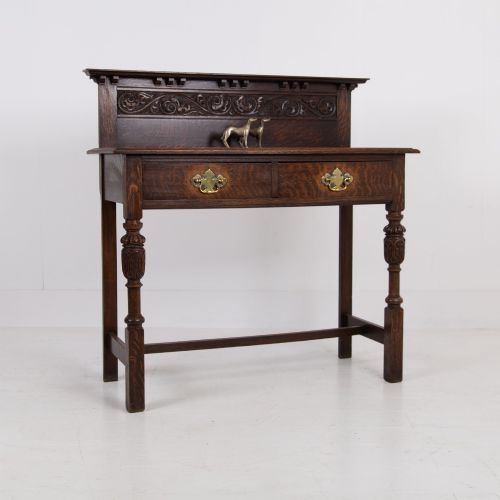

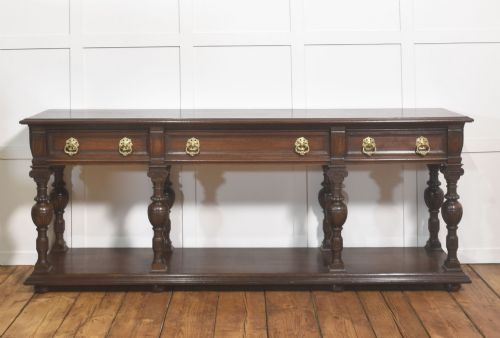
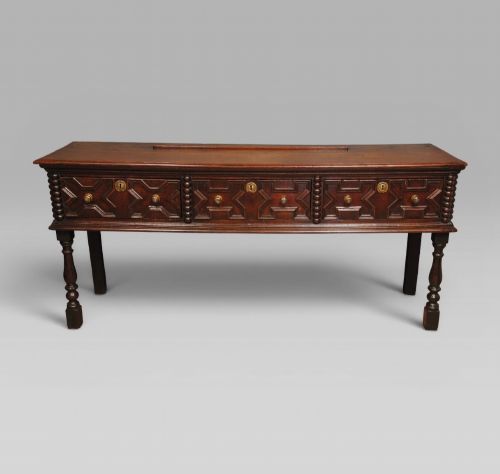
Jacobean Oak Server Table
A jacobean oak server table brings solid timber gravitas and centuries of utility into a modern dining room or hallway.
Jacobean Oak Server Table
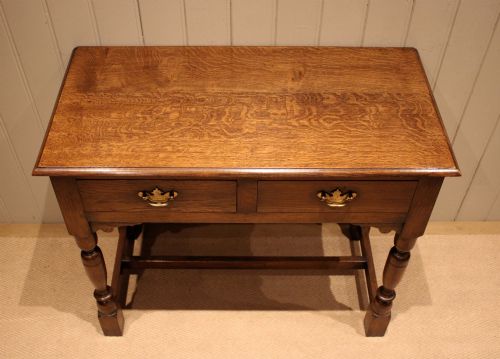
When you search for a jacobean oak server table, you encounter low boards, dresser bases, and heavy side tables designed for food preparation and service. These items originate from periods ranging from the seventeenth century through to revival eras in the nineteenth and twentieth centuries.
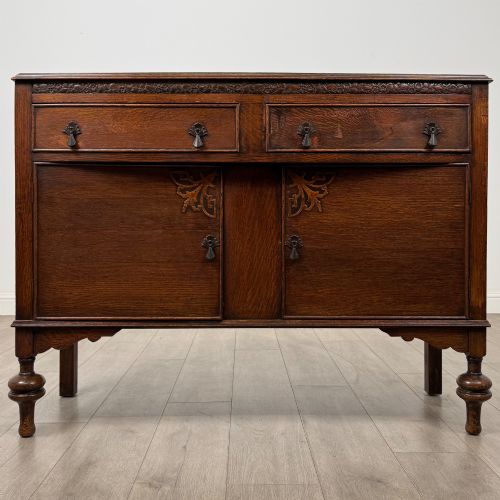
You are most likely to meet pieces built around nineteen-twenty or during the Edwardian period that adopt earlier styles. These later interpretations often combine traditional timber construction with proportions suited to domestic dining spaces.
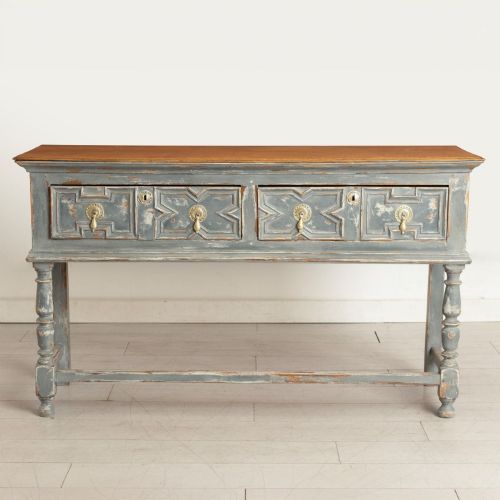
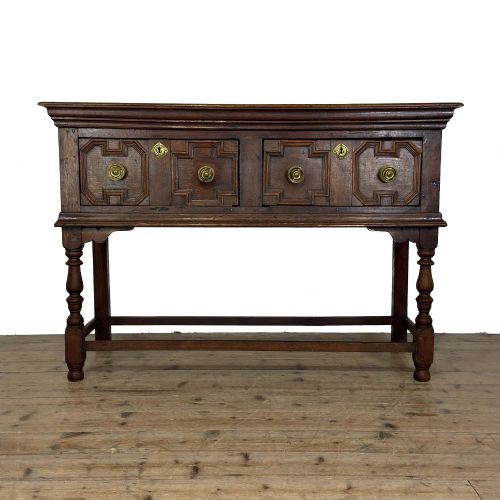
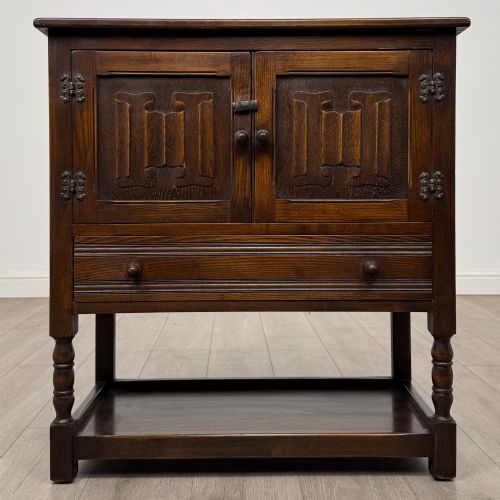
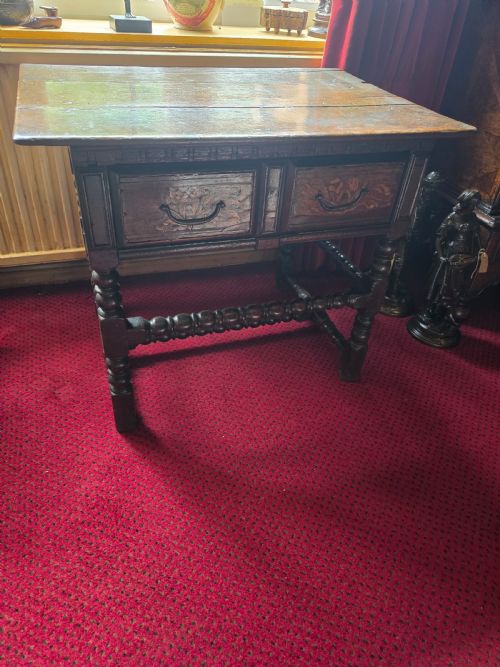
The form functions primarily as a low surface for display and serving, frequently incorporating drawers beneath the top board. Lower potboards or undershelves appear regularly across both seventeenth-century originals and later revival examples.
Materials and construction methods
Constructed predominantly from solid oak, these tables utilise heavy timber framing joined with traditional methods. Secondary additions of brass or iron appear in drawer pulls, hinges, and occasional decorative mounts.
Surfaces display various treatments including geometric mouldings, chip carving, and linenfold panels carved directly into the timber. Some examples show historical painted finishes or bleached surfaces applied during later periods.
Listings span from the seventeenth century through Victorian and Edwardian revivals up to nineteen-twenty, all sharing an oak and metal material palette.
Distinctions in construction and age
The distinction between seventeenth-century originals and later revival pieces rests in the patina of the timber and the hand-tooled nature of the joints. Early examples show tool marks and timber shrinkage consistent with age.
Proportion and decorative restraint separate finer examples from heavier, more rustic interpretations. Crispness in the geometric mouldings and the depth of the carved drawer fronts indicate the skill of the maker.
The Jacobean Oak Server Table Glossary
- Dresser base
- A low wooden sideboard fitted with drawers and occasionally a lower shelf, originally used in kitchens for food preparation and serving.
- Lowboy
- A small seventeenth or eighteenth-century table with drawers, standing on relatively tall legs.
- Geometric moulding
- Raised ornamentation applied to drawer fronts or panels in angular, repeating patterns.
- Potboard
- An open lower shelf fitted between the legs of a dresser base or serving table, traditionally used for storing pots and pans.
- Linenfold
- A style of wood carving that resembles folded parchment or fabric, popular during the Tudor and revival periods.
Jacobean Oak Server Table: Frequently Asked Questions
What is a server table?
A server table is a low wooden sideboard used for holding dishes and serving food in a dining room. They provide a sturdy surface and frequently include drawers for cutlery and linen.
Historically, these tables stood against dining room walls to assist hosts during meals. Today they function similarly while adding historical weight to an interior.
How do I date an oak table?
Dating relies on observing construction marks, timber shrinkage, and tool methods used on the wood. Seventeenth-century pieces display hand-cut joinery and heavy patination.
Revival pieces from the Edwardian era or nineteen-twenty often use machine-sawn timber alongside copied period motifs. Comparing the hardware and internal drawer construction helps confirm the era.
Where should I place a server?
These tables fit naturally in dining rooms, wide hallways, or living spaces against a blank wall. Their shallow depth allows them to sit comfortably in corridors without obstructing movement.
Ensure the room has sufficient clearance for the length of the board and any protruding drawer handles.
Are these tables solid wood?
The pieces recorded here use solid oak construction for their primary frames, tops, and drawer fronts. Heavy timber provides the structural integrity required for serving furniture.
Some revival examples incorporate secondary timbers in concealed areas like drawer linings while maintaining solid oak externally.