
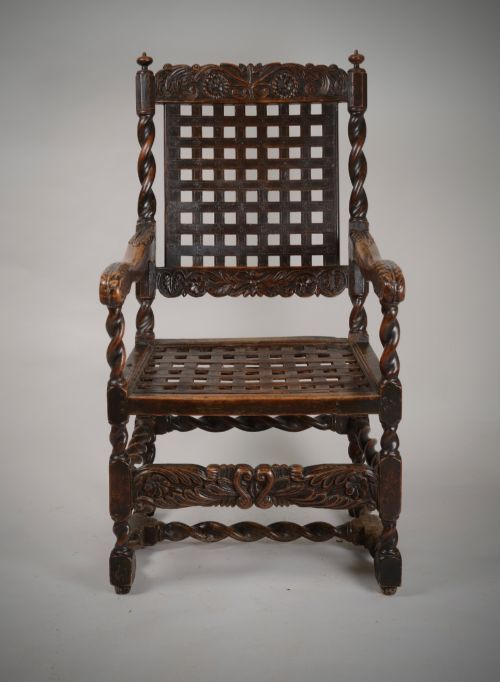
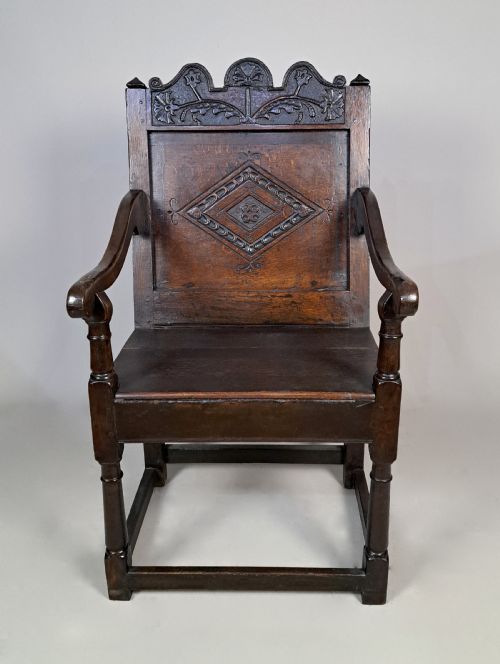
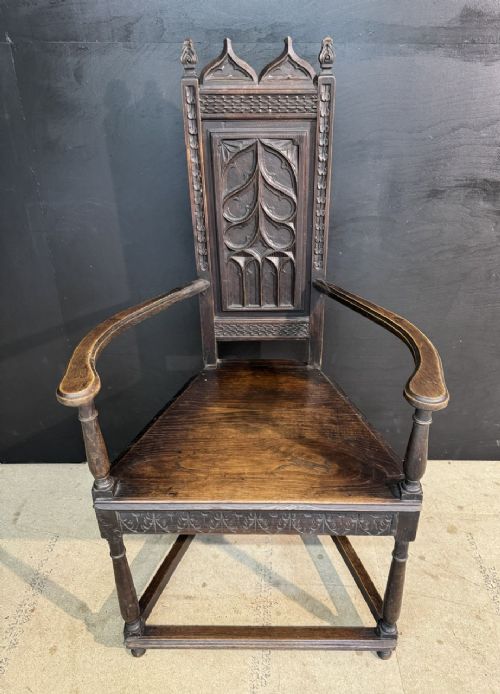

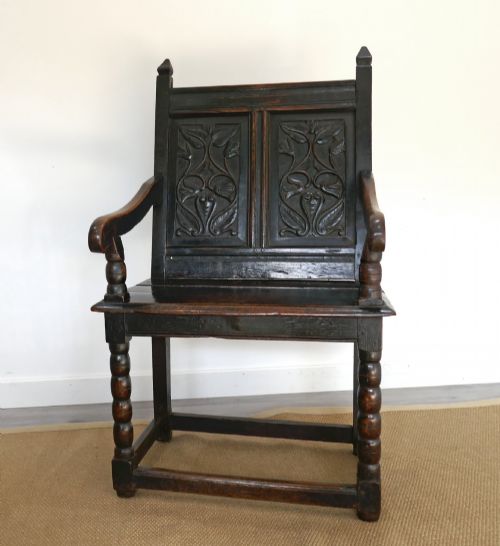
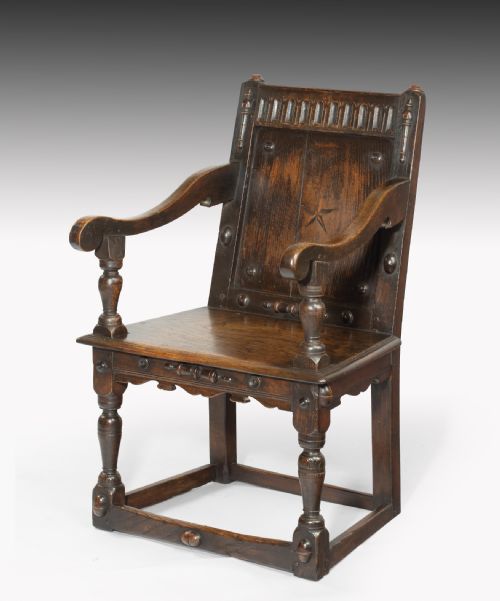
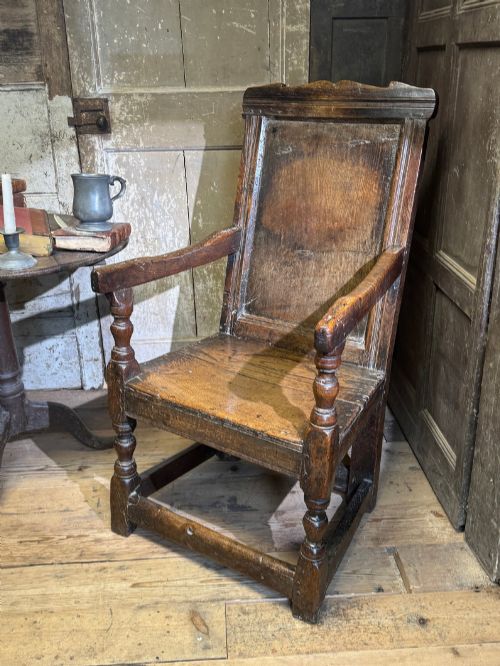


Jacobean Oak Open Chair
A jacobean oak open chair brings solid timber and centuries of joinery into a room, offering sturdy seating with carved panels.
Jacobean Oak Open Chair
When you search for a jacobean oak open chair, you encounter sturdy armchairs originating predominantly from the seventeenth century alongside revival interpretations spanning the eighteenth, nineteenth, and early twentieth centuries.
The form is characterised by a high back, solid wooden seat, and open arms, frequently referred to in listings as wainscot or carver chairs.
Examples on this page draw from English, Scottish, and regional origins such as Lancashire, Cheshire, and Yorkshire, with variations including child's chairs and fireside seats.
How they were made
Makers utilised solid oak, constructing frames through traditional joinery techniques such as mortise and tenon joints secured by wooden pegs.
Surface decoration relies on hand carving, wood inlay, and distinct turning techniques like bobbin turning and barley twist legs.
Upholstered versions incorporate materials like velvet, tapestry fabric, leather, and brass detailing to pad the seats and backs.
The inventory includes a dedicated child's wainscot armchair, proving that seventeenth-century comfort was occasionally scaled down for the smallest household members.
What varies in quality
The depth and crispness of the carved panels distinguish standard regional output from exceptional early period pieces.
The integrity of the original timber framing, the survival of early surface colour, and the restraint of later restorations determine the standing of an individual armchair.
The Jacobean Oak Open Chair Glossary
- Wainscot chair
- A heavy wooden armchair constructed primarily from oak with panelled backs, common in the seventeenth century.
- Carver armchair
- An open armchair with wooden armrests, traditionally placed at the head of a dining table.
- Bobbin turned
- A style of furniture leg or stretcher shaped on a lathe to resemble a series of bobbins or spools.
- Barley twist
- A spiral turning technique resembling a twisted rope, popular in seventeenth-century furniture and revived in later periods.
- Wood inlay
- Pieces of contrasting timber fitted into recessed portions of the oak surface to create decorative patterns.
Jacobean Oak Open Chair: Frequently Asked Questions
Are these chairs comfortable to sit in?
Early wainscot chairs feature rigid wooden seats and straight backs, designed for upright posture rather than lounging.
Later revival models often incorporate upholstered pads, leather, or tapestry fabric for added comfort during extended seating.
How do I identify a seventeenth century original?
Authentic period pieces show tool marks from hand working, pegged joinery, and timber shrinkage appropriate for age.
Period examples also display natural patination and surface wear accumulated over centuries of continuous domestic use.
What is the difference between wainscot and carver chairs?
Wainscot specifically denotes a heavy wooden armchair with a panelled back originating from the seventeenth century or earlier.
Carver is a broader term applied to open armchairs designed to match a set of dining chairs, appearing across multiple centuries.
How should I care for an oak frame?
Keep wooden furniture away from direct heat sources and sudden humidity changes to prevent the oak from splitting.
Apply a light application of beeswax occasionally to maintain the surface sheen and nourish the dry timber.