

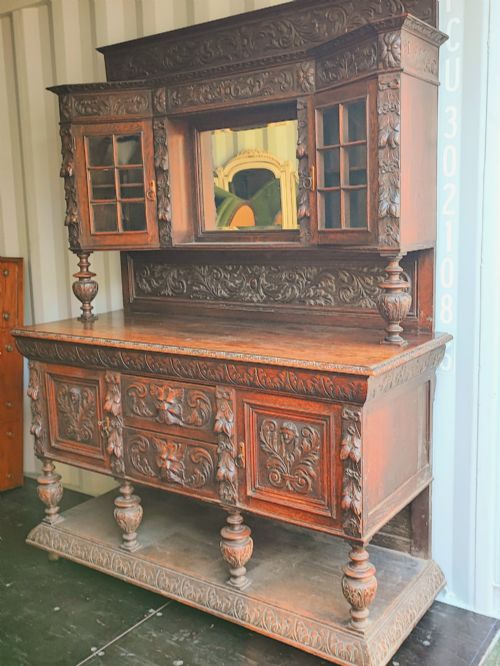
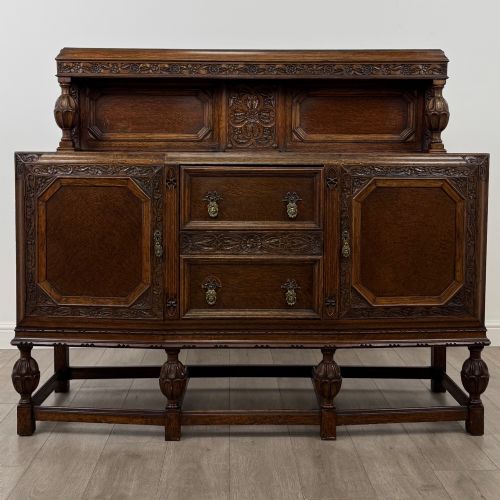

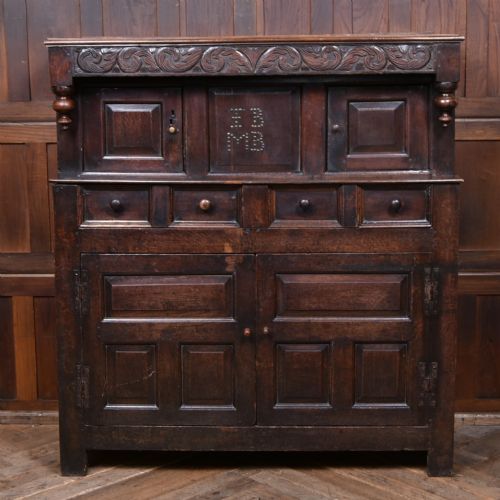
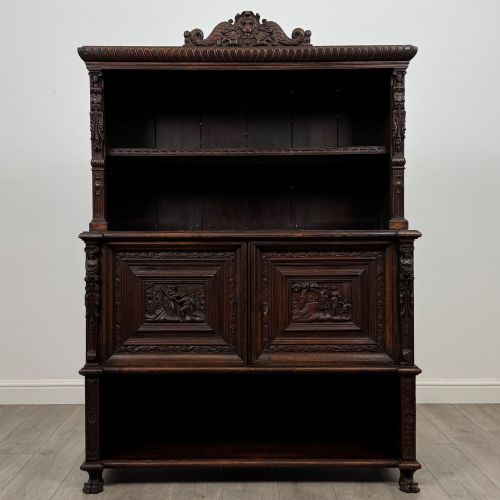



Jacobean Oak Court Cupboard
A jacobean oak court cupboard brings substantial historic timber into a room, offering enclosed display and storage through traditional joinery.
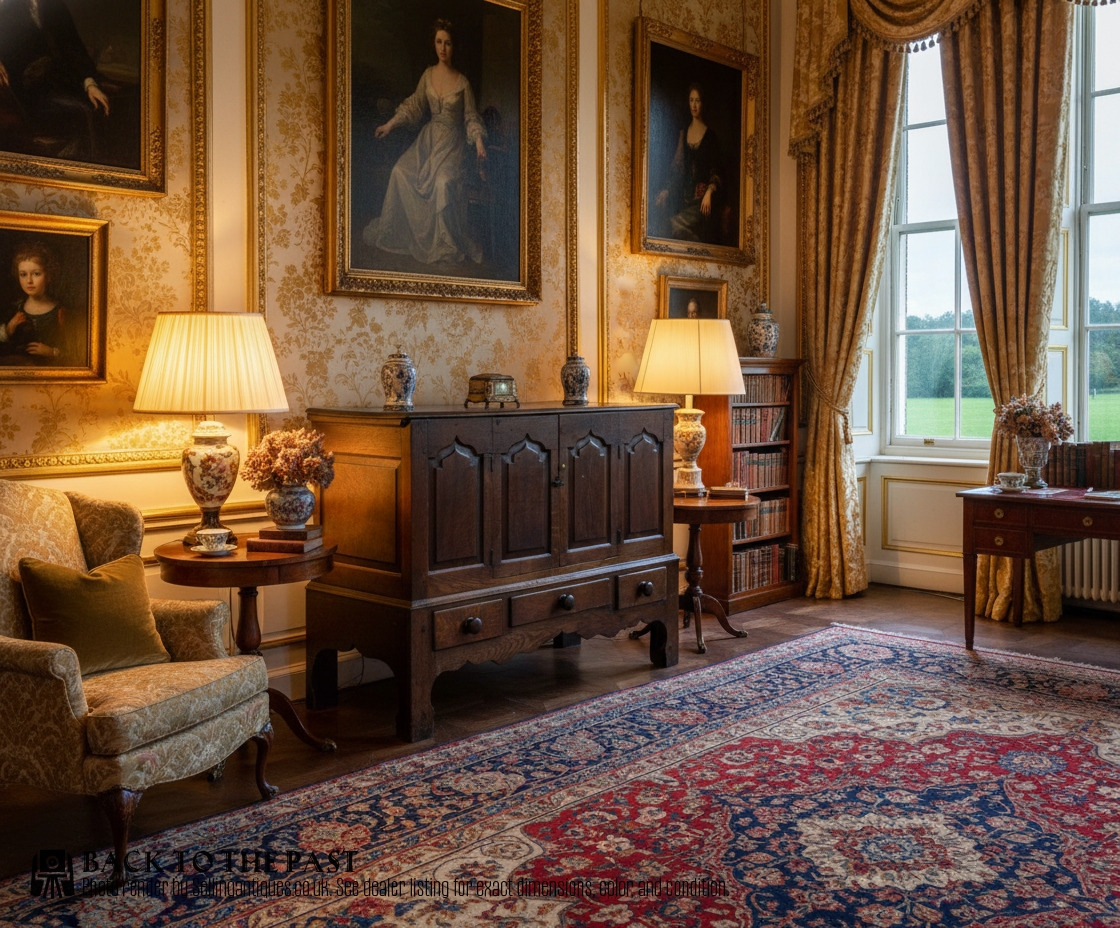
Jacobean Oak Court Cupboard
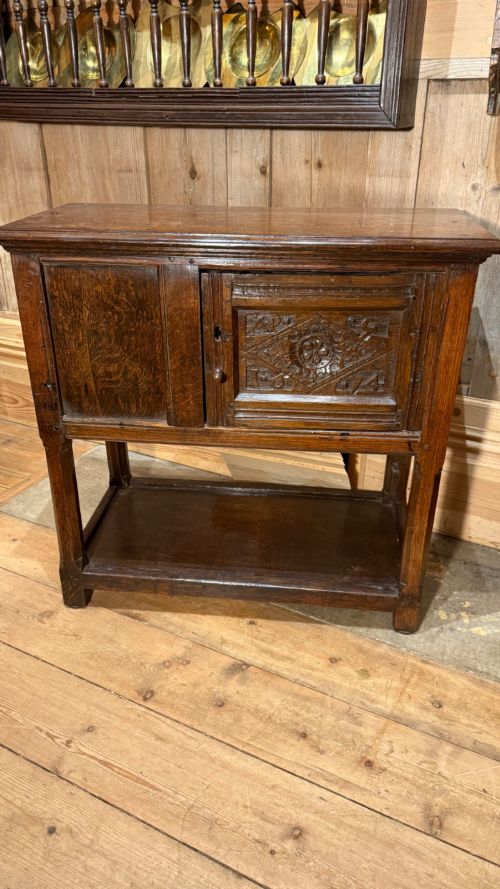
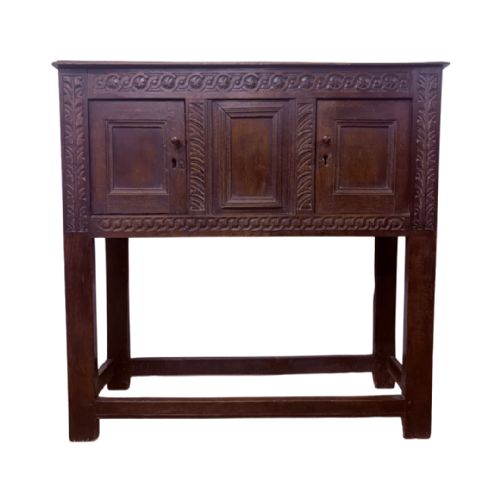
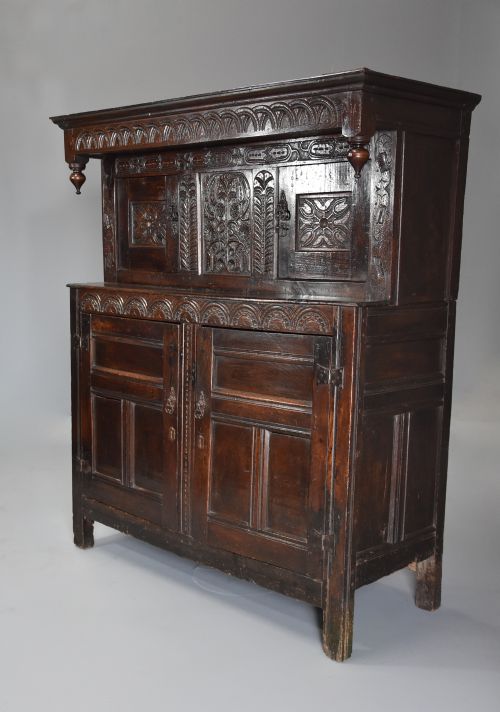
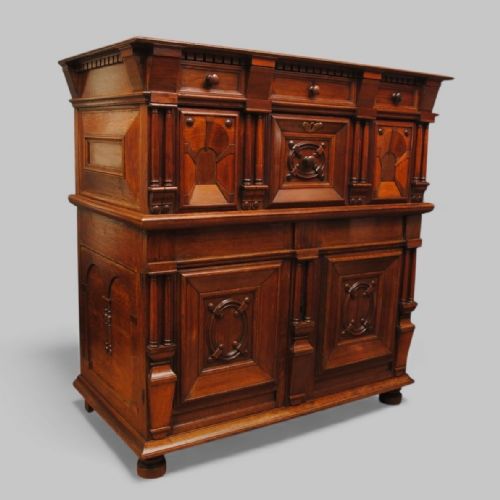
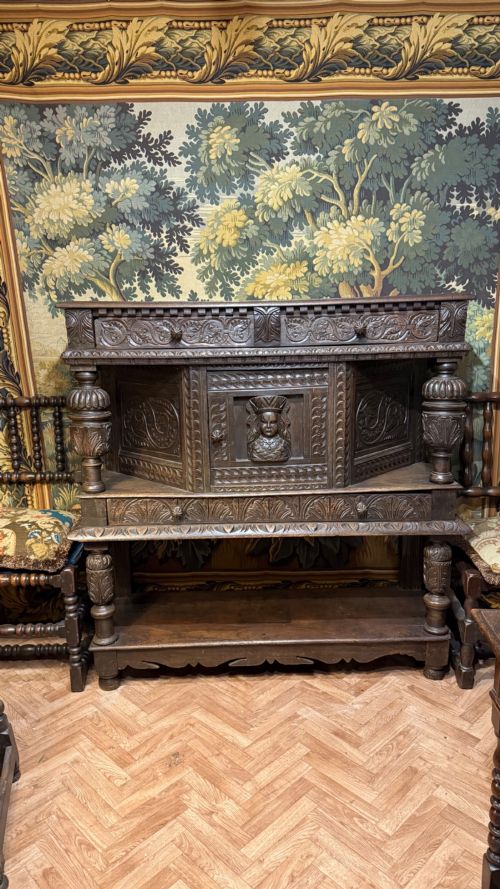
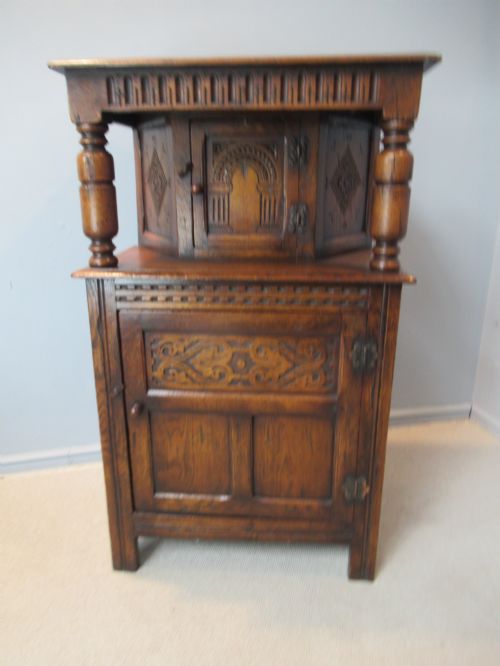
A jacobean oak court cupboard is a substantial storage piece historically used for displaying plate and storing provisions in domestic interiors. When exploring these listings, buyers encounter both authentic seventeenth-century examples and later revival pieces from the Victorian and Edwardian periods.
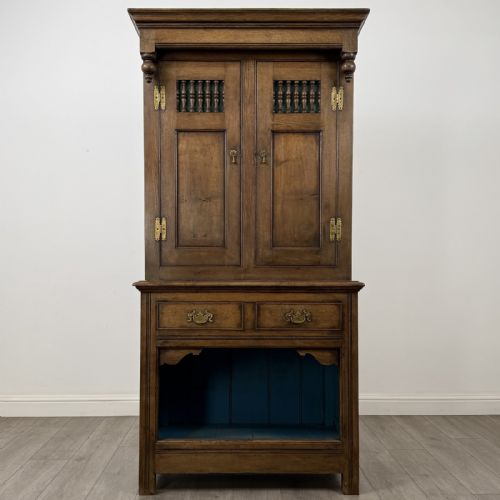
The form typically combines an enclosed upper or lower section with recessed or open display tiers. Alongside traditional court cupboards, the evidence records related regional forms including livery cupboards, press cupboards, and sideboards.
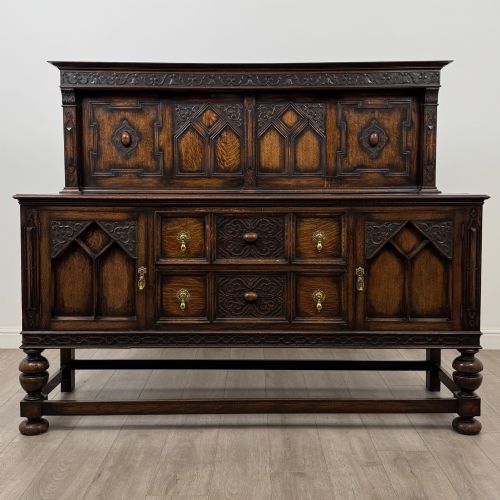
Original seventeenth-century pieces appear alongside nineteenth-century Victorian interpretations and early twentieth-century revival works dated across the nineteen-teens, twenties, and thirties. This variety spans rural country workshops and more formal urban cabinet-making traditions.
Assessing quality and authenticity
Quality rests upon the integrity of the timber, the depth and crispness of the hand-carved ornamentation, and the survival of original surface patination. Seventeenth-century examples show the tool marks and gradual weathering expected of early domestic furniture.
Revival pieces from the Victorian and Edwardian eras vary according to the fidelity of their historical styling and the weight of the solid oak employed in their construction. Later twentieth-century items often present simpler lines and lighter proportions while maintaining functional utility.
Jacobean Oak Court Cupboard Retail Price Guide 2026
Typical asking prices for jacobean oak court cupboard among the pieces listed under this phrase on Sellingantiques today, from the lower quarter to the upper quarter. They describe what is for sale here now, not the wider market.
Materials recorded across the available pieces include solid English oak, walnut, fruitwood, iron, brass, glass, and mirror.
The Jacobean Oak Court Cupboard Glossary
- Court cupboard
- A traditional standing cupboard featuring two stacked stages, often with a recessed upper section used for displaying plate.
- Livery cupboard
- An early storage cabinet designed for food and candles, typically ventilated with turned spindles or pierced panels.
- Press cupboard
- A large storage furniture form enclosing deep shelving or hanging space behind heavy panelled doors.
- Linenfold
- A carved decorative panel moulding resembling folded cloth, popular in early oak joinery.
- Patina
- The surface sheen and colour developed by aged timber through decades of handling, polishing, and exposure.
Jacobean Oak Court Cupboard: Frequently Asked Questions
What is a jacobean oak court cupboard?
A jacobean oak court cupboard is a heavy timber storage and display piece originating in the seventeenth century, characterised by stacked tiers and carved woodwork.
Later centuries produced numerous revival versions that imitate these early domestic forms while serving modern interior storage needs.
How were these cupboards originally used?
Households utilised these pieces in dining halls and parlours to store food, utensils, and valuable tableware.
The upper recessed stage displayed plate and drinking vessels during feasts to signal the household's social status.
How do I date a court cupboard?
Dating relies upon examining construction methods, tool marks, timber shrinkage, and the style of the carved ornamentation.
Seventeenth-century examples display pegged joined frames and untouched patination, whereas Victorian and Edwardian revival pieces show nineteenth or twentieth-century manufacturing techniques.
Are all these cupboards from the seventeenth century?
No, the selection includes genuine seventeenth-century pieces alongside Victorian, Edwardian, and early twentieth-century revival items.
Makers across the nineteenth and twentieth centuries frequently produced high-quality interpretations in the Jacobean taste.
What woods besides oak are found?
While English oak forms the primary material for the vast majority of these cupboards, some pieces incorporate walnut and fruitwood.
Iron and brass hardware also appear on hinges, locks, and handles across different periods.