




Jacobean Oak Bureau Desk
A jacobean oak bureau desk brings heavy timbers, fall fronts and fitted interiors into a room to organise daily correspondence.
Jacobean Oak Bureau Desk
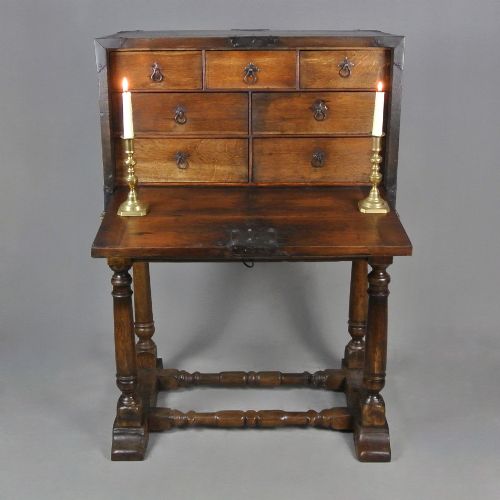
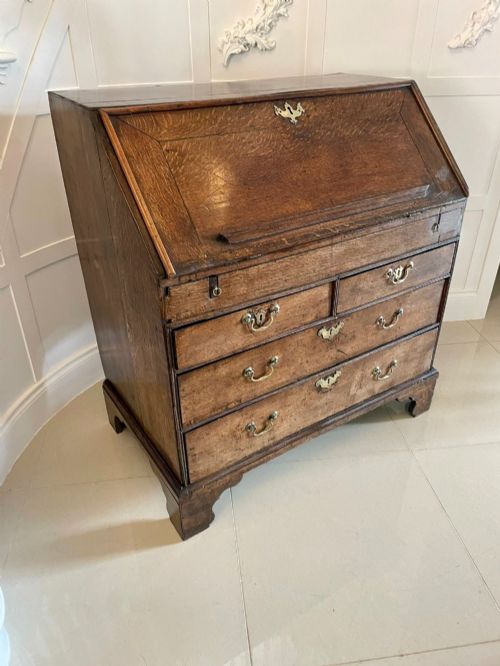
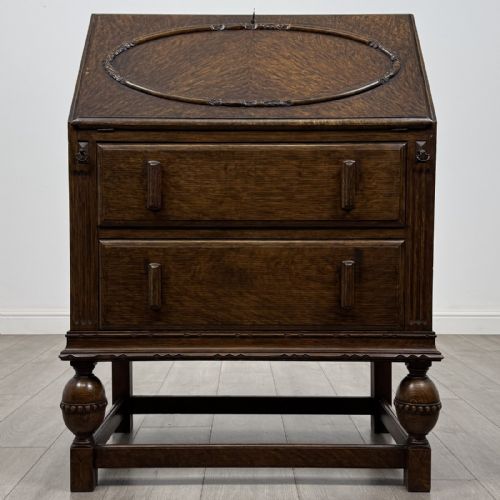
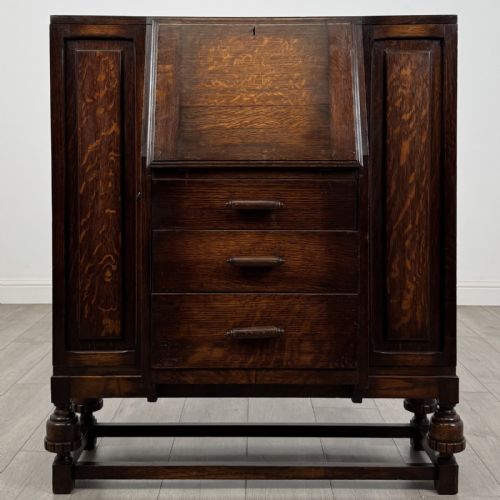
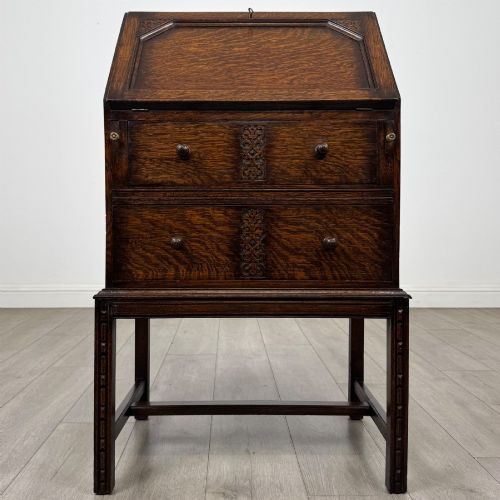
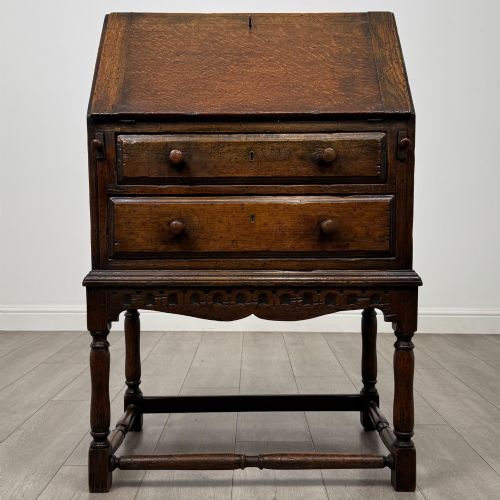
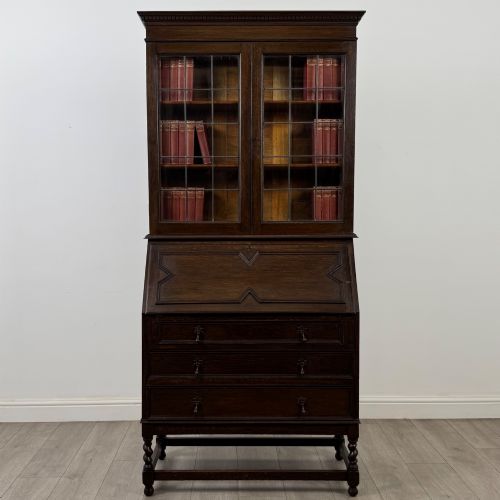
A jacobean oak bureau desk combines a sloping writing flap with internal compartments, drawers and sometimes an upper bookcase or cabinet section. These pieces range from early provincial examples to later revival interpretations produced during the Edwardian era and the 1920s.
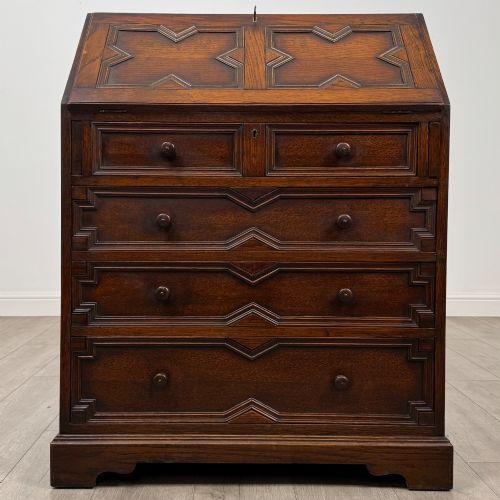
Most pieces encountered on this page belong to the twentieth-century revival movements or the seventeenth century, utilising solid oak, oak veneer and brass hardware. Forms vary from simple writing slopes and standing desks to large bureau bookcases with glazed upper doors.
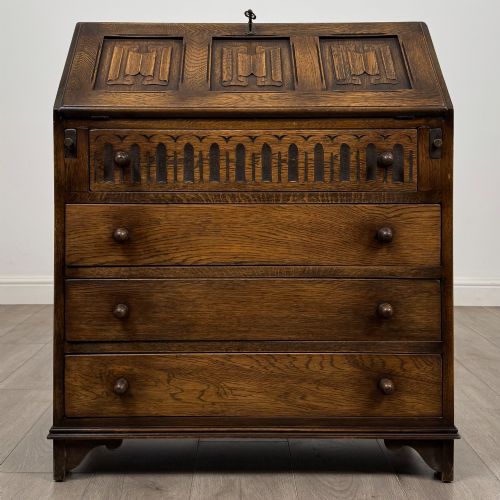
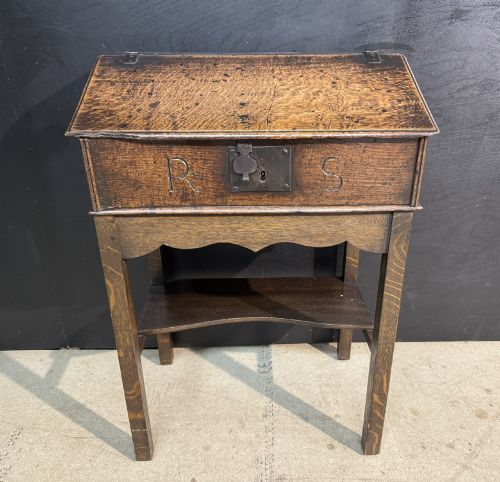
Buyers will find distinct vernacular characteristics alongside formal Jacobean styling, such as linenfold panelling, carved ornamentation and writing drawers with moving interiors. The scale ranges from small table-top boxes on stands to substantial cabinet furniture.
What varies in quality
The distinction between ordinary and superior pieces rests upon the crispness of the timber carving, the selection of figured oak and the structural integrity of the fall front hinges and internal fittings. Finer examples show thoughtful proportion and careful matching of veneers where used.
Interior complexity marks out the better specimens, where hidden compartments, moving elements and well-executed pigeonholes demonstrate superior cabinet-making skills. The presence of original stands, period brassware and untouched surfaces adds further distinction to early and revival pieces alike.
Jacobean Oak Bureau Desk Retail Price Guide 2026
Typical asking prices for jacobean oak bureau desk among the pieces listed under this phrase on Sellingantiques today, from the lower quarter to the upper quarter. They describe what is for sale here now, not the wider market.
Materials recorded across the inventory include oak, brass, glass, iron, oak veneer and decorative wood inlay.
Wylie & Lochhead
The Jacobean Oak Bureau Desk Glossary
- Bureau
- A writing cabinet featuring a sloping lid that folds down to create a desk surface, enclosing small drawers and pigeonholes.
- Linenfold
- A style of wood carving that imitates folded linen, commonly found on panels of early and revival oak furniture.
- Writing slope
- A portable or standing box with an angled top designed for reading or writing.
- Bureau bookcase
- A tall piece of furniture combining a lower desk bureau with an upper shelving or cabinet section, often glazed.
- Vernacular
- Furniture made by local craftsmen using regional traditions and readily available materials rather than following metropolitan court fashions.
Jacobean Oak Bureau Desk: Frequently Asked Questions
How do I use a bureau desk?
Lower the sloping front panel to create a writing surface while keeping correspondence and stationery stored neatly within the internal pigeonholes and small drawers behind it.
Close and lock the fall front when not in use to conceal papers and present a tidy cabinet appearance in your living space.
What is a bureau bookcase?
A bureau bookcase is a dual-purpose piece that combines a sloping desk compartment at the bottom with a taller set of shelves or cabinets enclosed by doors above.
These upper sections frequently feature glass panels to display books while keeping them protected from dust.
How do I tell seventeenth-century pieces apart from later revivals?
Seventeenth-century pieces display authentic signs of age in the timber grain, hand-cut joinery methods and vernacular construction techniques characteristic of the period.
Twentieth-century revival items, including Edwardian and 1920s examples, often replicate Jacobean styles using machine-sawn elements and standardised hardware.
How should I care for dark oak furniture?
Keep oak furniture away from direct heat sources and strong sunlight to prevent the timber from drying out or the finish from fading over time.
Apply quality beeswax sparingly and buff gently with a soft cloth to maintain the natural sheen of the wood without building up heavy residues.