

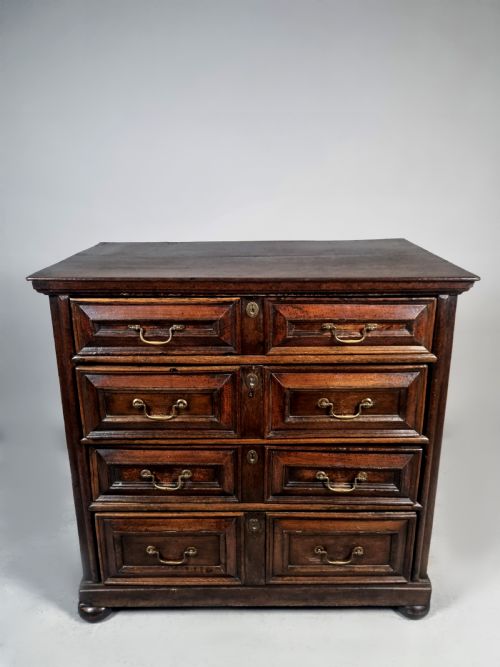
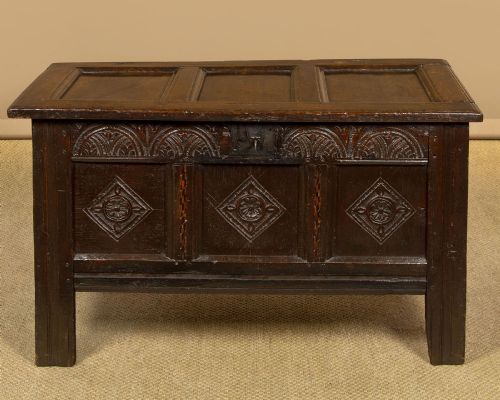
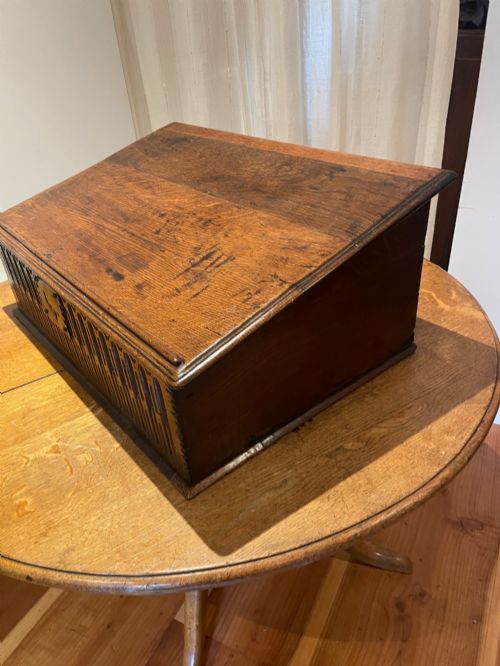
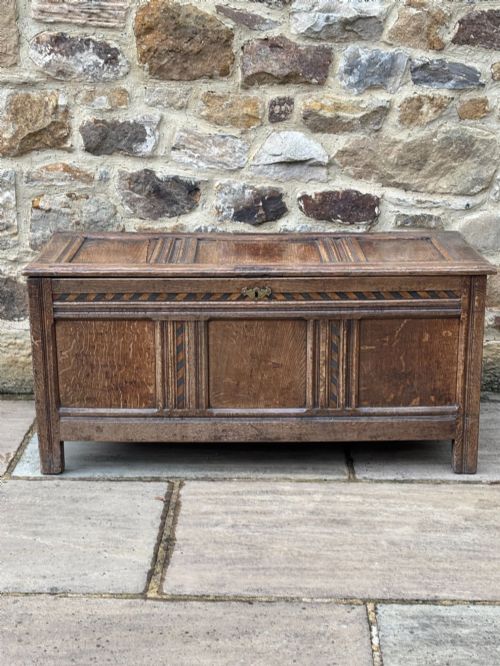

Jacobean Coffer
A jacobean coffer provides heavy timber storage with centuries of presence, offering a grounded anchor for an interior.
Jacobean Coffer
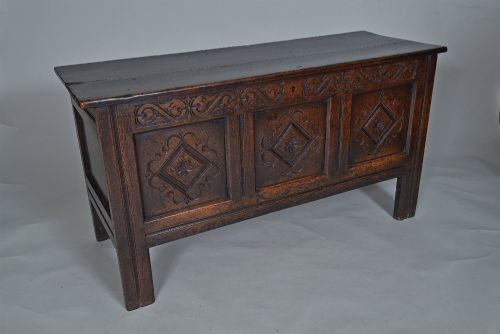
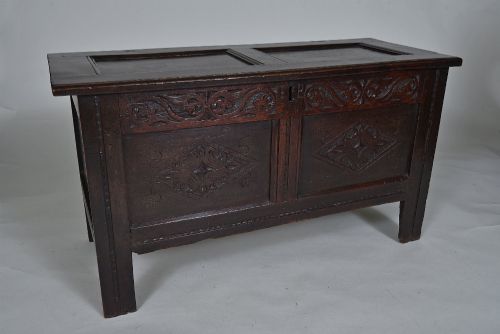
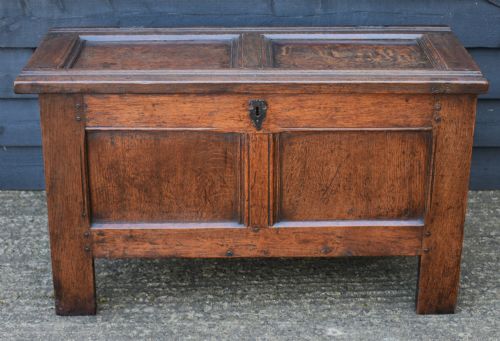
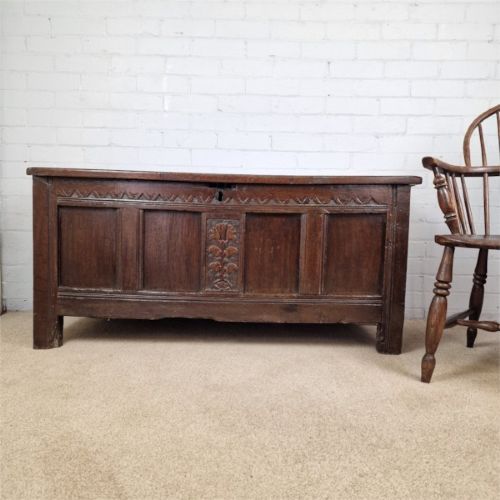
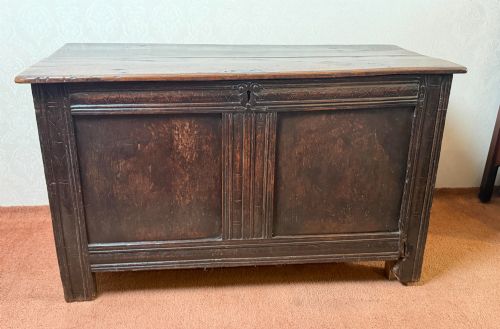
A jacobean coffer is a sturdy wooden chest designed for domestic storage, often featuring a hinged lift top and panelled construction. When searching this phrase, buyers encounter substantial pieces originating from the seventeenth century alongside later revival interpretations.
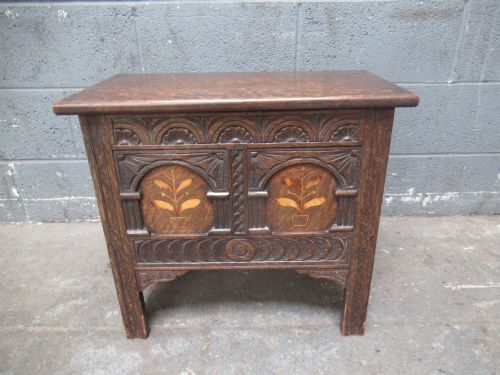
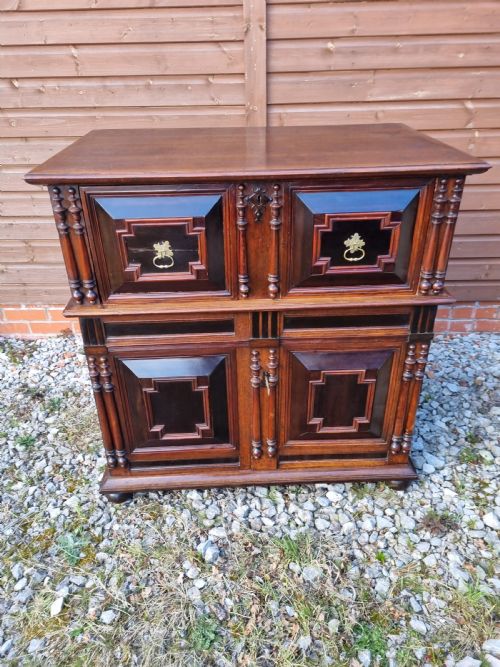
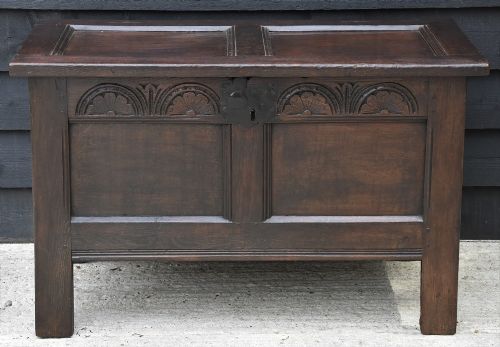
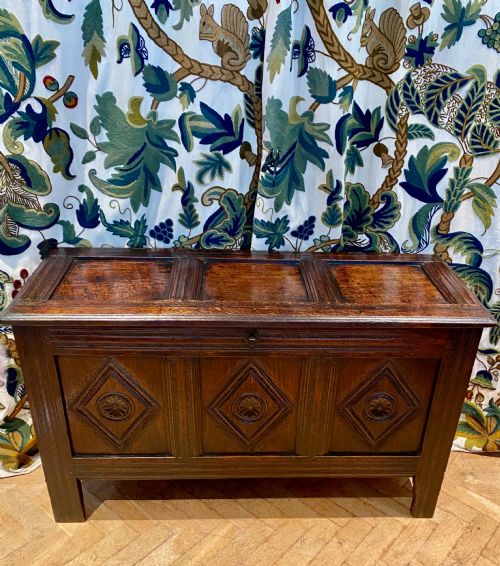
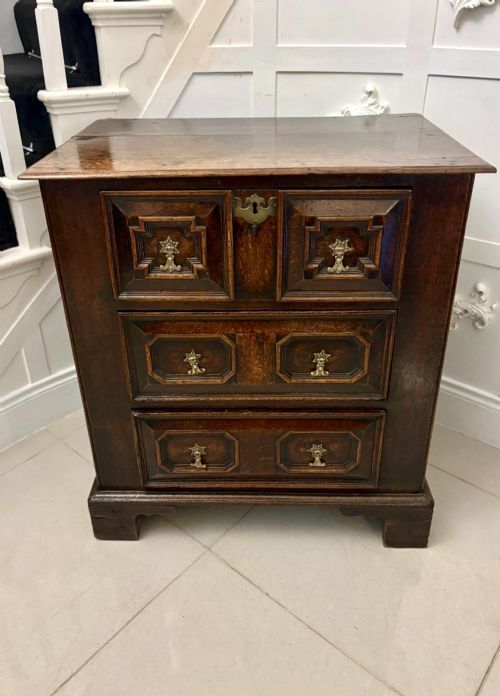
The form is most commonly met as an oak box, sometimes fitted with internal compartments or drawers below the main chamber. These containers served varied households for linens, documents and valuables.
Surviving examples span from the early seventeen-hundreds back to the jacobean era, with later twentieth-century revival pieces also appearing on the market. Buyers find both plain utility boxes and highly carved decorative chests.
How they were made
These chests rely primarily on solid oak, shaped through joined framing where stiles and rails hold thin floating panels in place. Iron and brass hardware such as strap hinges, locks and escutcheons secure the structure.
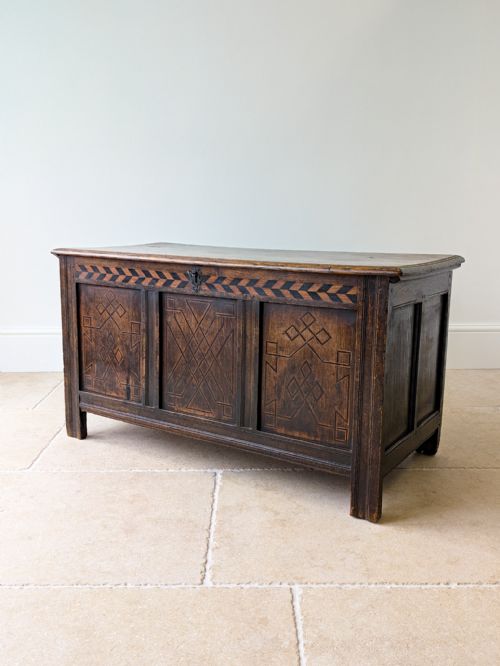
Carpenters utilised mortise and tenon joints fastened with wooden pegs to build a rigid frame that resisted the seasonal movement of timber. Surface enrichment involved hand carving, geometric mouldings and occasional marquetry inlay using mixed woods.
Jacobean Coffer Retail Price Guide 2026
Typical asking prices for jacobean coffer among the pieces listed under this phrase on Sellingantiques today, from the lower quarter to the upper quarter. They describe what is for sale here now, not the wider market.
Many seventeenth-century coffers still carry the ghostly shadow marks of vanished iron lock plates that once kept local secrets safe.
What varies in quality
The depth and crispness of the hand carving separate standard utilitarian boxes from finer commission pieces, where high-relief work defines the facade. Timber selection also dictates grade, with quarter-sawn English oak displaying pronounced medullary rays that signal superior material selection.
Integrity of construction defines the standing of a coffer, particularly the survival of original board bottoms, hinges and lid cleats. Pieces retaining their early patination and uncompromised joined frames hold greater character than heavily restored examples.
The Jacobean Coffer Glossary
- Joined oak
- Construction method using mortise and tenon joints secured by wooden pegs rather than modern fasteners. This technique provides structural stability to early furniture.
- Linenfold
- A style of wood carving resembling folded parchment or linen, commonly used on panels during the period. It gives a textured, vertical pattern to the surface.
- Mule chest
- A storage chest fitted with one or more drawers beneath the main compartment. This form bridges the evolution between the traditional coffer and the chest of drawers.
- Marquetry inlay
- Decorative patterns created by fitting contrasting wood veneers into prepared recesses. It adds pictorial or geometric variety to plain timber surfaces.
- Strong box
- A heavily reinforced security chest fitted with robust iron bands and complex locking mechanisms. These containers protected valuable documents and coin.
Jacobean Coffer: Frequently Asked Questions
What is a jacobean coffer used for?
These chests originally served households as secure storage for valuable textiles, garments, blankets and household documents. Their flat lids also allowed them to function as tables or benches in early rooms.
Today, they suit modern living spaces as practical storage trunks at the foot of a bed or as coffee tables in a sitting room.
How do I date a jacobean coffer?
Dating relies on examining construction methods, tool marks, timber characteristics and stylistic motifs. Seventeenth-century pieces typically show hand-split oak boards, pegged joints and distinctive geometric mouldings.
Revival pieces made in the twentieth century often reveal mechanical saw marks and standardised fixings upon closer inspection.
Are these coffers made of solid oak?
Most pieces recorded in the evidence utilise solid oak or English oak construction, reflecting the dominant timber of the period. Some examples incorporate mixed inlay woods for decorative marquetry elements.
Revival versions from later centuries also rely on solid oak frameworks to replicate the weight and appearance of seventeenth-century originals.
How do I care for an antique coffer?
Preserving the wood requires maintaining stable room humidity away from direct heat sources and strong sunlight. Regular dusting with a dry cloth keeps the surface clean without stripping the historic patina.
Application of traditional wax polish helps nourish the dry oak and protects the natural finish over time.