

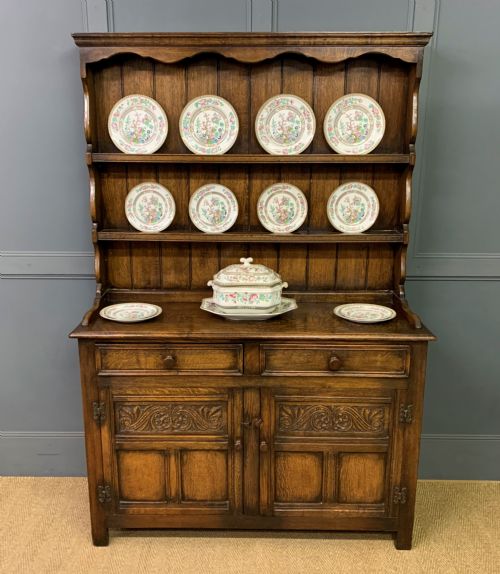


Jacobean Carved Sideboard Rack
These jacobean carved sideboard rack pieces are heavy oak dressers topped with plate racks, built to anchor a dining room.
Jacobean Carved Sideboard Rack
When you search for a jacobean carved sideboard rack, you encounter sturdy oak furniture built to display tableware and store provisions. These pieces combine a lower base with drawers or cupboards and an upper wooden tier for plates.
The selections span the eighteenth century up through the early twentieth century, taking shape as revivalist works from nineteen hundred to nineteen thirty alongside older examples. You will frequently meet Jacobean revival styles and English country interpretations on this page.
Forms range from simple Welsh dressers to grander dressers and hutches featuring deep carvings. The base units function as sideboards while the upper racks hold ceramics and pewter in plain sight.
How they were made
Cabinet makers constructed these dressers primarily from solid oak, utilising its dense grain to support heavy carving and daily use. Artisans shaped panels and framework using traditional joinery methods suited to heavy timber.
Hardware details incorporate brass and iron fixtures for hinges, pulls, and structural reinforcement. Metal components provide functional contrast to the dark timber surfaces and deep relief work.
Jacobean Carved Sideboard Rack Retail Price Guide 2026
Typical asking prices for jacobean carved sideboard rack among the pieces listed under this phrase on Sellingantiques today, from the lower quarter to the upper quarter. They describe what is for sale here now, not the wider market.
Listings feature oak dressers spanning the eighteenth century through the nineteen thirties, including Jacobean Revival and Edwardian periods.
What varies in quality
The depth and crispness of the hand carving dictate the distinction between standard production and superior craftsmanship. Deeper relief work on the oak panels and borders shows greater skill from the maker.
The integration of the upper rack to the lower sideboard determines structural harmony. Better examples demonstrate seamless joinery where timber patination matches evenly across both sections.
The Jacobean Carved Sideboard Rack Glossary
- Jacobean Revival
- A nineteenth and twentieth century style mimicking seventeenth century English furniture forms. It relies heavily upon dark oak, geometric mouldings, and turned legs.
- Welsh Dresser
- A traditional kitchen or dining room furniture piece combining a base cupboard with an open plate rack. This format originated for domestic storage and display.
- Plate Rack
- The upper shelving unit attached to a dresser designed to display ceramic plates upright. Grooves along the shelves keep the dishes from sliding forward.
- Oak
- A hard, durable timber favored for centuries in English cabinet making. Its distinct grain accepts deep carving and dark staining well.
Jacobean Carved Sideboard Rack: Frequently Asked Questions
What is a jacobean carved sideboard rack?
It is a traditional oak furniture combination featuring a lower storage base and an upper display shelf for plates.
These pieces emerged in various revival periods to bring historical character into dining rooms and large kitchens.
How do I date a carved oak dresser?
Dating relies on examining the construction methods, wood patination, and stylistic cues present in the carving. Revival pieces from the early twentieth century often display cleaner internal joints than eighteenth century originals.
Hardware such as brass hinges and iron pulls also provide clues to the manufacturing era.
Where should I place a dresser rack?
These large oak pieces suit dining rooms, large kitchens, or spacious hallways where their height and depth can be accommodated safely. Ensure the wall allows secure fixing if the upper rack requires extra stability.
Keep them away from direct heat sources to protect the solid oak timber from drying out.
Are these dressers suitable for daily use?
The sturdy oak construction and practical shelving make them entirely functional for everyday storage of tableware and linens. The lower cupboards handle heavier items while the upper rack displays decorative ceramics.
Routine maintenance involves simple dusting and occasional waxing to preserve the dark finish.