
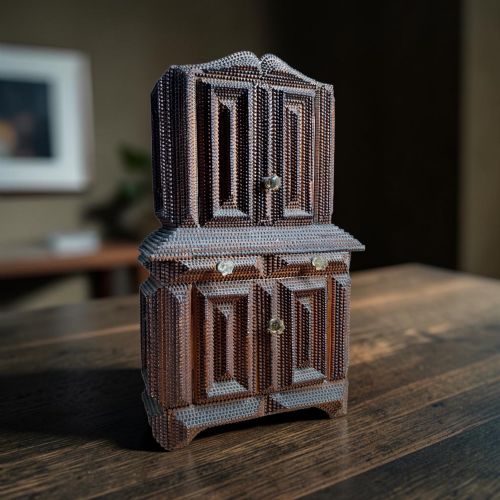
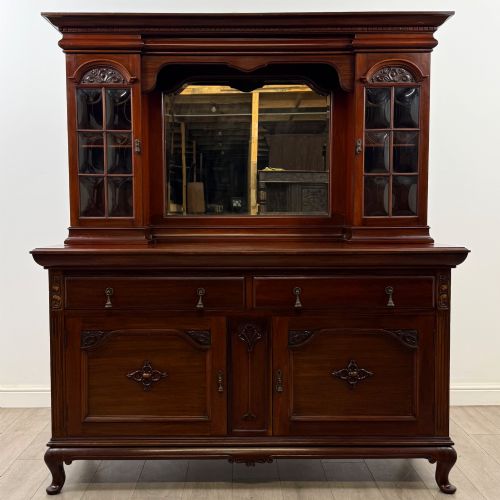


Dark Wood Dresser Hutch
A dark wood dresser hutch brings substantial storage and rustic presence to a room, spanning periods from the eighteenth century through the Edwardian era.
Dark Wood Dresser Hutch
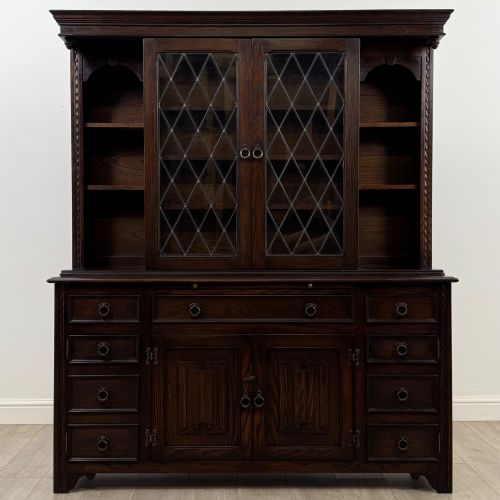
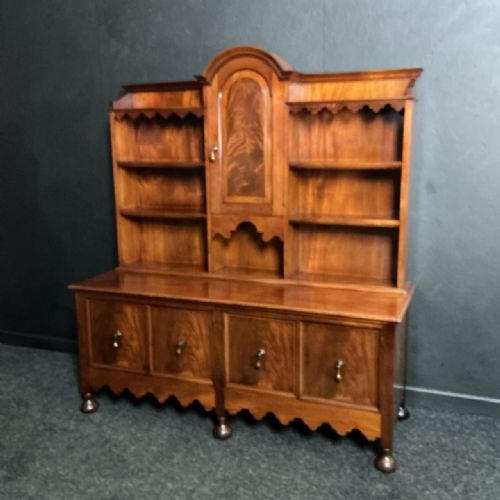
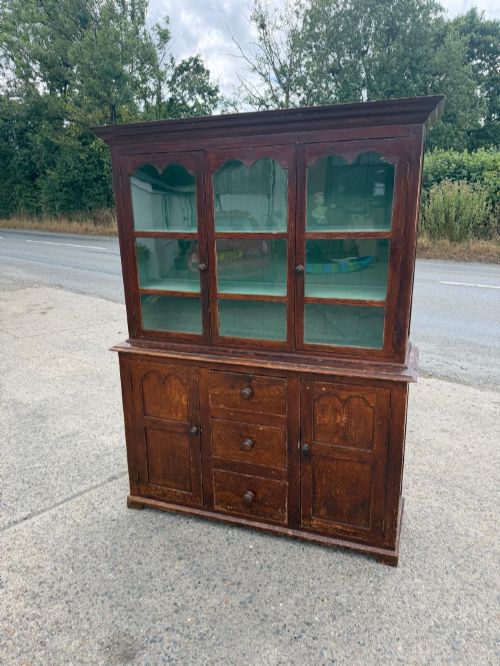
A dark wood dresser hutch combines a lower storage cabinet or sideboard with upper shelving or a glazed display section. These pieces range from eighteenth-century joined oak Welsh dressers to nineteenth-century Victorian pine and oak variants, alongside Edwardian mahogany editions.
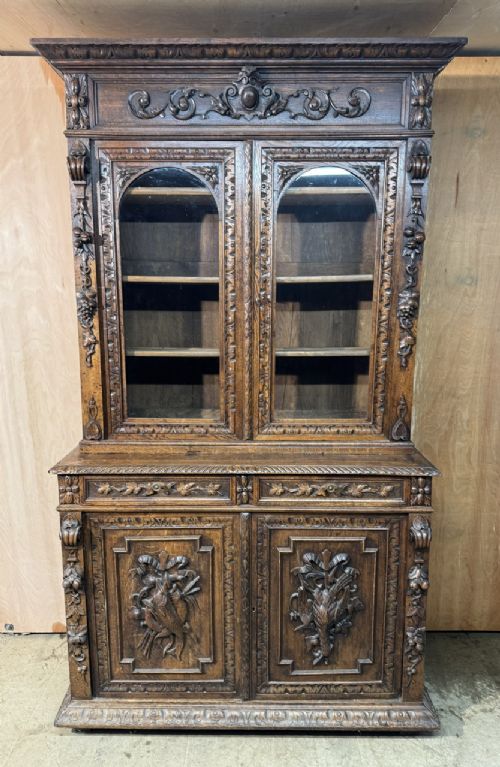
The selections on this page encompass diverse regional and revival styles, including English country, Jacobean revival, Tudor revival, and French Renaissance revival. Forms vary from simple farmhouse dressers to elaborate carved cabinets featuring green man motifs or geometric panels.
Buyers will encounter distinct configurations, such as glazed top dressers, clock dressers, and bowfront designs. These items serve primary functions in dining spaces, kitchens, and living areas for displaying tableware and storing household goods.
Materials and construction
Makers relied principally on solid oak and mahogany, often enhanced by flame mahogany veneers and secondary pine construction. Metal fixings such as brass and lead frequently appear on handles, hinges, and glazed cames.
Joinery techniques span traditional pegged joints seen in earlier joined oak examples to later revival cabinetry methods. Carving is a predominant decorative technique, utilising geometric patterns, figural motifs, and relief work executed directly into the timber.
Watch closely for hidden green man carvings peering through the oak foliage of nineteenth-century revival cabinets.
What separates the finest examples
The standard of a dark wood dresser hutch rests upon the crispness and depth of its carved ornamentation, from geometric patterns to figural panels. Pieces with integrated architectural details and harmonious proportions display superior craftsmanship.
Material selection dictates much of the distinction, where choice figured timber and patinated oak command greater appreciation. The integrity of the original construction, including period brass hardware and untouched surfaces, determines the standing of the piece.
The Dark Wood Dresser Hutch Glossary
- Welsh dresser
- A traditional kitchen or dining room storage unit featuring a base of drawers and cupboards surmounted by plate racks. These foundational pieces evolved significantly across the eighteenth and nineteenth centuries.
- Glazed top dresser
- A variant where the upper section incorporates glass doors to protect and display contents. This form frequently utilises lead or timber glazing bars.
- Joined oak
- Furniture constructed using mortise and tenon joints secured with wooden pegs rather than metal nails. This method defines earlier periods of cabinet making.
- Bowfront
- A curved front profile that swells outward in the centre. This shape softens the linear geometry typical of many traditional storage cabinets.
- Green man
- A sculptural architectural motif depicting a face made of or entwined with leaves and vines. It appears on revival furniture from the nineteenth century onwards.
Dark Wood Dresser Hutch: Frequently Asked Questions
How do I date an oak dresser hutch?
Dating relies on examining construction methods, timber selection, and stylistic cues present in the carvings. Earlier pieces display joined framework and hand-cut elements, whereas later revivals incorporate standardised machine milling.
Hardware styles and secondary woods also offer chronological clues. Comparing the piece against known period examples helps establish its likely origin.
What is the difference between a Welsh dresser and a sideboard?
A Welsh dresser traditionally incorporates an upper tier of open shelves or a glazed hutch mounted above the lower storage base. This upper structure was designed specifically for displaying ceramic plates and serving dishes.
A sideboard typically consists solely of the lower cabinet or buffet structure with drawers and cupboards. It lacks the superstructure characteristic of a true dresser hutch.
Where should I place a dresser hutch?
These substantial pieces anchor dining rooms and spacious kitchens where tableware requires accessible storage and display. They also function effectively in living areas as focal points for books and decorative objects.
Adequate wall space and clearance are essential to accommodate their depth and height. Proper placement avoids direct heat sources that could dry out antique timber.
How do I care for antique dark wood furniture?
Maintenance involves dusting regularly with a soft, dry cloth and avoiding silicone-based polishes that build up over time. Applying appropriate wax periodically helps nourish the wood and preserve the surface patina.
Maintaining stable room humidity prevents the timber from warping or splitting. Direct sunlight should be avoided to protect the colour of the wood.