


Jacobean Carved Oak Desk
A jacobean carved oak desk brings heavy timber and deep relief carving into a room, offering a solid surface for correspondence.
Jacobean Carved Oak Desk
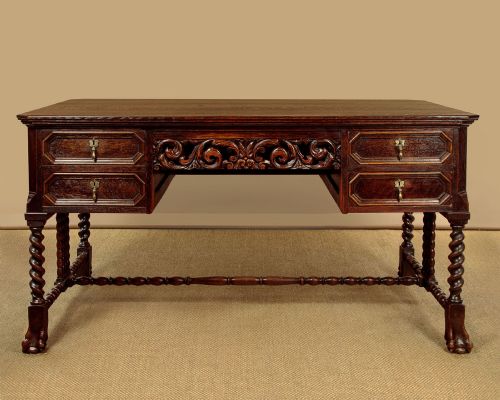
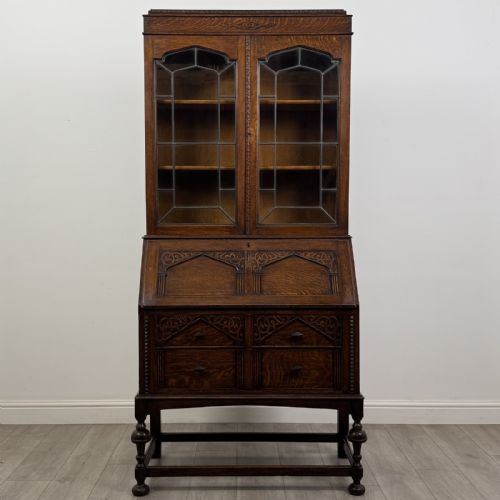
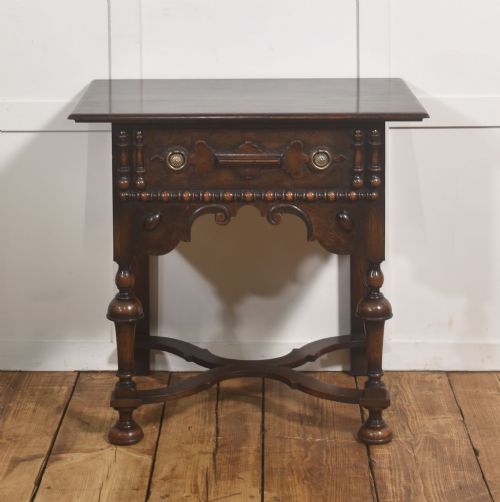
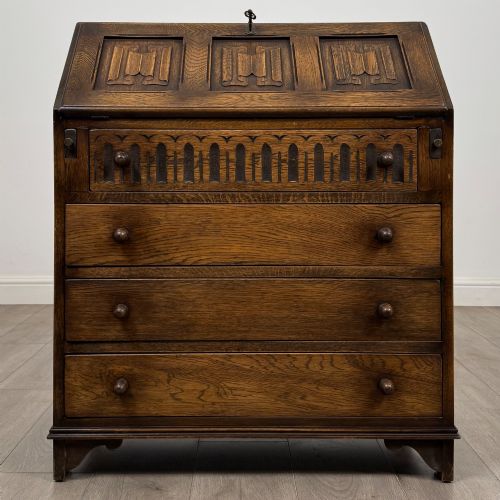
A jacobean carved oak desk encompasses writing tables, bureaus, and desk boxes originating from the seventeenth century or created in revival styles during the nineteenth and early twentieth centuries. Buyers searching this phrase look for heavy timber construction, geometric mouldings, and deep panel carving rooted in early English furniture traditions.
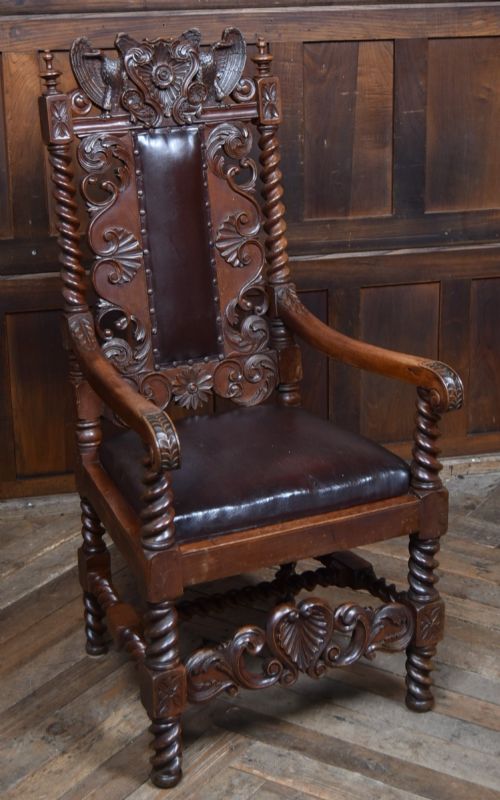
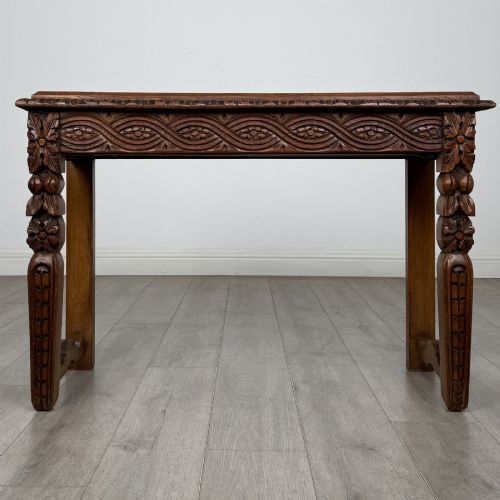
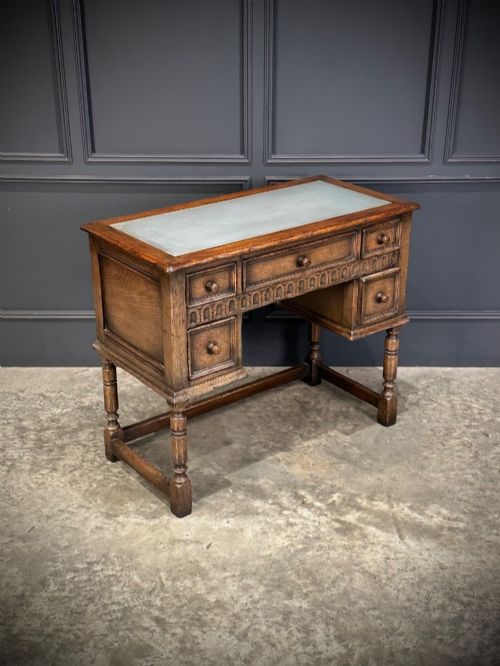
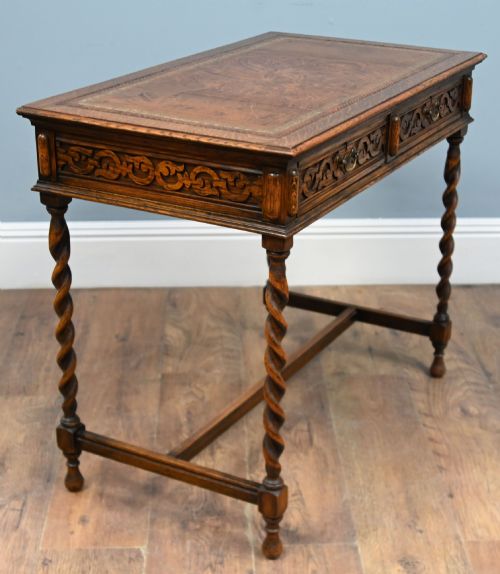
The pieces met most often on this page date from the nineteenth and early twentieth centuries, constructed in revival styles that mimic seventeenth-century workmanship. These later interpretations often take the form of fitted bureaux, writing tables with barley twist legs, or console tables with hidden storage.
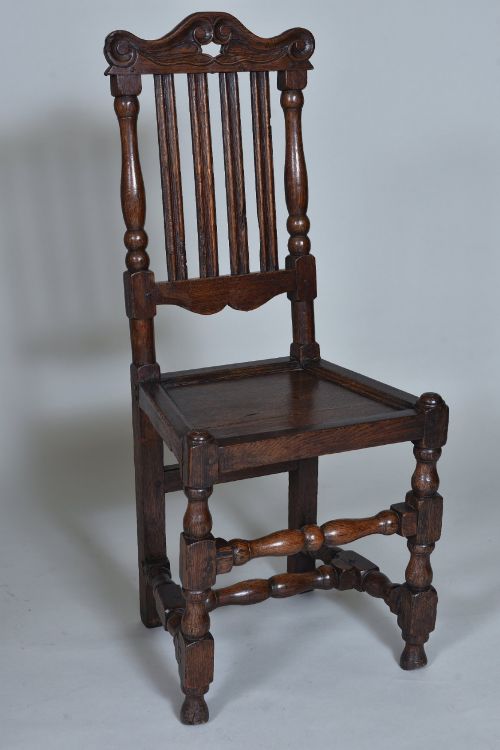
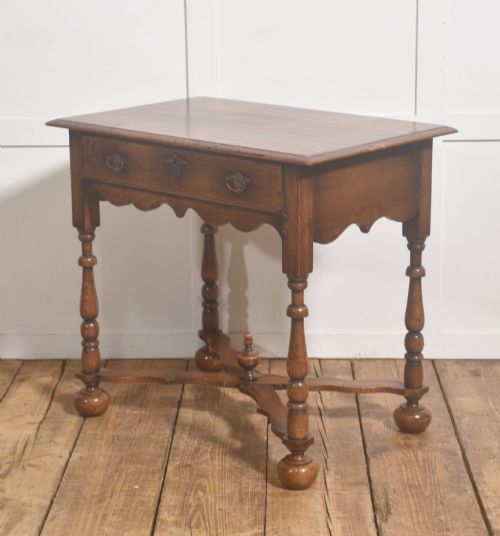
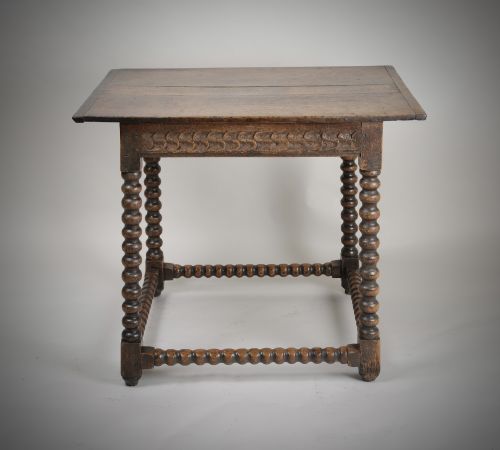
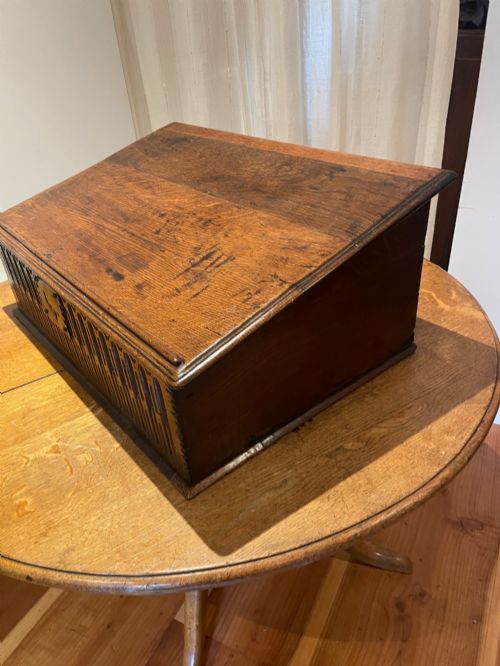
Original seventeenth-century examples appear alongside revival pieces, offering authentic period vernacular forms such as table boxes, bible boxes, and early writing slopes. These genuine early pieces display the honest jointure, adze marks, and patination accumulated over centuries of domestic use.
What Varies in Quality
The crispness and depth of the carved ornamentation separate standard production from superior examples. Master carvers produced intricate guilloche patterns, scrolling foliage, and figural motifs with sharp undercut details, whereas lesser pieces show shallow, mechanical stamping.
Proportion and timber selection dictate the architectural success of the desk. Superior items utilise quarter-sawn oak displaying strong medullary rays, assembled with balanced proportions that maintain structural integrity without appearing cumbersome.
Jacobean Carved Oak Desk Retail Price Guide 2026
Typical asking prices for jacobean carved oak desk among the pieces listed under this phrase on Sellingantiques today, from the lower quarter to the upper quarter. They describe what is for sale here now, not the wider market.
Listings span from the seventeenth century through the Edwardian era, predominantly featuring oak constructed in revival styles alongside genuine period boxes.
The Jacobean Carved Oak Desk Glossary
- Bureau
- A sloping writing lid enclosing fitted interior pigeonholes and small drawers. This form evolved from the desk box placed upon a stand into a unified cabinet.
- Bible Box
- A small wooden chest with a sloped or flat lid, originally built to store household Bibles and important documents. These portable boxes frequently served as early writing desks.
- Barley Twist
- A turned wooden furniture leg or stretcher resembling a spiral rope. This decorative turning method gained widespread popularity during the seventeenth century and returned in nineteenth-century revivals.
- Linenfold
- A style of wood carving that imitates folded parchment or linen cloth. This motif appears frequently on panels of revival cabinets and desks.
- Vernacular
- Furniture made by regional craftsmen for local use, following traditional domestic patterns rather than high-style court designs. These pieces often display idiosyncratic construction methods.
Jacobean Carved Oak Desk: Frequently Asked Questions
How do I spot a seventeenth-century original?
Examine the timber for hand-cut tool marks, pegged joinery, and natural shrinkage warps that indicate age. Genuine pieces accumulate distinct patination and wear patterns around primary touchpoints.
Hardware such as hand-forged iron hinges and latches also provides clues to the period of manufacture. Revival pieces from later centuries typically employ machine-cut screws and standardised hinges.
What is a bureau bookcase?
A bureau bookcase combines a lower writing desk with a sloping lid and an upper shelving cabinet enclosed by doors. These combination units provided storage for both writing equipment and bound volumes.
Many examples feature leaded glass doors on the upper section to display book collections. They represent larger workspace solutions developed in later revival periods.
How should I care for antique oak?
Maintain a stable room temperature and keep wooden desks away from direct heat sources to prevent timber splitting. Apply traditional beeswax periodically to nourish the dry grain and protect the surface.
Avoid modern silicone sprays or harsh chemical cleaners that strip the historic finish. Gentle dusting with a dry cloth preserves the underlying patination.
What distinguishes revival pieces?
Revival furniture reproduces earlier historical styles using nineteenth or twentieth-century workshop techniques. Pieces from these later eras often incorporate standardised dimensions and mechanical carving aids.
While lacking the exact age of seventeenth-century originals, these revival desks offer robust construction and traditional styling suited to daily domestic use.