
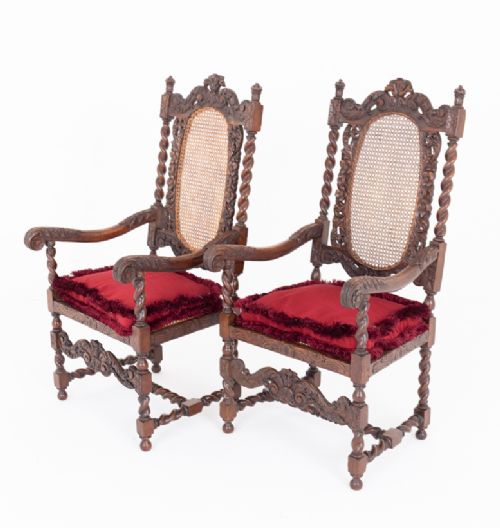
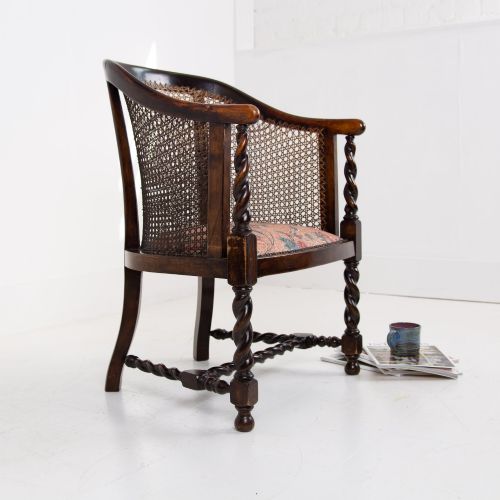
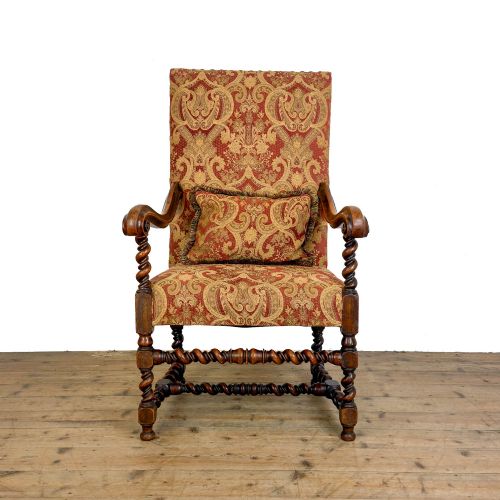

Jacobean Carved Armchair
A jacobean carved armchair brings heavy timber and formal ornament into a room, offering deep seats and solid joints.
Jacobean Carved Armchair
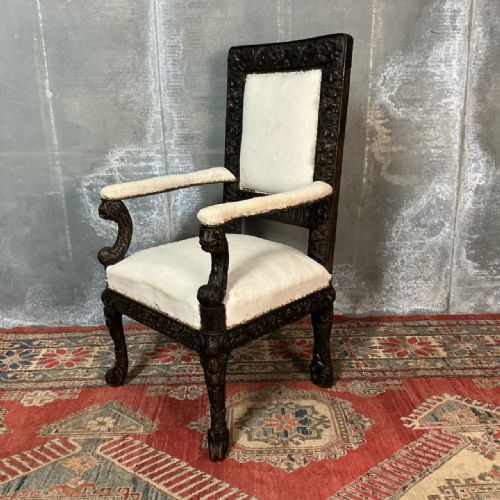
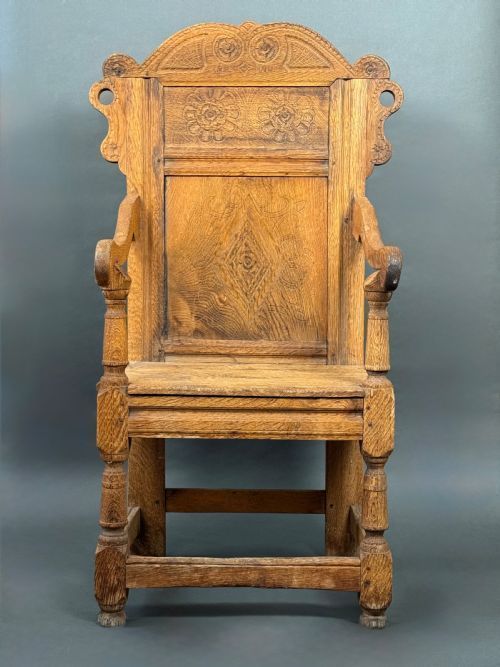
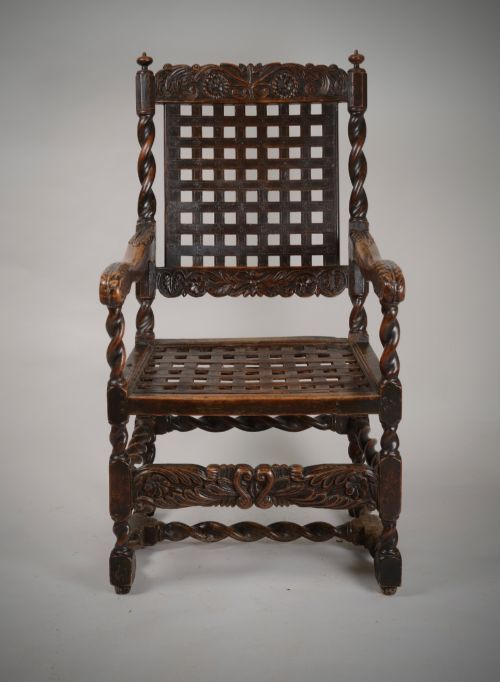
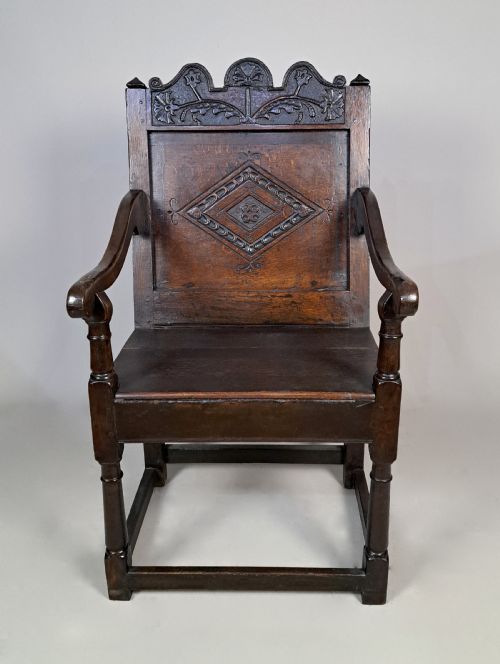
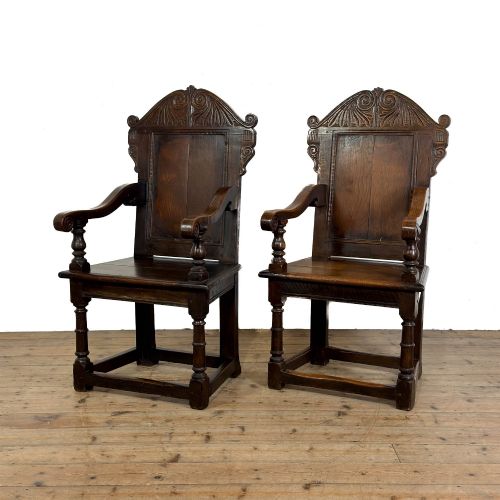
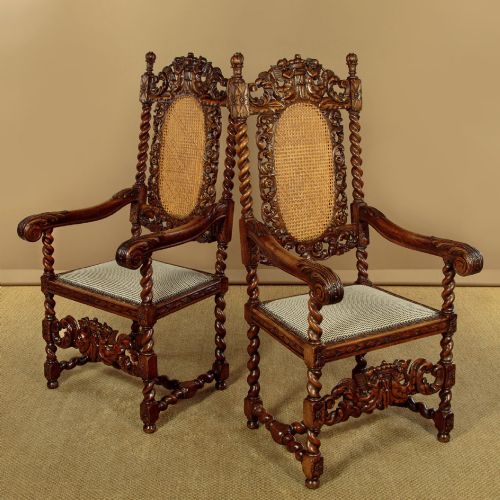
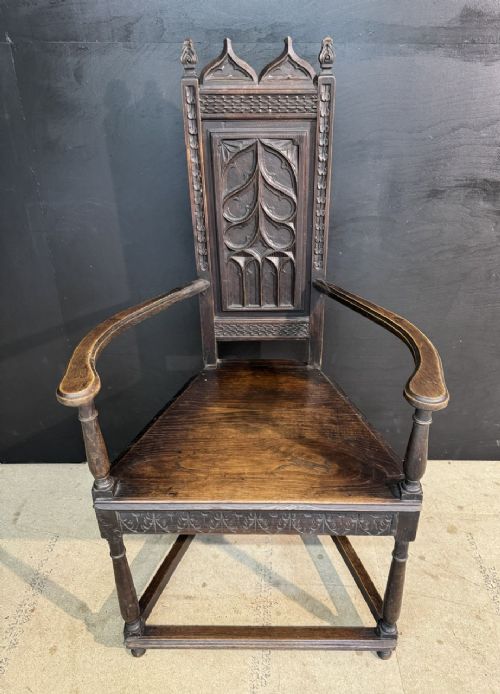
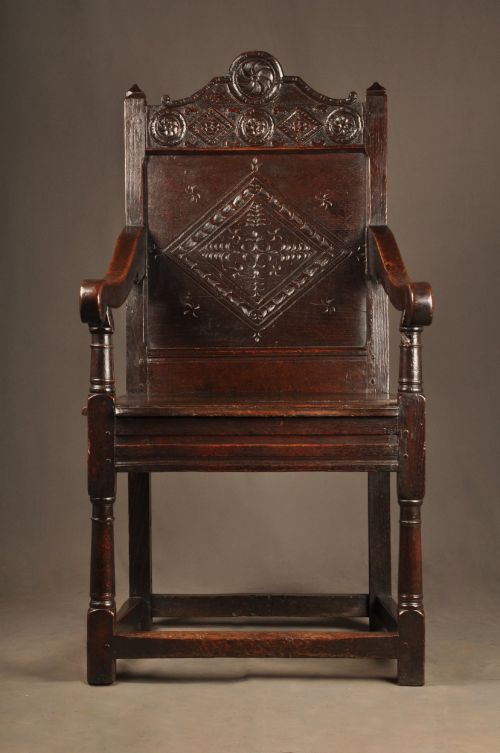
A jacobean carved armchair is a substantial wooden seat, most frequently encountered as a wainscot armchair originating from the seventeenth century or constructed during later revival periods. These forms include regional variations from Yorkshire, Lancashire, and the West Country, alongside pieces made in the nineteenth and twentieth centuries under Jacobean and Carolean revival influences.
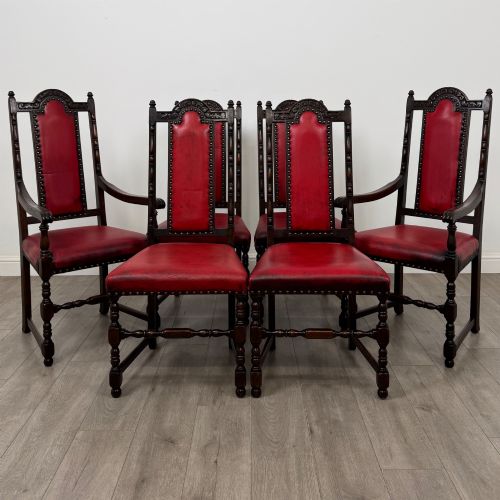
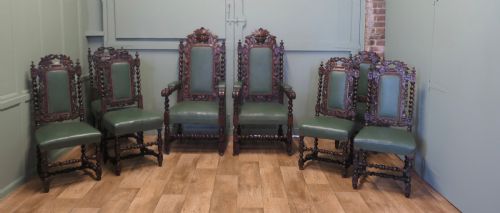
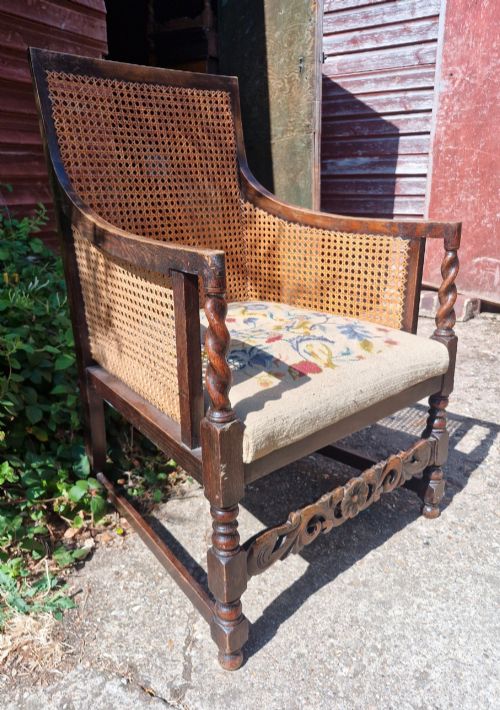
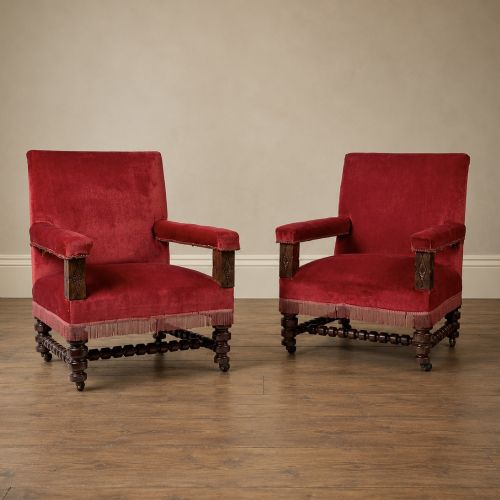
The primary form is upright and architectural, featuring panelled backs, substantial armrests, and turned legs joined by stretchers. While seventeenth-century examples display period joinery and regional tool marks, later revival pieces replicate these heavy proportions using oak, walnut, and sometimes rosewood, occasionally incorporating cane, velvet, or tapestry fabric inserts.
Materials and construction
Constructed predominantly from native oak and walnut, these chairs rely on joined timber frames secured with mortise and tenon joints rather than metal nails. Carving is executed directly into the solid wood of the back panels, crest rails, and arms, utilising chip carving, gouge work, and geometric strapwork.
Secondary materials such as brass tacks, cane, leather, and textiles like red velvet or tapestry fabric appear on seats and upholstery where specified by the period. Surface finishes develop through decades of wax application and friction, highlighting the grain of the timber.
The listings span from the seventeenth century through Victorian revivals up to the nineteen-thirties, utilising oak, walnut, cane, and velvet.
Factors of quality
Quality rests in the depth and crispness of the timber carving, the integrity of the original joints, and the retention of surface patination. Pieces with untouched historic timber surfaces and deeply carved crest rails sit apart from later copies that lack regional character or feature mechanical tooling.
The Jacobean Carved Armchair Glossary
- Wainscot
- A heavy wooden armchair with a panelled back and solid seat, common in the seventeenth century. These chairs were constructed by joiners using frame and panel techniques.
- Stretcher
- A horizontal wooden rod connecting the legs of a chair to provide structural stability. On these chairs, they are often positioned low to keep feet off cold floors.
- Crest rail
- The horizontal top member of a chair back, frequently decorated with carving, piercing, or shaping. It forms the visual apex of the piece.
- Joined
- A method of furniture construction using interlocking wooden joints held together with pegs, typical of seventeenth-century carpentry before the widespread adoption of glue and screws.
- Revival
- A nineteenth or twentieth-century architectural and decorative style that imitates earlier historical periods, such as the seventeenth century or Jacobean era.
Jacobean Carved Armchair: Frequently Asked Questions
How do I spot a seventeenth-century original?
Authentic period examples display hand-tool marks, pegged mortise and tenon joints, and dry timber with deep historic patination. Regional characteristics in the carving style often point to specific workshops in areas like Yorkshire or Lancashire.
Later revival pieces tend to use more uniform machinery marks and lack the accumulated wear patterns found on genuine seventeenth-century furniture.
Were these chairs used for dining?
Earlier wainscot forms served as seats of authority for the head of the household rather than matching sets around a dining table. They stood in halls and parlours as status objects.
Matching sets of armchairs and side chairs appear more commonly in nineteenth and twentieth-century Jacobean revival dining room productions.
How should I care for the wood?
Maintain the timber by applying traditional beeswax sparingly and buffing with a soft cloth to protect the surface. Avoid placing the chair near direct heat sources or strong sunlight, which causes timber to dry out and split.
Keep humidity levels stable in the room to preserve both the oak structure and any upholstered elements like velvet or tapestry fabric.
What is a wainscot chair?
A wainscot chair is an enclosed wooden armchair constructed using oak panelling similar to wall wainscoting. They are characterised by high panelled backs, solid wooden seats, and sturdy armrests.
These pieces represent some of the earliest domestic seating found in English homes, dating primarily from the seventeenth century.