

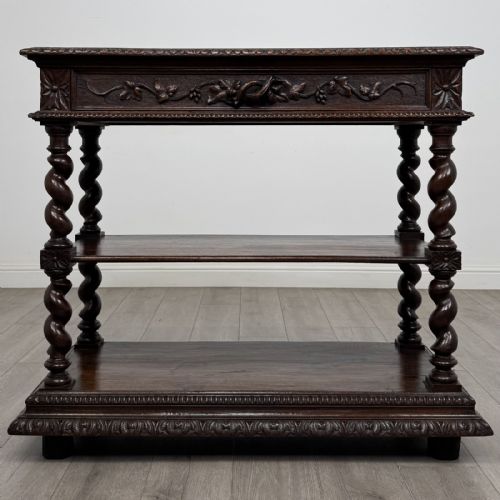
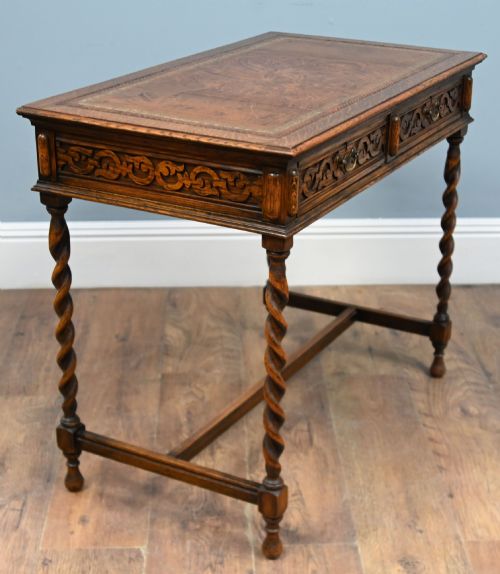
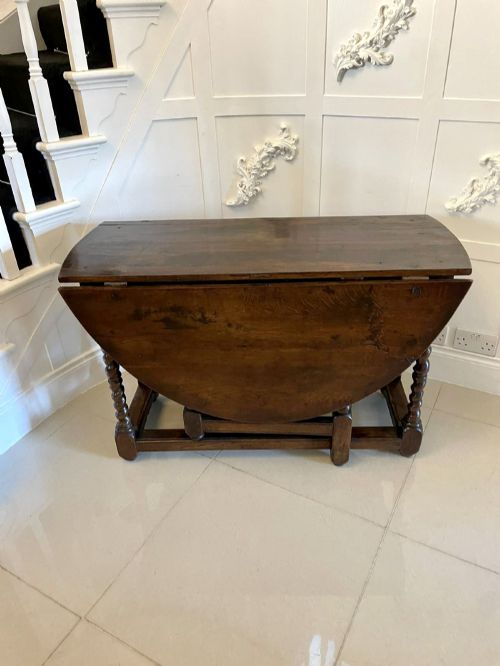
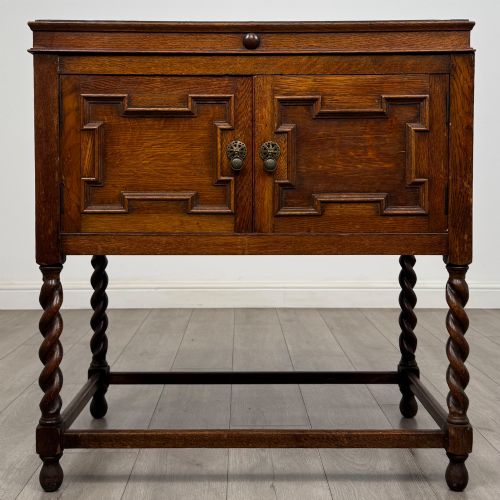
Jacobean Barley Twist Table
A jacobean barley twist table brings substantial English oak and vigorous turned columns into a room, offering a tangible link to centuries of domestic craft.
Jacobean Barley Twist Table
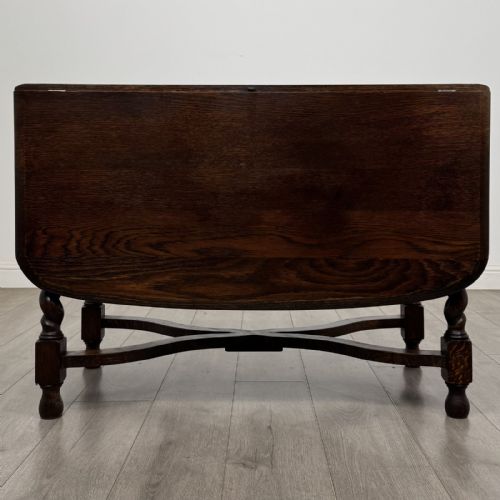
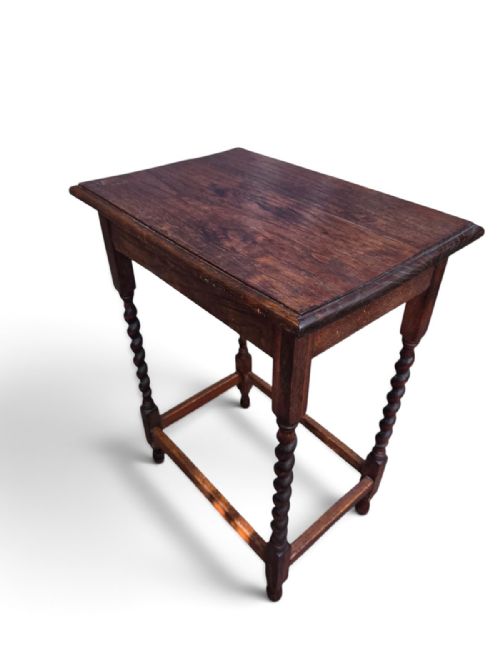
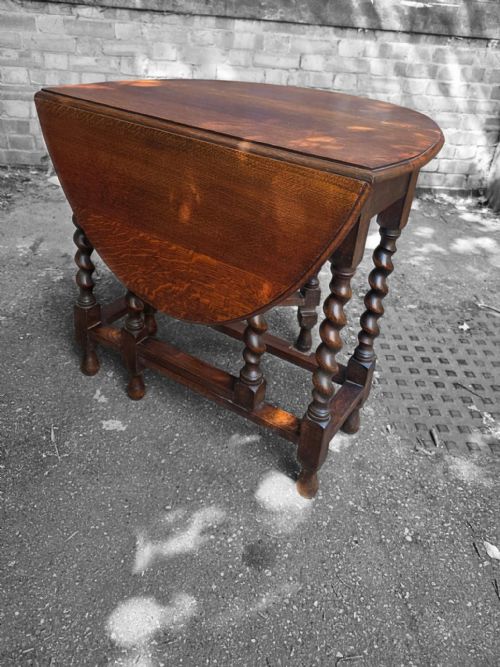
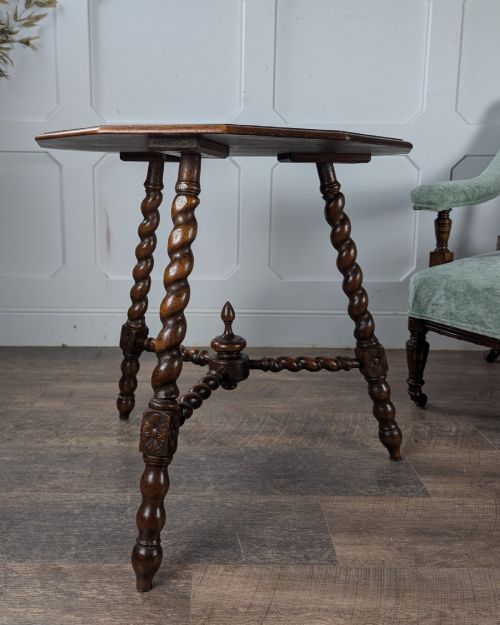
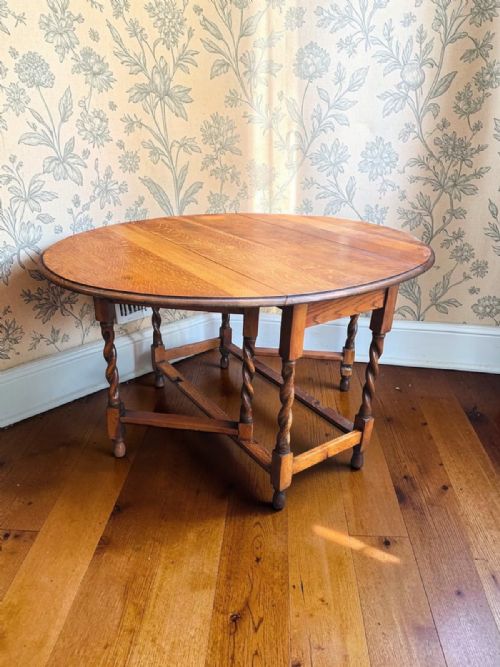
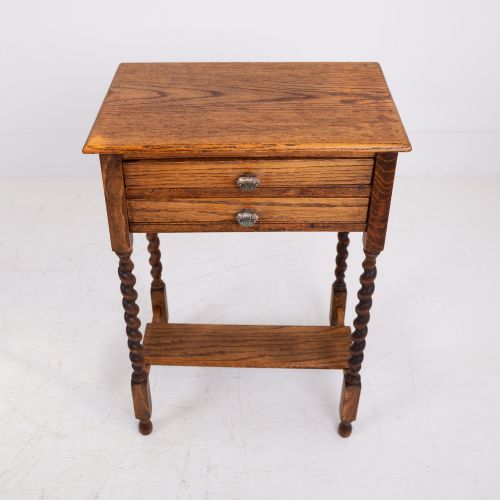
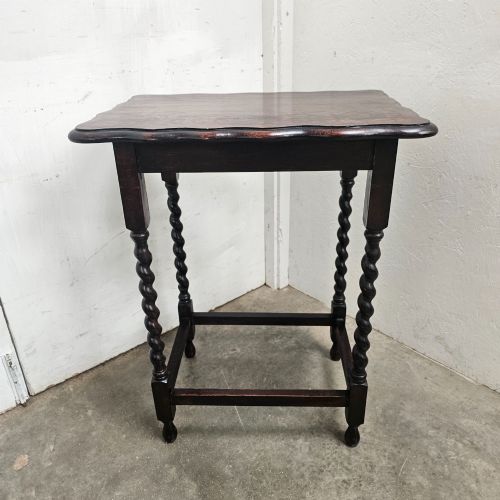
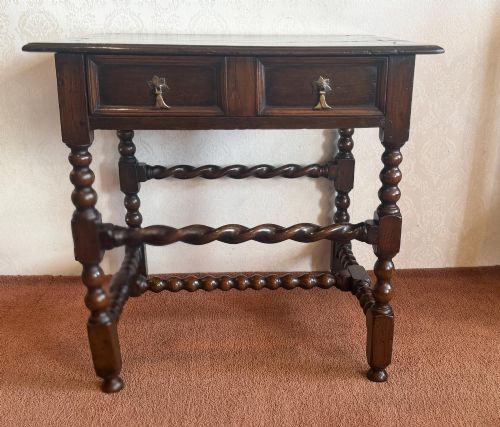
A jacobean barley twist table combines sturdy timber construction with helical leg turnings that catch the light. Buyers searching this phrase encounter forms ranging from compact side tables to expansive gateleg dining tables.
The pieces appearing most frequently date from the Edwardian period and the nineteen-twenties, executed in revival styles that emulate seventeenth-century joinery. These later iterations bring historic character into modern rooms without the fragility of true antiquity.
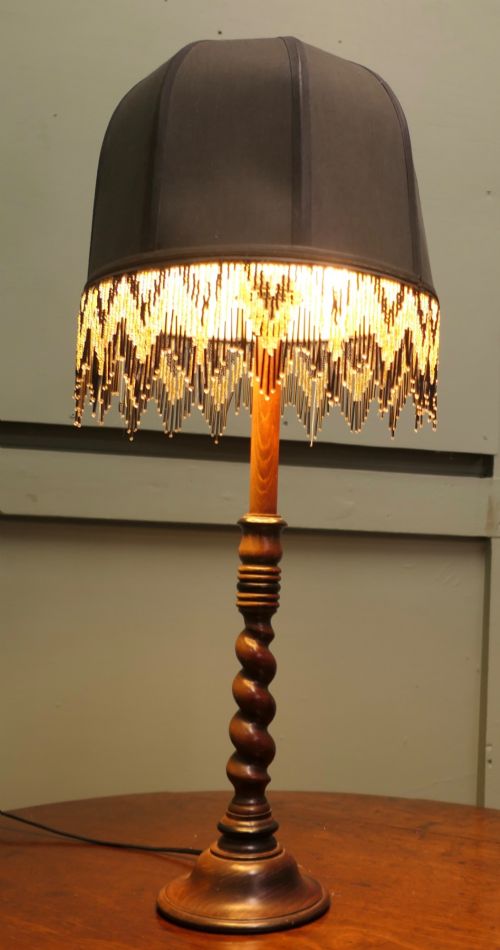
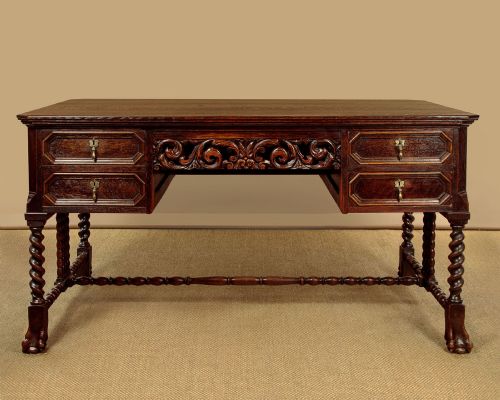
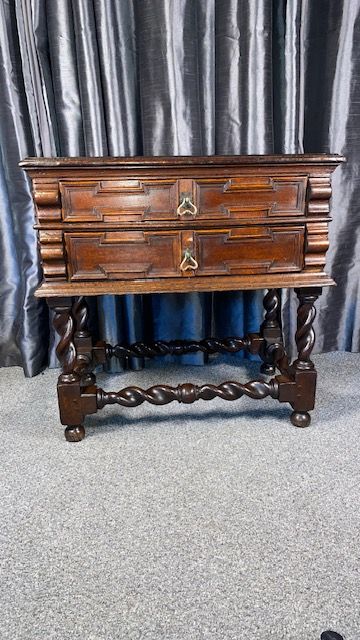
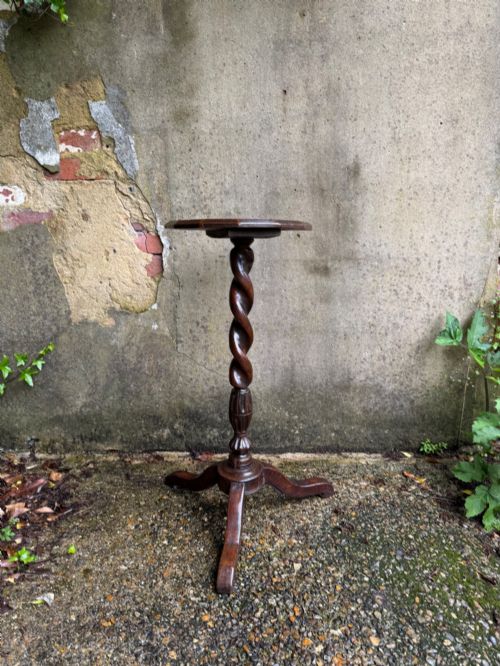
Beyond the standard dining and side tables, the selection includes occasional surfaces, plant stands, and desks incorporating the characteristic spiral legs. Each form utilises the turning technique to add vertical movement to heavy oak frames.
Materials and Construction
Solid oak serves as the primary material, chosen for its density, strength, and pleasing grain patterns. Carpenters built these frames using traditional mortise and tenon joints to ensure stability across heavy-use surfaces like gateleg dining tables.
The signature twist is formed by cutting a helical groove down a square or cylindrical timber shaft, a process executed by hand chisels in early examples or specialised machinery in later revival pieces. Metal brackets and brass fittings occasionally appear on writing desks and drop-leaf mechanisms.
Finishes typically consist of dark wax or polish applied to the timber, enhancing the natural warmth of the grain and protecting the surface from daily wear.
Jacobean Barley Twist Table Retail Price Guide 2026
Typical asking prices for jacobean barley twist table among the pieces listed under this phrase on Sellingantiques today, from the lower quarter to the upper quarter. They describe what is for sale here now, not the wider market.
Some Edwardian afternoon tea trolleys secretly harboured wheels ready to roll scones across the parlour.
Distinctions in Craftsmanship
Quality reveals itself in the crispness of the twist turning and the selection of timber matching across the top boards. Superior examples display symmetrical spirals with smooth facets and tight joints that withstand the movement of drop-leaf actions.
Substantial gateleg tables depend on the integrity of their hinge mechanisms and the thickness of the swing legs to support extended leaves. Lesser pieces may show misalignment in the folding leaves or loose turning joints resulting from poor initial assembly or subsequent moisture damage.
The Jacobean Barley Twist Table Glossary
- Barley twist
- A type of turning resembling a spiral rope or column. It gained popularity in English furniture during the seventeenth century and saw a major revival in the Edwardian era.
- Gateleg table
- A drop-leaf table featuring hinged legs that swing outward to support the extended leaves. This design allows the furniture to fold flat when not in active use.
- Jacobean revival
- A late nineteenth and early twentieth-century design movement that copied or adapted the heavy oak forms, carving, and turnings of the early seventeenth century. It dominated much domestic production before the First World War.
- Drop-leaf
- A table configuration featuring a fixed centre section flanked by hinged flaps. These flaps drop down vertically to save space or lift up to create a larger dining surface.
- Mortise and tenon
- A traditional woodworking joint where a protruding peg fits snugly into a corresponding cavity. This method provides immense structural rigidity without relying on metal fasteners.
Jacobean Barley Twist Table: Frequently Asked Questions
How do I date a barley twist table?
Dating relies on examining the timber species, the sharpness of the tool marks, and the construction methods used in the frame. Early seventeenth-century originals show hand-carved irregularities and pegged joints, whereas Edwardian revivals often utilise uniform machine turnings and modern hardware.
Secondary woods and finish types also provide clues to the era of manufacture. Nineteenth and twentieth-century reproductions frequently display darker factory finishes and standardised dimensions suited to later domestic spaces.
Are these tables suitable for daily dining?
Gateleg and occasional tables built from solid oak offer robust surfaces that handle regular meals and writing tasks with ease. Their sturdy construction supports the weight of dishware and books without excessive flexing.
Care should be taken to protect the polished wood surfaces from moisture and heat using coasters and mats. Regular waxing maintains the moisture barrier of the oak and preserves the depth of the finish.
How do I care for antique oak?
Maintaining solid oak involves keeping the timber away from direct heat sources and dramatic humidity fluctuations. These environmental controls prevent the wood from drying out, cracking, or warping over time.
Applying a traditional beeswax polish periodically nourishes the grain and enhances the natural lustre of the surface. Avoid using silicone-based sprays that leave a residue and attract dust to the carved details.