

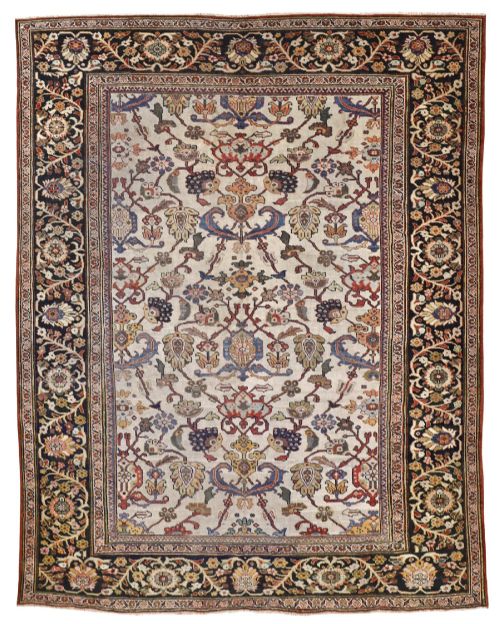

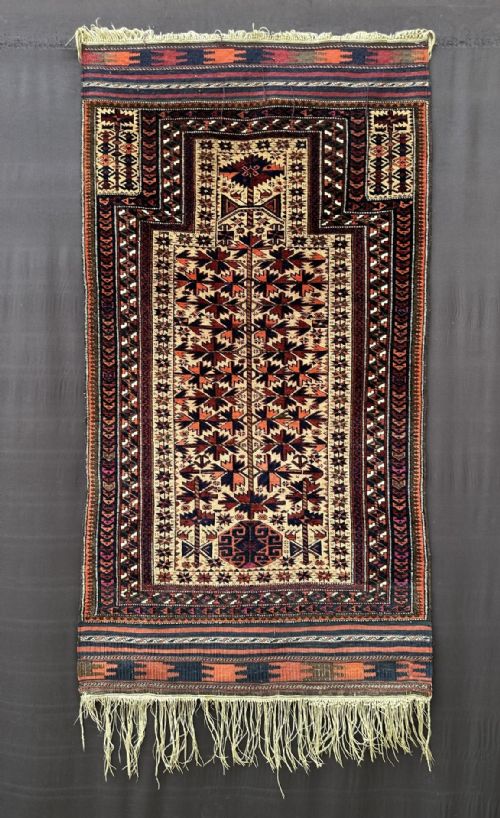
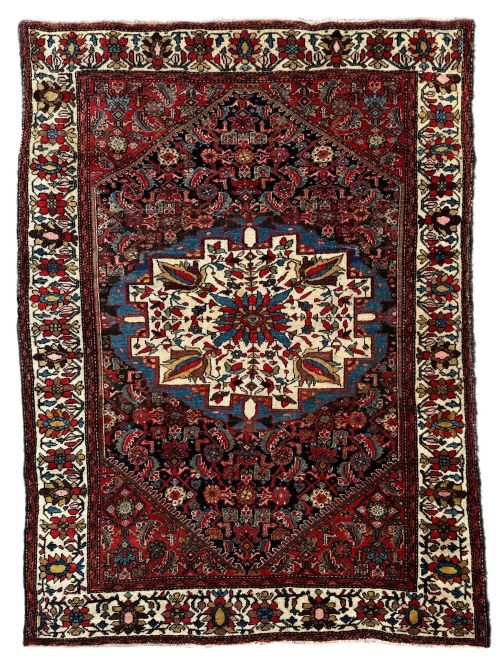
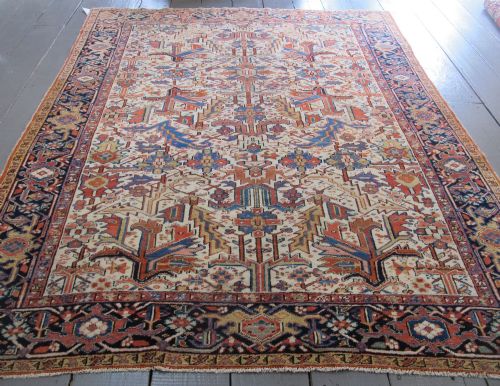

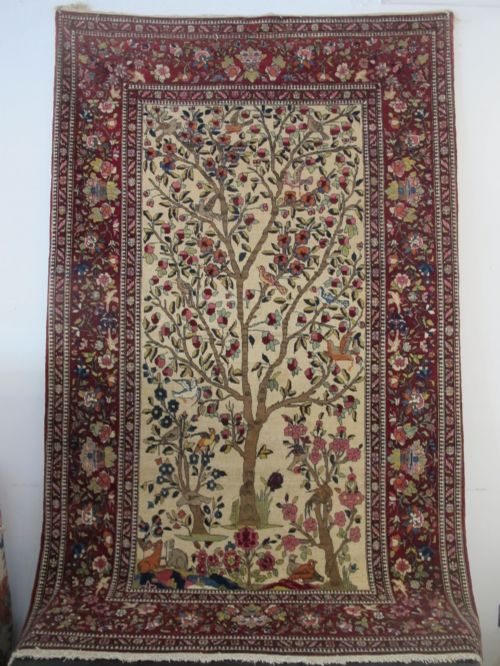


Ivory Wool Persian Carpet
An ivory wool persian carpet brings warmth and intricate geometric or floral artistry to a room, offering durability and historical depth.
Ivory Wool Persian Carpet
An ivory wool persian carpet represents a distinct category of floor coverings originating from various weaving centres across Persia, spanning the late nineteenth and early twentieth centuries. These pieces feature pale neutral backgrounds that highlight dense botanical motifs, central medallions, or tribal patterns woven by village and city artisans.
Buyers browsing this selection frequently encounter room-size carpets as well as smaller rugs produced in regions such as Heriz, Mahal, Tabriz, and Isfahan. The pale ground colour serves to brighten interior spaces while framing the saturated vegetable or mineral dyes utilised in the borders and central fields.
Traditional examples range from finely knotted city workshops to sturdier village and tribal weaves created by nomadic groups including the Bakhtiari, Baluch, and Afshar. Each region imparts specific structural characteristics and regional motifs onto the wool foundation.
Materials and Construction Methods
The foundation relies on hand-spun wool and cotton, where sturdy cotton warps and wefts provide structural stability while the wool pile delivers resilience and softness underfoot. Certain refined city pieces incorporate subtle silk highlights to accentuate specific contours within the floral or geometric design.
Dyers utilised natural dyes derived from plants, roots, and insects to achieve enduring shades of indigo, madder red, and warm ochre set against the creamy ivory wool. Artisans tied symmetrical or asymmetrical knots by hand onto vertical looms, varying knot density according to whether the piece emerged from a metropolitan workshop or a tribal camp.
Ivory Wool Persian Carpet Retail Price Guide 2026
Typical asking prices for ivory wool persian carpet among the pieces listed under this phrase on Sellingantiques today, from the lower quarter to the upper quarter. They describe what is for sale here now, not the wider market.
Listings feature pieces spanning the nineteenth century through the 1930s, constructed from hand-spun wool, cotton, and occasional silk highlights.
Factors Defining Quality
Knot density and structural integrity form the baseline of evaluation, where tighter knotting allows for crisper delineation of intricate curves and fine lines in the medallion. Finer city weaves from centres like Isfahan or Tabriz demonstrate meticulous precision, whereas village and tribal pieces prioritise robust wool and energetic asymmetry.
The purity and condition of the wool pile directly influence the tactile experience and longevity of the textile. Master dyers achieved harmonious tonal variations across natural dye lots, creating a rich patina as the wool aged across decades.
The Ivory Wool Persian Carpet Glossary
- Medallion
- A central ornamental design motif placed in the middle of the carpet field. This focal element often echoes the corner spandrels in traditional Persian compositions.
- Warp
- The vertical threads stretched lengthwise on the loom that form the structural skeleton of the carpet. Fringe ends typically consist of the exposed warp threads.
- Weft
- The horizontal threads passed alternately over and under the warp threads to bind the knots in place. Multiple weft shots add rigidity to the textile structure.
- Pile
- The vertical tufts of wool or silk clipped to a uniform height to create the surface of the carpet. Pile thickness influences the cushion and weight of the textile.
- Natural Dyes
- Colourants extracted from organic sources such as plants, roots, and minerals prior to the widespread adoption of synthetic aniline dyes. These dyes produce complex, muted hues that mellow gracefully over time.
Ivory Wool Persian Carpet: Frequently Asked Questions
How do I clean an antique wool carpet?
Regular gentle vacuuming without a beater bar removes surface dust and grit from the wool pile. Professional specialist cleaning remains essential for deep washing to protect natural dye integrity.
Avoid household detergents and excessive moisture, which can damage the foundation yarns and cause colour bleeding. Promptly blot liquid spills rather than rubbing the affected area.
Can I place these carpets in high traffic areas?
Traditional wool and cotton construction provides exceptional durability suited for everyday living spaces. Dense village and tribal weaves withstand regular foot traffic remarkably well.
Utilising a quality underlay prevents slipping and cushions the foundation against premature wear. Placing heavy furniture correctly distributes weight and protects the pile from crushing.
How do I distinguish village rugs from city carpets?
City workshops utilise fixed looms and detailed cartoons to produce symmetrical, highly refined floral layouts with high knot counts. Village and tribal weavers work from memory or simplified templates, resulting in charming irregularities and bolder geometric motifs.
Materials also offer clues, as city pieces frequently incorporate finer wool and occasional silk highlights, while village rugs rely on robust, thick-spun wool suited for utilitarian daily life.
Why do ivory ground carpets look different in various lights?
Natural wool absorbs and reflects ambient light differently depending on the pile direction and angle of view. Hand-spun wool contains slight variations in texture that catch light organically across the neutral ivory field.
Placing the carpet so that the pile runs away from your primary viewing angle reveals richer colour depth. Daylight versus artificial interior lighting also alters the perceived warmth of the pale background.