
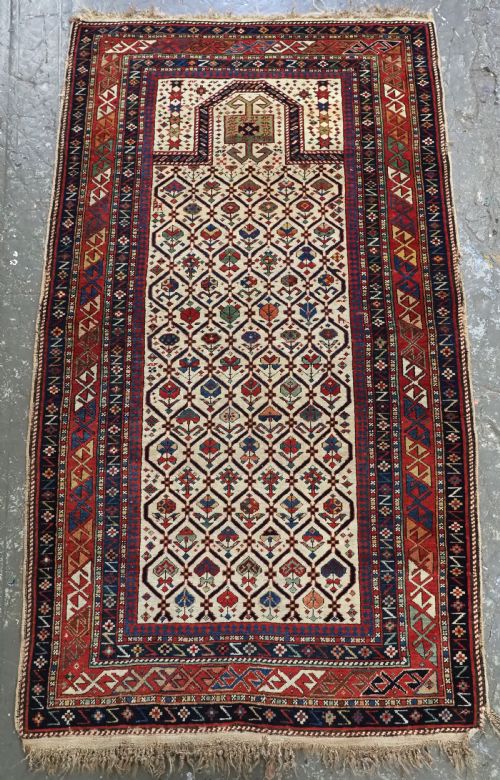
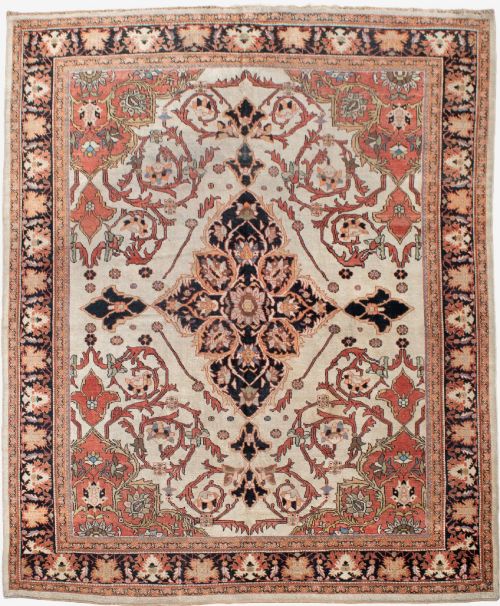
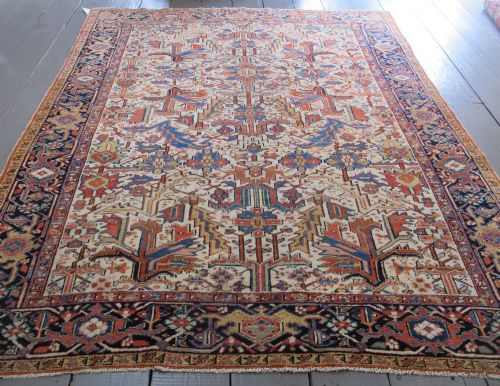
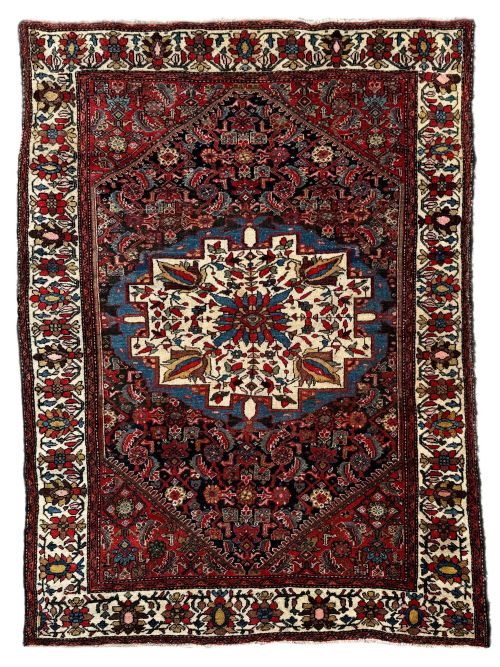
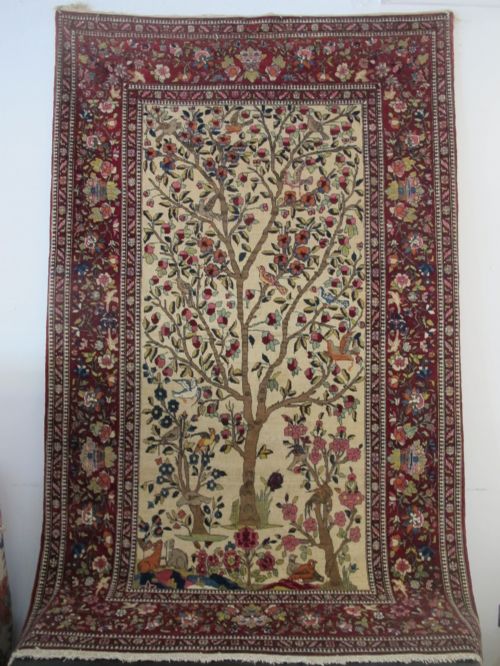


Ivory Wool Area Rug
An ivory wool area rug brings warmth and traditional Persian artistry into a room, offering tactile comfort through classic regional knotting.
Ivory Wool Area Rug
An ivory wool area rug draws the eye with pale neutral foundations that showcase darker geometric or floral motifs. When you search for an ivory wool area rug, you encounter pieces originating from Persian workshops, towns, and nomadic tribes. The selection on this page includes rugs and carpets created during the late nineteenth and early twentieth centuries.
Materials and construction methods
Weavers constructed these pieces principally using wool for the pile, frequently paired with cotton or silk to form the foundation and structural details. Natural textile fibres provided the durability required for floor use while allowing intricate pattern work.
Craftspeople tied pile knots onto warp and weft threads, incorporating traditional dyes to achieve deep contrasts against the pale ivory fields. The physical construction relies on established Persian weaving traditions passed down through generations of artisans.
Ivory Wool Area Rug Retail Price Guide 2026
Typical asking prices for ivory wool area rug among the pieces listed under this phrase on Sellingantiques today, from the lower quarter to the upper quarter. They describe what is for sale here now, not the wider market.
The listed pieces span five distinct decades between 1890 and 1930, utilising wool, cotton, and silk across diverse Persian regional styles.
Assessing the grade and character
Quality in these floor coverings rests on the density of the knotting and the precision of the design execution. Finer examples display meticulous rendering of complex motifs such as star medallions, dragon and phoenix designs, or central floral arrangements.
The handling of the ivory ground and the clarity of the secondary colours define the visual hierarchy. Pieces demonstrating superior workshop execution maintain structural integrity alongside well-balanced compositional proportions.
The Ivory Wool Area Rug Glossary
- Pile
- The vertical or diagonal loops of yarn that form the usable surface of the textile. This soft upper layer receives the wear during everyday use.
- Warp
- The stationary longitudinal threads stretched onto the loom before weaving begins. Weavers tie the rug pile directly around these foundational strands.
- Weft
- The horizontal threads passed across the warp strands to lock the knots in place. These threads stabilize the structural grid of the carpet.
- Medallion
- A large central ornamental design motif placed in the middle of the field. Many traditional Persian carpets feature this focal geometric or floral element.
- Ground
- The main background area of the rug surrounding the central motifs and borders. In this selection, that primary background appears in ivory tones.
Ivory Wool Area Rug: Frequently Asked Questions
How do I clean an old wool rug?
Professional dusting and specialist low-moisture washing remain the safest methods for historic textiles. Avoid harsh scrubbing or soaking to protect the natural fibres and dyes.
Regular gentle vacuuming without a rotating power brush helps remove grit from the pile between specialist cleans.
Are these rugs suitable for high-traffic areas?
Wool provides natural resilience and elasticity, making these floor coverings durable enough for everyday living. Placing a quality underlay beneath the piece adds cushioning and prevents slipping.
Rotating the rug periodically ensures even wear patterns across the surface over the years.
What does an ivory ground mean?
The ivory ground refers to the pale, off-white background colour that dominates the central field of the carpet. This neutral tone serves to highlight the contrasting colours used in the borders and central motifs.
Weavers sourced undyed wool or applied specific light tones to create this luminous foundation.
How do I identify a tribal rug?
Tribal rugs typically display bolder, more geometric patterns and asymmetric designs woven by nomadic or village communities. These pieces often reflect the personal iconography and local traditions of the weavers rather than formal workshop patterns.
Differences in symmetry and wool texture often distinguish village and tribal weaving from city workshop production.