


Ivory Tribal Rug
An ivory tribal rug brings grounding geometry and tactile warmth to an interior through centuries of nomadic weaving traditions.
Ivory Tribal Rug
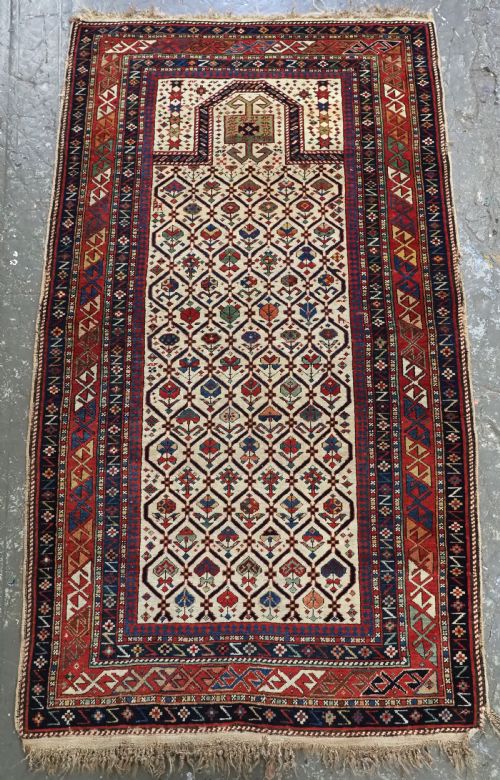
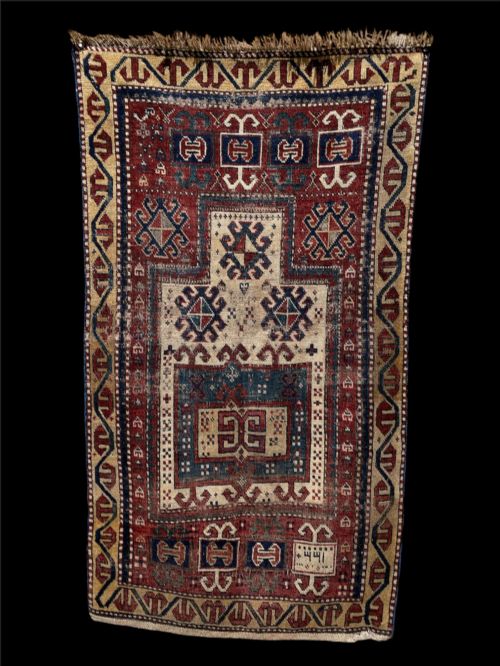
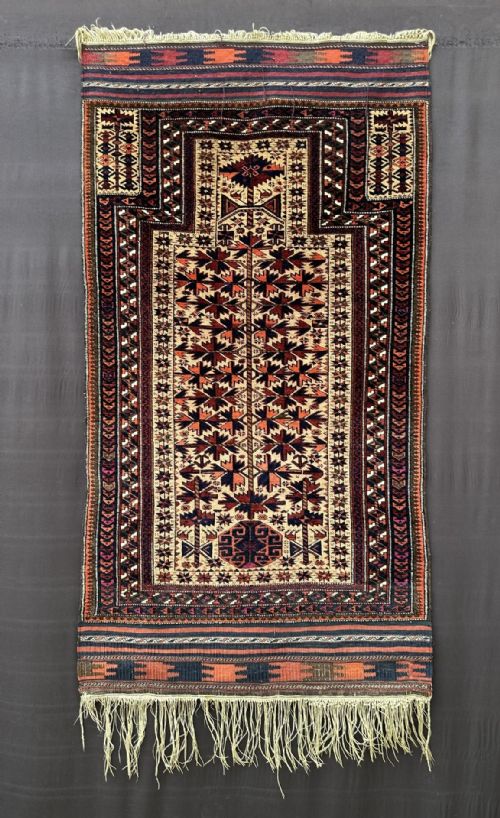
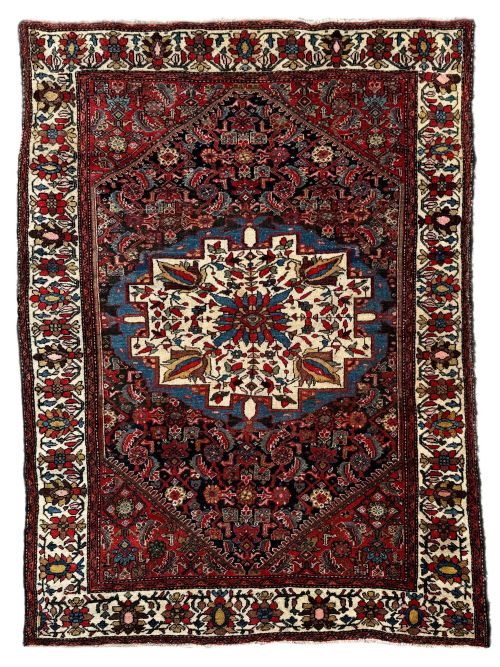
An ivory tribal rug encompasses hand-knotted and flatwoven floor coverings originating from nomadic and village workshops across Persia, the Caucasus, Anatolia, and Central Asia. These textiles feature pale neutral fields that highlight intricate geometric medallions, floral lattices, and tribal motifs.
The pieces available display diverse regional forms including prayer rugs, torba faces, half-saddlebags, runners, and larger carpets woven across the nineteenth and early twentieth centuries. Specific tribal groups such as the Tekke, Qashqa'i, Bakhtiari, and Afshar contributed distinct compositional vocabularies to this grouping.
Buyers seeking an ivory tribal rug will encounter foundational formats ranging from small scatter rugs to room-sized carpets. The pale grounds provide a stark contrast to the saturated secondary colours typically used in village and nomadic weaving.
How they were made
Weavers constructed these textiles predominantly using wool for the pile and foundation, supplemented by cotton for structural warps and wefts in certain regional traditions. The wool was frequently hand-spun, imparting a varied texture and tactile irregularity to the surface.
Natural dyes produced the chromatic palette observed across the pieces, interacting with the wool fibres to develop subtle tonal shifts over time. Flatwoven techniques such as kilim construction alongside traditional knotting methods defined the structural integrity of these functional textiles.
Listings feature wool and cotton materials shaped by Persian, Caucasian, and Anatolian weaving traditions spanning the nineteenth and early twentieth centuries.
What varies in quality
The refinement of a piece rests upon the density of the knotting and the precision with which intricate geometric or floral lattice designs are executed. Finer examples maintain crisp compositional balance across the pale ground, while simpler village pieces display more relaxed symmetry.
Material selection and dye saturation dictate the visual depth of the textile. Pieces retaining vibrant natural dyes and tightly spun wool exhibit greater resilience and chromatic longevity than those with less stable colouration.
The Ivory Tribal Rug Glossary
- Warp
- The stationary vertical threads stretched upon a loom that form the foundational skeleton of a rug. The exposed fringe at either end of a finished textile consists of these structural threads.
- Weft
- The horizontal threads passed alternately over and under the warp threads to bind the knots in place. Together with the warps, they form the sturdy grid supporting the pile.
- Natural dye
- Colourants derived from plant, insect, or mineral sources utilised before the advent of synthetic alternatives. These substances interact organically with wool fibres to produce complex, ageing hues.
- Boteh
- A traditional teardrop or almond-shaped motif with a curved upper tip, frequently associated with Persian and regional weaving. This enduring symbol appears across various tribal and village designs.
- Torba
- A small utilitarian wall-hanging bag or storage sack produced by Turkmen tribes, often featuring distinctive guls or leaf patterns. Surviving fragments typically showcase the intricate face of the original pouch.
Ivory Tribal Rug: Frequently Asked Questions
What is an ivory tribal rug?
An ivory tribal rug is a hand-woven textile created by nomadic or village weavers in regions such as Persia, the Caucasus, and Anatolia, distinguished by a pale neutral background.
These pieces utilise traditional geometric motifs, animal designs, and floral lattices passed down through specific tribal groups over generations.
How were these rugs used originally?
Nomadic and village communities employed these textiles as functional floor coverings, sleeping mats, wall hangings, and storage bags within tents or dwellings.
Many smaller formats served specific domestic roles, such as prayer rugs for daily worship or saddlebags for transport during seasonal migrations.
How do I live with an antique tribal rug?
Living with these textiles involves placing them in low-to-moderate traffic areas where their wool pile and natural dyes can be appreciated without excessive physical strain.
Pairing them with a breathable underlay protects the historical foundation fibres from premature wear against hard flooring surfaces.
How do I tell different regional styles apart?
Regional attributions rely on specific combinations of knotting structure, border arrangements, and signature motifs unique to tribes like the Qashqa'i, Bakhtiari, or Tekke Turkmen.
The colour palette and specific drawing style of elements like medallions or boteh patterns offer clear clues to a rug's geographic origin.