


Ivory Floral Carpet
An ivory floral carpet brings depth and traditional pattern into a room through hand-knotted wool, cotton, and silk.
Ivory Floral Carpet
An ivory floral carpet combines a pale neutral ground with botanical motifs, spanning regional weaving traditions from Persian centres to Caucasian workshops. These pieces emerge from periods across the nineteenth and twentieth centuries, including examples from the eighteen-fifties through to nineteen-thirty.
The version most commonly met on this page is the room-size or area carpet featuring traditional Persian or Caucasian designs. Buyers encounter rugs from specific origins such as Tabriz, Mahal, Isfahan, Qum, and Shirvan alongside village and tribal pieces.
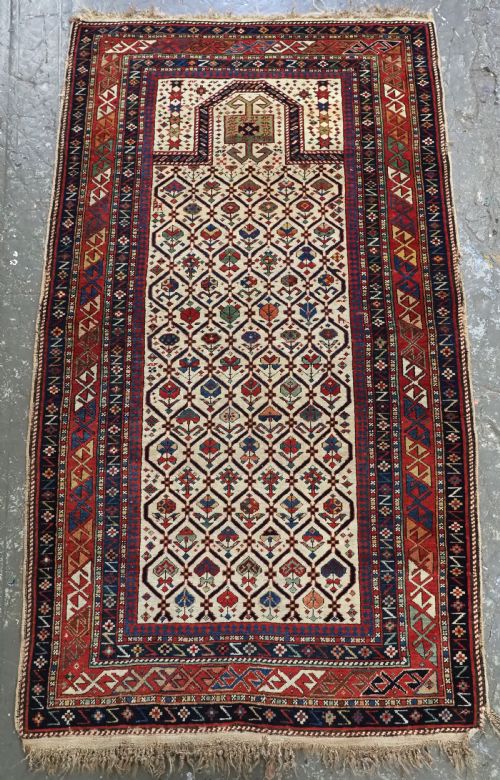
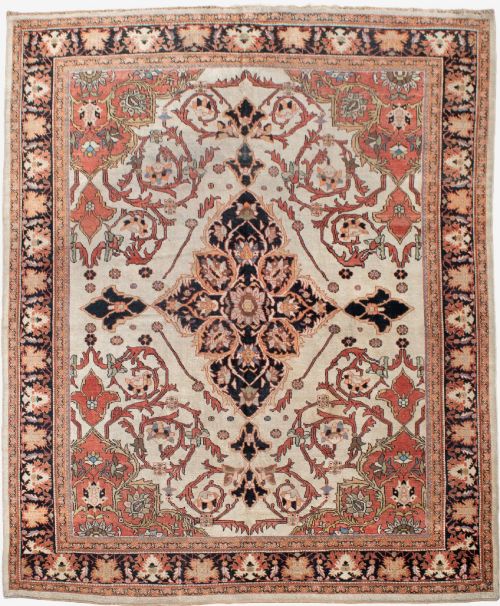
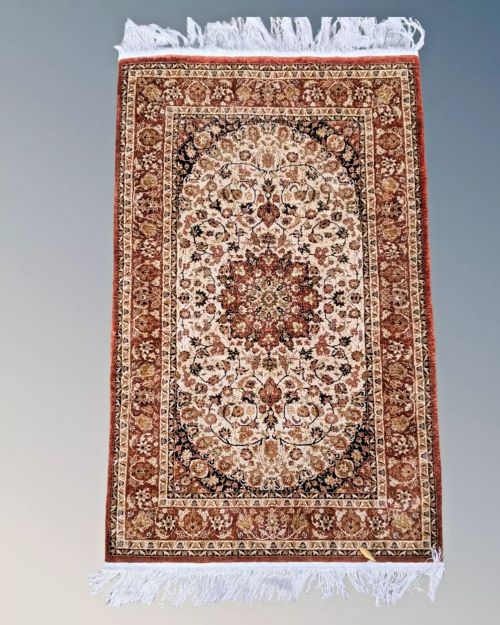
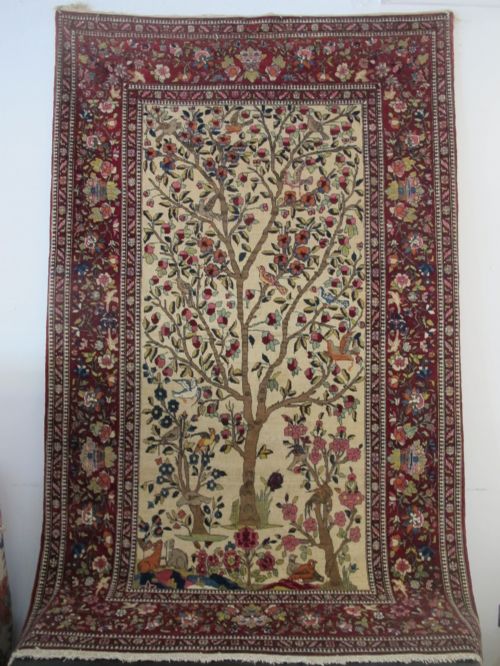
Makers and weavers utilised recurring floral lattices, central medallions, and prayer designs set against light backgrounds. Each piece reflects the specific palette and knotting density of its geographic origin.
Materials and construction
Weavers constructed these carpets predominantly using wool pile on cotton foundations, occasionally incorporating silk highlights for specific detail work. Natural dyes created the varied tones found across the floral motifs and neutral grounds.
Hand-knotting techniques varied by region, determining the pile density and the crispness of the botanical patterns. Foundation threads of cotton provided stability for dense wool and silk knotting.
Dated pieces span the decades from eighteen-fifty through to nineteen-thirty.
Evaluating quality and execution
Knot density and precision of design dictate the refinement of the weaving, separating fine city workshops from simpler village production. Materials also play a role, as the inclusion of silk highlights or superior wool grades alters the tactile quality of the pile.
Design execution and dye consistency define the visual success of the piece. Balanced composition within the floral lattice and harmonious integration of the ivory ground separate standard examples from superior works.
The Ivory Floral Carpet Glossary
- Ground
- The main background colour of the carpet, which in these pieces is predominantly ivory. This light field allows the floral motifs to stand out.
- Medallion
- A symmetrical central ornament placed in the middle of the carpet field. Many traditional Persian and Caucasian designs use this focal point.
- Prayer rug
- A smaller format rug featuring a mihrab or niche design, traditionally used for prayer. Caucasian examples often pair this form with an ivory ground and floral lattice.
- Pile
- The vertical or slanted loops of yarn that form the usable surface of the carpet. It is typically spun from wool, occasionally with silk additions.
- Lattice
- An open, repeating network of intersecting lines or stems forming a grid across the carpet field. Floral elements frequently fill the compartments of this framework.
Ivory Floral Carpet: Frequently Asked Questions
How do I clean an ivory floral carpet?
Professional specialist cleaning is essential for maintaining antique wool and silk pile carpets without damaging the foundation threads.
Regular gentle vacuuming without a beater bar removes loose dirt from the surface safely.
Where were these carpets made?
The pieces originate primarily from traditional weaving centres and regions across Persia, the Caucasus, Kashmir, and Turkey.
Specific towns and workshops like Tabriz, Isfahan, Qum, and Mahal developed distinct regional styles and knotting techniques.
How do I date an antique carpet?
Dating relies on examining the materials, dye types, structural characteristics, and stylistic conventions typical of specific decades.
Comparative analysis with documented examples from periods such as the nineteenth or early twentieth century aids verification.
Are these carpets suitable for heavy traffic?
Wool pile carpets with sturdy cotton foundations withstand normal domestic foot traffic well in living areas.
Silk highlight pieces benefit from placement in lower-traffic zones to preserve the finer fibres.