
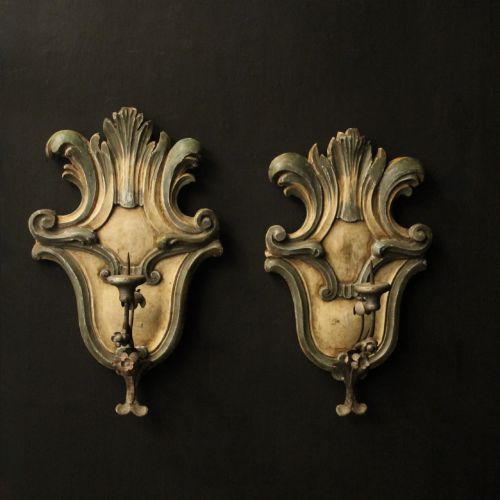
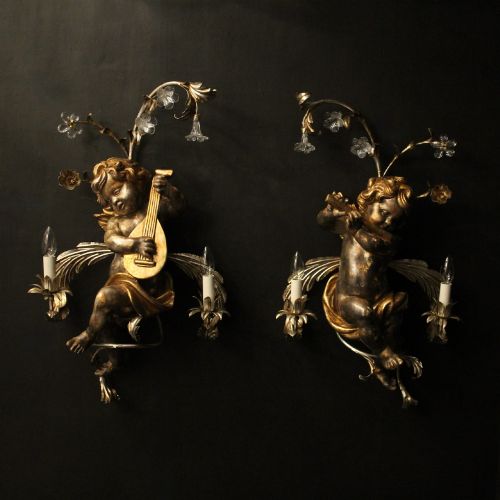
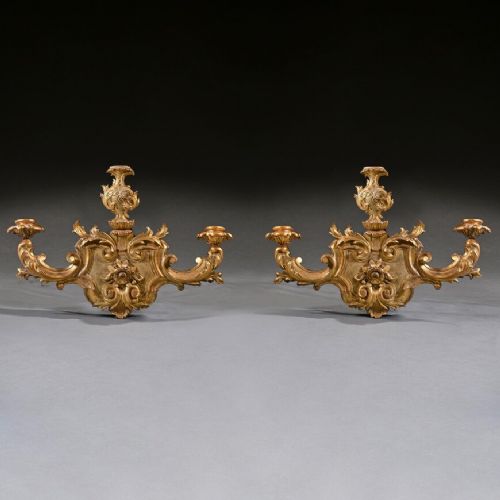
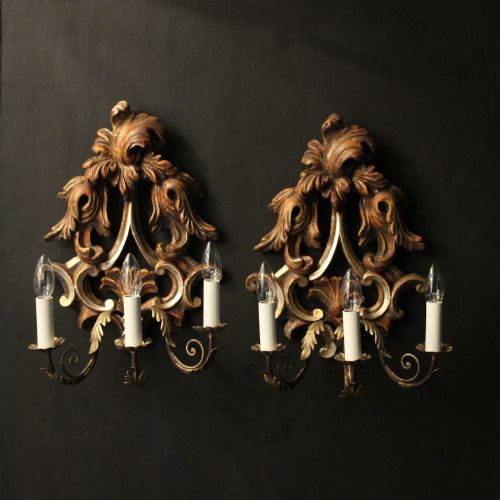


Italian Rococo Wall Sconces
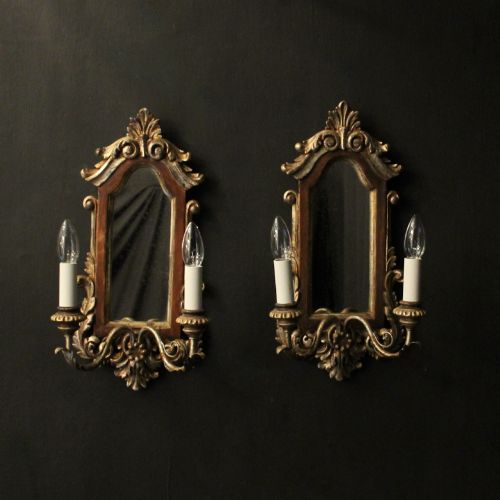
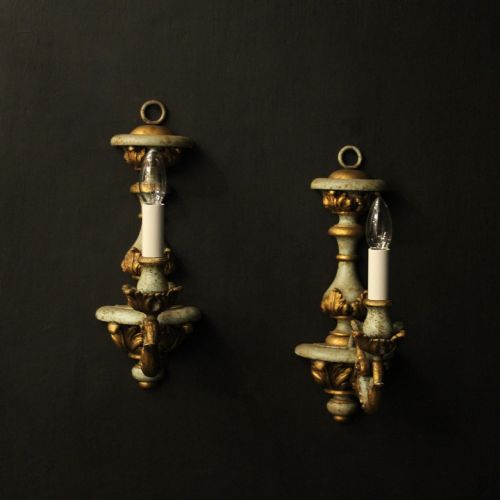
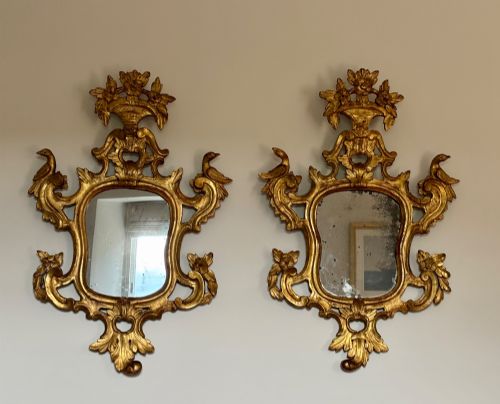
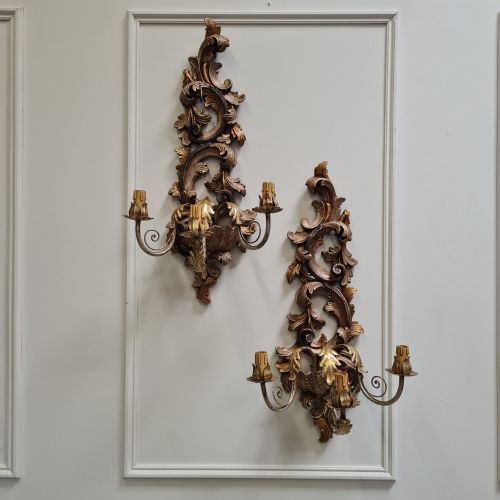
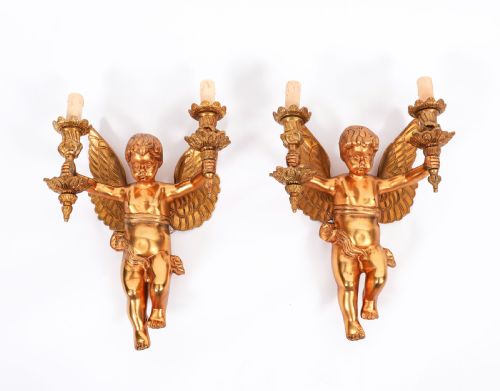
These Italian rococo wall sconces bring dramatic carved movement and gilded brilliance to any interior.
Italian Rococo Wall Sconces
Italian rococo wall sconces combine dynamic asymmetry, C-scrolls and naturalistic flourishes designed to hold candles or illuminate rooms from a vertical plane. When searching this phrase, buyers encounter wall lights, girandoles, brackets and mirrors that reflect light into interior spaces.
The pieces appearing on this page span several centuries, reaching from original eighteenth-century creations through nineteenth-century revivals up to twentieth-century Florentine interpretations. Twentieth-century giltwood pairs from the nineteen-twenties and thirties appear most frequently in the current selection.
Regional variations emerge clearly across the listings, with Venetian pieces focusing on carved mirrors and Florentine examples prioritising multi-armed giltwood structures. Workshops across Italy also produced polychrome versions and items incorporating metal elements alongside traditional carved wooden frames.
Materials and Construction
Makers shaped these fixtures from timber, applying gesso to build up the intricate relief details characteristic of the style before finishing the surfaces with gold leaf or silver leaf. Carved wood forms the structural core of the girandoles and wall brackets, providing the tensile strength needed for projecting candle arms.
Gilding techniques involve laying thin metallic leaf over prepared grounds, sometimes paired with polychrome paint layers to create contrasting colour and depth. Glass components such as Murano elements and mirrored plates integrate into the design to catch and multiply ambient light.
Listings span multiple construction materials, including carved wood, gesso, metal, glass, and applied gold or silver leaf.
Distinctions in Quality
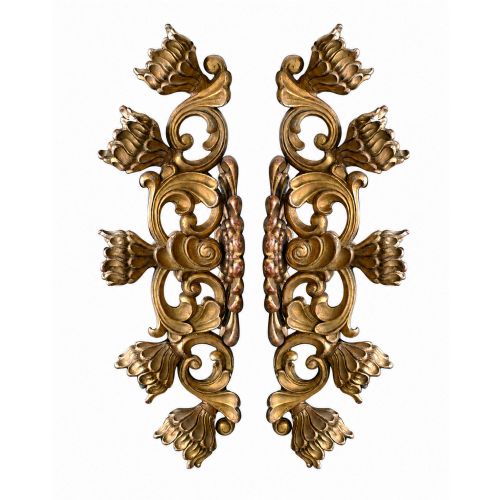
Depth and crispness of the carving separate superior examples from simpler production pieces, particularly where acanthus leaves and scrollwork curl away from the wall plane. Master carvers achieved a fluid sense of motion in wood and gesso that lesser hands rendered stiffly.
The integrity of the original gilding and the quality of the gesso preparation dictate the visual resonance of the piece over time. Richly layered gold leaf holds a warmer tonality and responds differently to light than flat modern metallic paints.
The Italian Rococo Wall Sconces Glossary
- Giltwood
- Timber coated with gold leaf applied over a prepared gesso ground. This finish provides the characteristic metallic gleam seen on classical wall fixtures.
- Girandole
- An ornamental wall bracket or mirror fitted with candle branches. The reflective glass plate serves to multiply the light cast into the room.
- Gesso
- A plaster mixture applied to wood surfaces and carved or moulded into relief details. It forms the smooth base layer required for subsequent gilding.
- Cartouche
- An ornamental tablet or panel frame resembling a rolled-up piece of parchment. It often forms the central motif of rococo mirrors and sconces.
- Pricket
- A sharp metal spike set vertically in a candleholder to secure the base of a wax candle. This form appears frequently on earlier ecclesiastical and domestic lights.
- Ormolu
- Gilded bronze or other metallic mounts used for decorative effect. These components add structural precision and contrasting texture to carved wooden frames.
Italian Rococo Wall Sconces: Frequently Asked Questions
How do I hang heavy wall sconces?
Heavy carved wood and giltwood fixtures require secure fixing directly into wall studs or the use of appropriate masonry anchors. The weight of multi-branched sconces demands robust hardware to protect both the wall and the antique frame.
Professional installation is recommended for larger girandoles and mirrored wall lights to ensure the hanging brackets bear the load safely without putting strain on ancient joints.
Were these originally wired for electricity?
Most antique wall lights and sconces were built for candles before being adapted for modern electrical wiring during later decades. Traces of historical alterations often remain visible around the nozzle and drip pan areas.
When incorporating them into modern lighting schemes, a qualified electrician can run discreet wiring through the existing channels or adapt the fittings to accept low-voltage candle tubes.
How do I clean gilded surfaces safely?
Dusting requires only a very soft, dry brush or feather duster to remove surface particles without disturbing delicate gesso and leaf. Moisture and chemical cleaning agents must be avoided entirely as they strip historic finishes.
Professional conservators should handle any significant restoration or deep cleaning to preserve the integrity of the original gold leaf and underlying wood.
Can I mix eighteenth-century and twentieth-century pieces?
Twentieth-century Florentine revivals often capture the exuberant spirit of earlier eighteenth-century designs, allowing for harmonious placement within the same interior scheme. Scale and intensity of gilding matter more than exact chronological alignment when pairing wall lights.
Matching the overall palette of the room helps integrate pieces from different periods, such as combining silver-gilt and gold-gilt elements across adjacent walls.