


Painted Wood Wall Sconces
Painted wood wall sconces bring warmth and decorative texture to a room, offering historic lighting forms shaped by centuries of regional design.
Painted Wood Wall Sconces
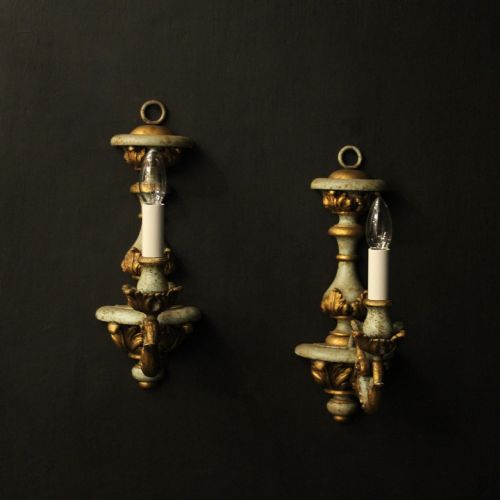
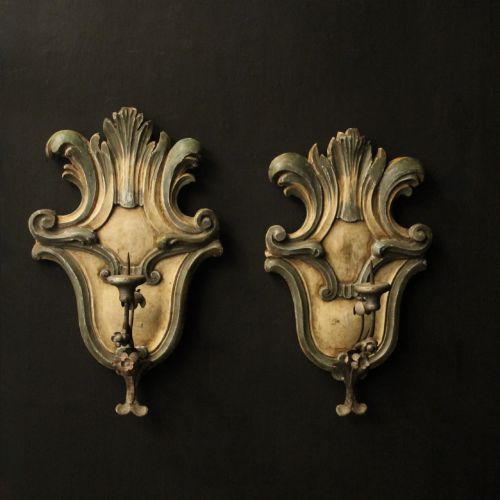
Painted wood wall sconces encompass wall brackets, girandoles, and multi-armed wall lights spanning from the eighteenth century through to the interwar decades of the twentieth century. These pieces originate predominantly from Italian and French workshops, reflecting regional decorative traditions from Baroque excess to Neoclassical restraint.
Forms range from single candle brackets to triple-arm fixtures and large architectural wall brackets designed to hold objects or illuminate dark corners. Many pieces incorporate mirrored plates or metallic gilding to amplify candlelight within historic interiors.
Materials and construction methods
Carved wood provides the primary structural foundation for these pieces, frequently enhanced with gesso and plaster layers to build up intricate ornamental details before the application of paint or metal leaf. Artisans utilised soft and hardwoods, shaping them through carving and turning.
Surface decoration relies on polychrome pigments, oil painting, and giltwood finishes, sometimes combining silver or gold leaf with painted floral motifs or faux-marble effects. Metal elements occasionally reinforce the wooden arms or candle nozzles.
Listings feature Italian and French origins predominantly, spanning the eighteenth, nineteenth, and early twentieth centuries.
Distinctions in quality
Depth and precision of the underlying woodcarving separate superior examples from more mechanical later production, visible in the crispness of acanthus leaves, scrollwork, and architectural moulding. Hand-applied polychromy with layered glazes demonstrates greater artisanal skill than flat, uniform modern repainting.
The integrity of the gesso ground beneath the paint layer dictates longevity, as inferior preparation leads to flaking and loss of fine detail over time. Original gilding and untouched historic paint surfaces carry higher regard than heavily restored or later overpainted finishes.
The Painted Wood Wall Sconces Glossary
- Polychrome
- Decorated in multiple colours. This technique defines many Italian and French provincial wall lights.
- Girandole
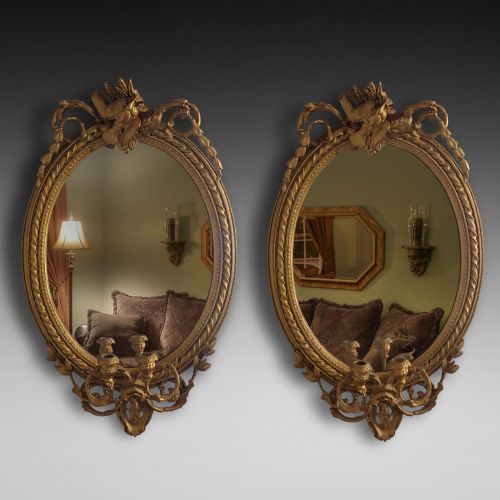
- A decorative wall bracket featuring a mirror that reflects the candlelight. These pieces often include carved and gilt frames.
- Gesso
- A plaster-like mixture applied to wood as a smooth base for paint or gilding. It allows artisans to carve intricate relief decoration.
- Pricket
- A sharp metal spike on a candleholder designed to secure the base of a candle. This form appears on older ecclesiastical and domestic fixtures.
- Giltwood
- Wood carved and covered with a thin layer of gold leaf or metal powder. It creates a luminous surface under artificial light.
Painted Wood Wall Sconces: Frequently Asked Questions
How do I hang antique wall sconces safely?
Most antique wall sconces hang from a secure bracket or screw fixed directly into wall studs or appropriate masonry anchors. Given the weight of carved wood, gesso, and metal arms, professional installation ensures the fixture supports its own weight safely.
Rewired electric models require a qualified electrician to connect the internal vintage wiring to modern household circuits according to current safety regulations.
Can these wooden sconces hold real candles?
Many historical wall sconces were designed exclusively for wax candles, featuring original prickets or drip pans. Using traditional candles remains possible if monitored carefully, though heat and smoke can damage delicate historic paint and gilt surfaces over time.
Modern buyers frequently opt for flame-retardant LED candles to replicate the historic aesthetic without risking heat damage to the antique wood and gesso.
How should I clean painted wood wall sconces?
Dust these fixtures gently with a dry, soft-bristled brush or a clean microfiber cloth to remove surface particles without disturbing fragile paint or gilt layers. Avoid water, harsh chemical cleaners, or abrasive cloths, which strip historical polychromy and damage the underlying gesso.
Professional conservators should handle major cleaning or consolidation if the paint begins to flake or separate from the carved wood base.
How do I distinguish eighteenth-century sconces from later copies?
Eighteenth-century pieces display hand-cut tool marks, aged timber shrinkage patterns, and traditional animal-protein glues beneath the gesso layers. Examining the reverse side and joinery often reveals period-specific construction methods distinct from nineteenth or twentieth-century manufacturing.
Wear patterns around candle nozzles and mounting points also indicate genuine age through natural handling rather than artificial distressing.