

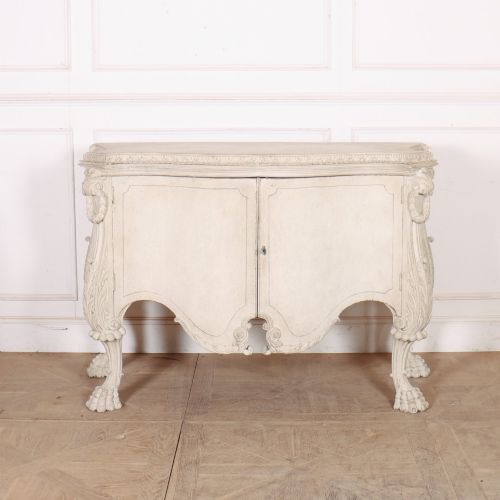
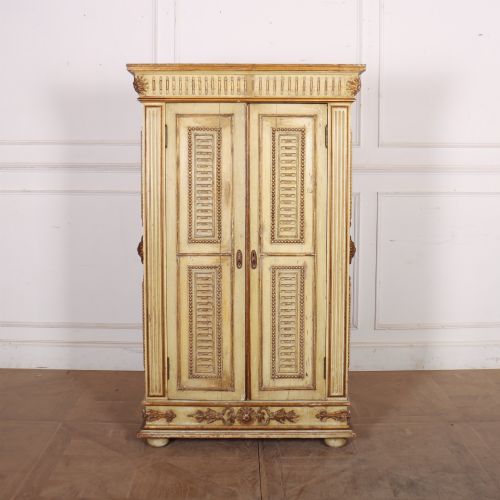
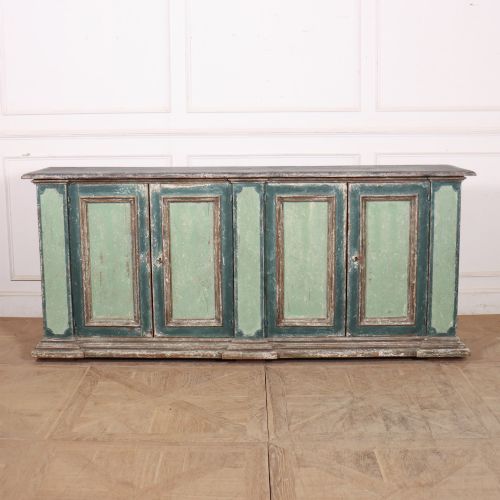


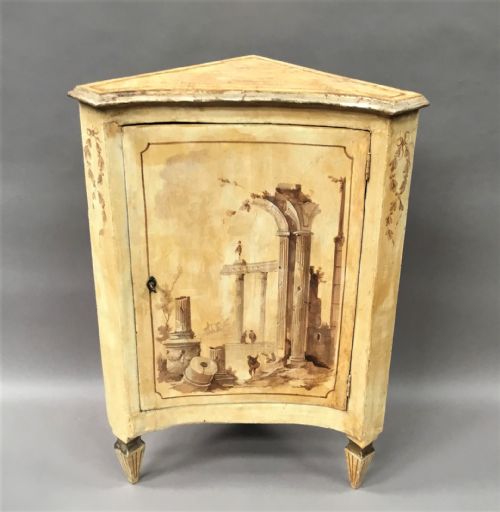


Italian Painted Storage Cabinet
These Italian painted storage cabinet examples bring decorative colour and regional character to a room, offering practical storage disguised in centuries of hand-painted artistry.
Italian Painted Storage Cabinet
When you search for an italian painted storage cabinet, you encounter a diverse group of functional furniture items spanning several centuries of Italian craftsmanship. The selection ranges from tall marriage cupboards and wardrobes to compact side cabinets and standing corner units.
The pieces on this page lean heavily towards nineteenth-century interpretations alongside notable eighteenth-century examples. Forms such as cupboards, sideboards, and cocktail cabinets dominate the inventory, each bearing the distinct regional styles of Italian provincial and rococo design.
Buyers most frequently meet nineteenth-century painted cupboards and side cabinets constructed from pine or broader wood substrates. These items serve as focal storage points in living spaces, hallways, and bedrooms, combining utilitarian capacity with rich surface decoration.
How they were made
Makers constructed these storage pieces primarily from solid wood such as pine, applying layers of gesso to prepare the surfaces for intricate paintwork. Artisans then utilised hand-mixed pigments, sometimes incorporating gold leaf accents to highlight carved architectural details and mouldings.
Surface decoration defines the construction of these items, employing polychrome painting techniques characteristic of Venetian and Tuscan traditions. Metal and iron hardware, including hinges and locks, secure the doors on these wardrobes and sideboards.
Italian Painted Storage Cabinet Retail Price Guide 2026
Typical asking prices for italian painted storage cabinet among the pieces listed under this phrase on Sellingantiques today, from the lower quarter to the upper quarter. They describe what is for sale here now, not the wider market.
Marriage cupboards carry historical paint intended to celebrate matrimonial unions, meaning some survive with centuries of romantic goodwill baked directly into the pigments.
What varies in quality
The distinction between standard examples and superior pieces rests largely in the preservation and sophistication of the original painted surface. Finer cabinets display layered polychrome detail and integrated gesso work that has survived centuries with minimal later intervention.
Structural integrity and the quality of the underlying woodwork also separate provincial utility pieces from high-style creations. Venetian rococo and eighteenth-century items often exhibit more ambitious joinery and refined proportions than later nineteenth-century counterparts.
The Italian Painted Storage Cabinet Glossary
- Polychrome
- Decorated in multiple colours. This technique defines the vibrant painted surfaces seen on many Italian storage pieces.
- Gesso
- A plaster-like mixture applied to wood surfaces to create a smooth base for painting and gilding. It allows for crisp decorative relief.
- Provincial
- Of or relating to the regions outside the capital, often denoting simpler or more rustic regional styles. These designs reflect local domestic traditions.
- Rococo
- An ornate style characterised by asymmetry, curves, and scrollwork. It influences the fluid lines of many Venetian storage cabinets.
- Gold leaf
- Gold beaten into extremely thin sheets used for gilding surfaces. It provides metallic highlights against the painted wood.
Italian Painted Storage Cabinet: Frequently Asked Questions
Where should I place a painted cabinet?
These cabinets work well in hallways, dining rooms, or bedrooms as statement storage pieces that break up monotonous wall space.
Keep them away from direct sunlight and moisture to protect the historic paint layers from fading or lifting.
How do I clean an antique painted surface?
Dust the exterior gently with a dry, soft microfiber cloth to prevent abrasion.
Avoid commercial cleaning sprays, water, and solvents, as moisture quickly damages fragile historical paint and gesso.
Are these cabinets suitable for everyday use?
Most pieces offer generous interior space with shelving or hanging room depending on whether they are cupboards or wardrobes.
Handle the old doors and iron hardware with care to preserve the original operational mechanics.
How can I tell an eighteenth-century piece apart?
Earlier eighteenth-century pieces often feature heavier timber construction, deeper patination, and distinct regional joinery methods.
Stylistic markers such as Tuscan proportions or early Venetian motifs also help separate them from nineteenth-century revivals.