

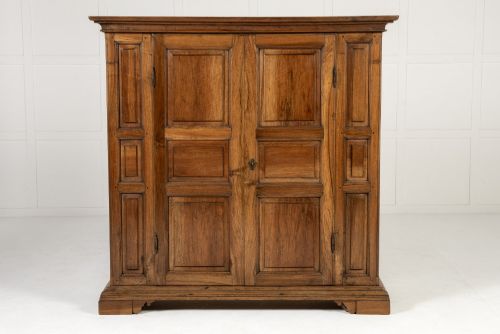
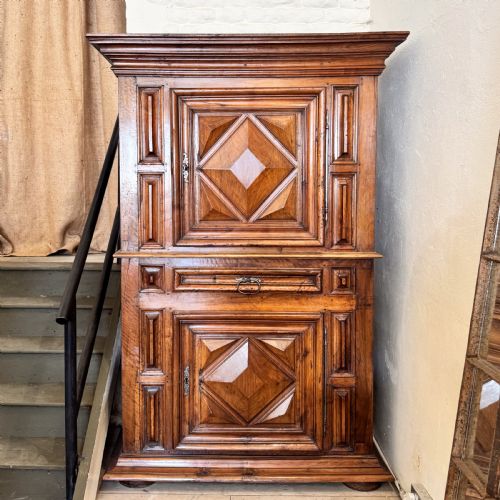
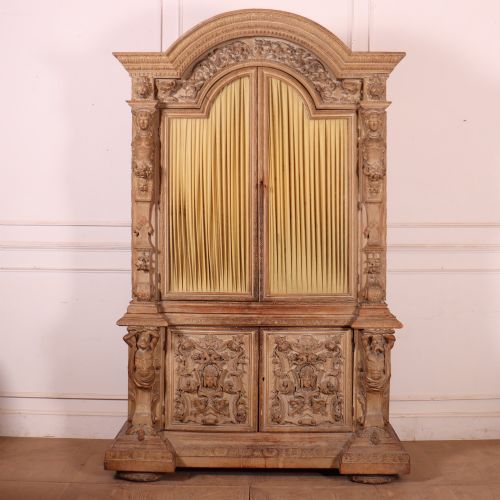
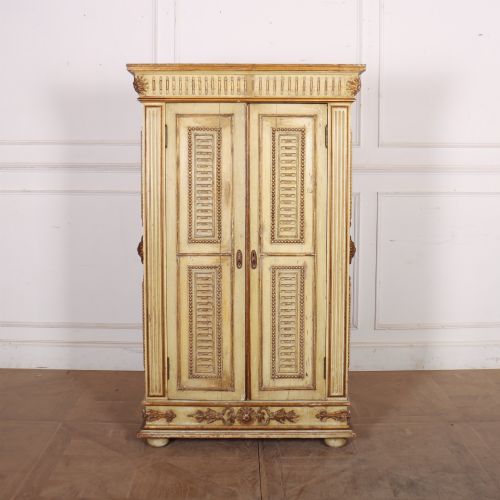


Italian Armoire Cabinet
An italian armoire cabinet brings sculptural warmth and substantial storage to a room, drawing the eye with rich timber grain and period carved detail.
Italian Armoire Cabinet
When you search for an italian armoire cabinet, you are looking at substantial storage furniture originating from Italy, spanning styles from Italian Provincial and Baroque to Renaissance Revival and Neoclassical Revival. These pieces function as large cupboards, wardrobes, vitrines, and display cabinets designed to anchor a room.
The versions you are most likely to meet on this page date from the eighteenth and nineteenth centuries, alongside pieces from around eighteen-ninety, nineteen hundred, and nineteen thirty. They appear in forms ranging from painted marriage cupboards to grand walnut storage cabinets.
Materials and construction
Makers built these pieces primarily from solid walnut and pine, often applying elaborate carved wooden details to the structure. Some examples incorporate iron hardware alongside glass panes for display sections.
Surface decoration frequently involves paint, gesso, and gold leaf, creating polychrome finishes or traditional painted schemes seen on marriage cupboards.
Italian Armoire Cabinet Retail Price Guide 2026
Typical asking prices for italian armoire cabinet among the pieces listed under this phrase on Sellingantiques today, from the lower quarter to the upper quarter. They describe what is for sale here now, not the wider market.
Marriage cupboards carry centuries of whispered wishes behind their painted doors, storing domestic secrets along with the linens.
Judging quality and character
Quality in these pieces rests upon the depth and crispness of the carved woodwork and the architectural proportions of the cabinet. Finer examples display carefully selected walnut grain and balanced, confident proportions that command the space.
Surface treatments also divide the range, distinguishing simple utility cupboards from elaborately finished polychrome painted wardrobes or gilded pieces that reflect higher artistic ambition.
The Italian Armoire Cabinet Glossary
- Vitrine
- A glass-fronted cabinet designed for the display of porcelain, books, or curiosities. These pieces showcase items while protecting them from dust.
- Polychrome
- Decorated in multiple colours. This technique appears on painted furniture and marriage cupboards.
- Gesso
- A plaster-like mixture applied to wood as a base for painting or gold leaf gilding. It provides a smooth surface for intricate detail work.
- Marriage cupboard
- A large storage piece traditionally commissioned or gifted for a wedding. These often feature decorative painted surfaces and regional motifs.
Italian Armoire Cabinet: Frequently Asked Questions
How do I date an antique italian cabinet?
Dating relies on examining the construction methods, timber choice, and stylistic revival elements present in the woodwork. Hardware styles and the wear on painted surfaces also offer clues to the period of origin.
Eighty-century pieces often display hand-carved walnut and simpler joinery, while nineteenth-century items may incorporate Renaissance or Baroque revival motifs.
What rooms suit an italian armoire cabinet?
These large storage pieces suit principal bedrooms, grand hallways, or spacious living areas where their scale can be properly appreciated. They provide substantial closed storage for linens, clothing, or household items.
Placed against a plain wall, a carved walnut or painted cupboard acts as a focal point that defines the character of the interior.
Are painted and wooden cabinets cared for differently?
Painted surfaces require gentle dusting with a soft cloth and protection from direct sunlight to prevent fading of polychrome details and gold leaf. Unfinished or waxed timber benefits from occasional nourishment with appropriate furniture wax.
Both finishes need stable indoor humidity levels to prevent wood movement and cracking in the panels.
What is the difference between a cupboard and an armoire?
Cupboards generally refer to enclosed storage furniture with shelves, whereas armoires traditionally served as wardrobes for hanging garments. Over time, the terms have often been used interchangeably in listings.
Examining the interior layout reveals whether the piece was built for folded storage or hanging clothes.