

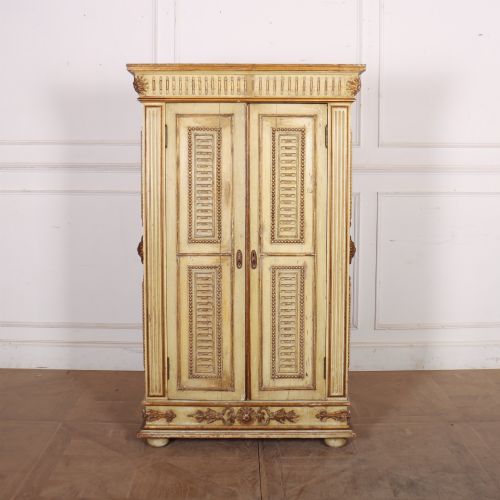


Gilded Wooden Cupboard
A gilded wooden cupboard brings rich surface and substantial form into a room, offering practical storage disguised beneath layered gold and paint.
Gilded Wooden Cupboard
A gilded wooden cupboard encompasses a diverse group of storage furniture spanning from the seventeenth century through to the 1930s. When exploring a gilded wooden cupboard, a buyer encounters forms ranging from Italian side cupboards and architectural tabernacles to Chinese lacquer cabinets and English spice cupboards.
The selection includes pieces created across various international traditions, incorporating Italian Neoclassical Revival, French Chateau, Pre-Raphaelite, and Qing Dynasty styles. Buyers most frequently meet side cabinets, small cupboards, and bedside tables fashioned from wood and finished with paint, gesso, and gold leaf.
How they were made
Construction relies upon traditional woodworking joined with gesso preparation to receive surface enrichment. Artisans applied gold leaf over gesso bases on wood carcases, building up relief work for architectural mouldings and decorative panels.
Alternative surface treatments involve black lacquer and hand-painted details executed in styles such as the Pre-Raphaelite revival. Brass hardware and marquetry inlays frequently complement the primary wood structures of these cabinets.
Gilded Wooden Cupboard Retail Price Guide 2026
Typical asking prices for gilded wooden cupboard among the pieces listed under this phrase on Sellingantiques today, from the lower quarter to the upper quarter. They describe what is for sale here now, not the wider market.
One unexpected workshop chest even served a Victorian watch and clock repairer.
What varies in quality
Quality rests upon the execution of the decorative surface and the integrity of the underlying woodwork. The depth and precision of carved details and the skill applied in laying gold leaf or lacquer distinguish finer examples from simpler workshops.
Coherence of style also determines standing, whether an item follows strict Italian Rococo lines or adopts the architectural structure of a seventeenth-century tabernacle. The harmony between the carcase construction and the applied finish dictates the overall standard.
The Gilded Wooden Cupboard Glossary
- Gesso
- A plaster mix applied to wood surfaces as a smooth base for gilding or painting. This ground layer allows intricate relief work to be carved before metal leaf is laid.
- Giltwood
- Timber that has been coated with gold leaf or gold dust. It differs from solid gold by utilising a wooden carcase beneath the metallic finish.
- Lacquer
- A durable resin finish applied in multiple layers and polished to a hard sheen. Asian and European makers utilised this technique to create glossy, protective surfaces.
- Marquetry
- The art of applying pieces of veneer to a structure to form decorative patterns. Craftsmen fitted varied wood types together to create pictorial scenes on cabinet doors.
- Tabernacle
- An architectural structure designed with columns or pilasters framing a central recess. In early pieces, this form was adapted for small domestic shrines or cabinets.
Gilded Wooden Cupboard: Frequently Asked Questions
What is a gilded wooden cupboard?
A gilded wooden cupboard is a storage piece constructed from timber and enriched with gold leaf, gesso, or painted finishes. These items range from small table cabinets to full side cupboards created in diverse international traditions.
They serve as focal points in a room while providing enclosed storage for small objects, textiles, or daily utilities.
How do I date a cupboard?
Dating relies upon examining the construction methods, timber species, and stylistic vocabulary employed in the piece. Seventeenth and eighteenth-century examples display distinct architectural proportions compared to nineteenth-century revival styles or 1930s pieces.
Comparing the decorative motifs, such as Qing Dynasty carvings or Pre-Raphaelite painted scenes, helps place the object within its historical period.
Where should I place one?
These cupboards suit living rooms, hallways, or bedrooms where their decorative surfaces can be appreciated. Smaller variations function well as bedside tables or table cabinets on top of larger furniture.
Position them away from direct heat sources and strong sunlight to protect the fragile gold leaf and painted wooden surfaces.
How do I care for the finish?
Maintenance requires gentle dusting with a soft, dry cloth without the use of chemical polishes or modern cleaning sprays. The delicate layers of gold leaf and lacquer can be easily damaged by moisture or abrasive friction.
Keeping the environment stable in humidity and temperature prevents the underlying wood from expanding and cracking the gesso layer.