



Italian Neoclassical Seating
Italian neoclassical seating brings structured classical symmetry and refined carving into a room, offering enduring elegance for formal interiors.
Italian Neoclassical Seating
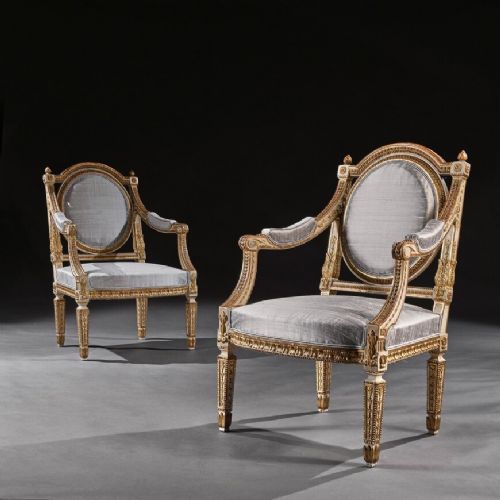
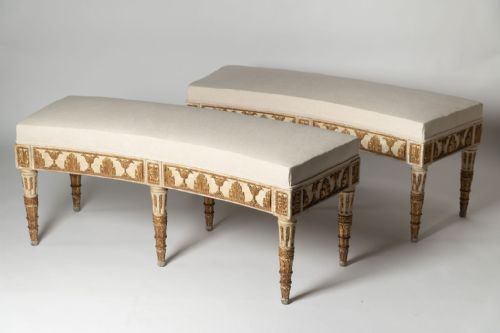
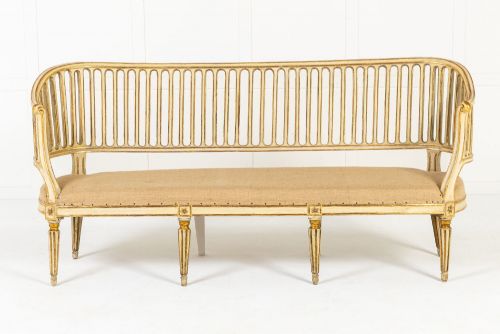
When you search for italian neoclassical seating, you encounter armchairs, settees, benches, stools, and window seats rooted in 18th century, 19th century, and turn-of-the-century design. These forms draw heavily on classical antiquity, translating ancient architectural motifs into domestic furniture.
The pieces on this page most commonly appear as painted wood or giltwood frames upholstered in silk, linen, or other fine fabric. You also find curule stools and structural seating displaying disciplined lines rather than baroque curves.
Makers and workshops across Italy produced these items during distinct periods, including grand tour neoclassical and italian empire phases. Their silhouettes rely on straight tapered legs, urn motifs, and restrained ornamentation that echo archaeological discoveries of the era.
Materials and Construction
Frames rely on timber shaped, joined, and finished with painted wood surfaces, parcel gilt, or full gold leaf and gesso. Artisans built structural elements to support elaborate upholstery while maintaining strict architectural proportions.
Upholstery materials comprise traditional textile selections such as linen and silk upholstery. These fabrics are secured over padded foundations to complement the gilded or painted wooden frames beneath.
Italian Neoclassical Seating Retail Price Guide 2026
Typical asking prices for italian neoclassical seating among the pieces listed under this phrase on Sellingantiques today, from the lower quarter to the upper quarter. They describe what is for sale here now, not the wider market.
Listings feature periods spanning the 18th century through 1900, incorporating painted wood, giltwood, bronze, and silk upholstery.
Judging Quality and Execution
The distinction between standard examples and finer items lies in the crispness of the wood carving and the application of gesso and gold leaf. Superior pieces display deeply defined architectural details and harmonious proportions that reflect disciplined craftsmanship.
The integration of the textile finish with the painted or gilded frame dictates the overall visual success of the piece. Masterful execution ensures that decorative elements enhance the classical silhouette rather than overwhelm its structural lines.
Zoffoli
The Italian Neoclassical Seating Glossary
- Curule stool
- An ancient Roman form of folding seat featuring X-shaped legs adapted into decorative neoclassical seating. This design references magistrate chairs from antiquity.
- Giltwood
- Timber coated with gold leaf over a prepared gesso ground. It provides a brilliant metallic finish common on formal neoclassical frames.
- Parcel gilt
- A decorative technique where specific carved details of a painted wooden frame are highlighted with gold leaf. This creates contrast against the primary painted surface.
- Grand tour
- A period of European travel undertaken by wealthy young men to study classical art and architecture. Items acquired or inspired by these journeys heavily influenced Italian neoclassical design.
- Gesso
- A plaster mixture applied to wood surfaces to create a smooth base for gilding or painting. Its quality determines how sharply fine carved details emerge.
Italian Neoclassical Seating: Frequently Asked Questions
How were settees and window seats used?
Settees and window seats provided formal seating in reception rooms, galleries, and long hallways of grand residences.
They served both a functional purpose for resting and a decorative role, accentuating the classical proportions of interior spaces.
How do I care for giltwood frames?
Giltwood surfaces require gentle dusting with a soft, dry cloth and protection from direct sunlight and fluctuating humidity.
Avoid liquid cleaners and harsh chemicals, as moisture can lift the delicate gold leaf and underlying gesso layers.
How do I distinguish 18th and 19th-century pieces?
Eighteenth-century examples typically display hand-carved nuances and patination inherent to the height of the neoclassical movement.
Later 19th-century items, including grand tour interpretations, often reflect revivals of these earlier classical forms with distinct casting or carving techniques.