




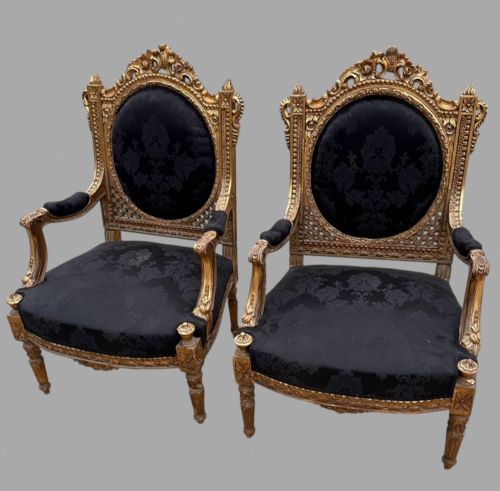


Neoclassical Gilt Fauteuil Pair
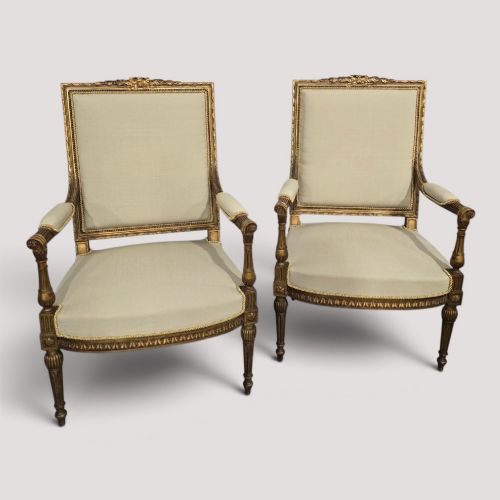
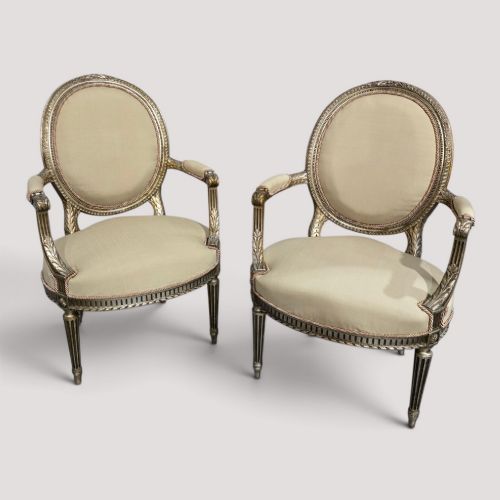
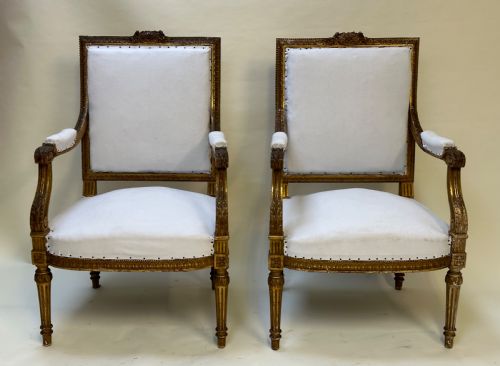
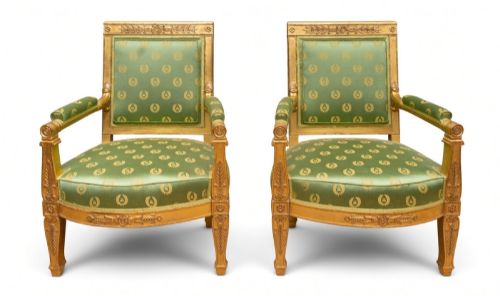
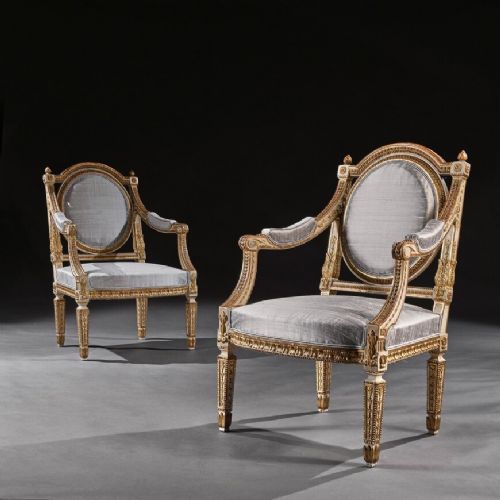
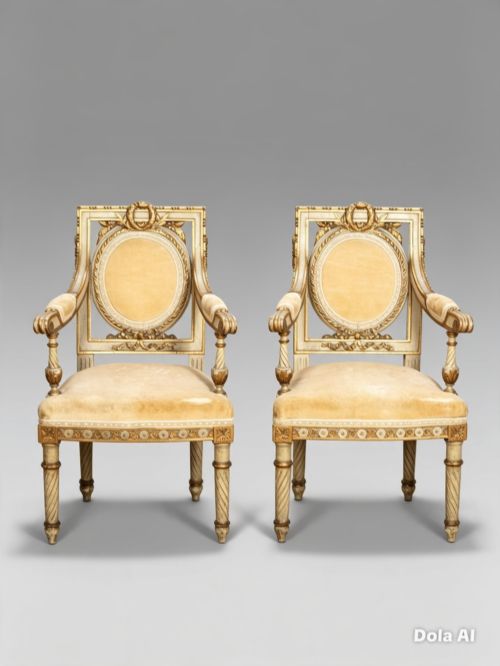
A neoclassical gilt fauteuil pair brings structured French elegance into a room with formal symmetry and carved gilded timber.
Neoclassical Gilt Fauteuil Pair
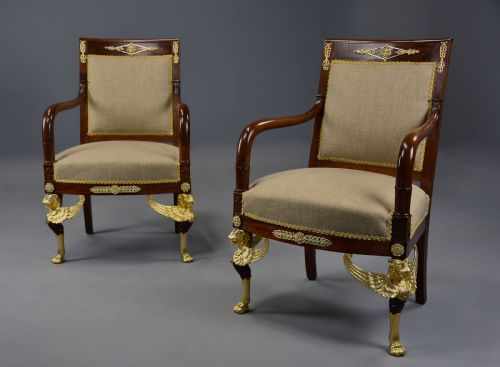
A neoclassical gilt fauteuil pair represents seated upholstered armchairs originating primarily from French and Italian traditions, spanning the nineteenth and early twentieth centuries. These matching seats follow formal design vocabularies like French Empire, Louis XVI Revival, and Regency styles.
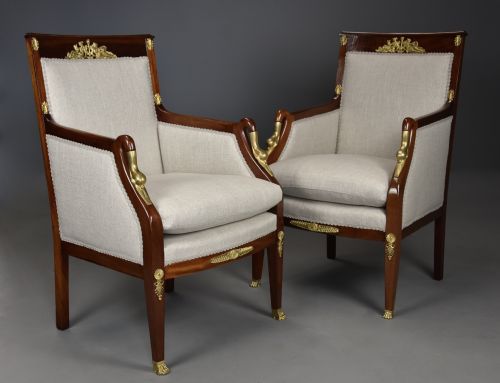
Most examples found here date from the nineteenth century or the early twentieth century, utilising mahogany or gilded timber frames. They function as striking decorative items for formal drawing rooms and salons, pairing open armrests with upholstered seats and backs.
Materials and construction methods
These armchairs rely on solid timber foundations, predominantly mahogany and giltwood, occasionally enhanced with painted and parcel gilt surfaces. Metal ornamentation, including ormolu and brass, appears on select revival pieces to accentuate structural lines.
Upholstery relies on traditional textiles such as velvet and linen stretched over supportive frames. Carved wooden details define the neoclassical aesthetic, uniting structural joinery with surface gilding.
Neoclassical Gilt Fauteuil Pair Retail Price Guide 2026
Typical asking prices for neoclassical gilt fauteuil pair among the pieces listed under this phrase on Sellingantiques today, from the lower quarter to the upper quarter. They describe what is for sale here now, not the wider market.
Listings feature pieces spanning the nineteenth century up to 1920, incorporating styles from French Empire to Italian Neoclassical.
Distinctions in craftsmanship and design
Quality separates simple nineteenth century interpretations from pieces bearing precise maker attributions and historical provenance, such as work by Jacob-Desmalter. Finer examples display crisper carved detail in the giltwood and more substantial timber framing.
The sophistication of the stylistic revival dictates the visual success of the piece, distinguishing restrained neoclassical symmetry from heavier decorative adaptations. Integration of genuine ormolu mounts rather than lesser metalwork elevates the standing of the armchair.
Jacob Desmalter
The Neoclassical Gilt Fauteuil Pair Glossary
- Fauteuil
- An open-framed upholstered armchair with wooden armrests, characteristic of French seating design. These chairs typically feature exposed carved and gilded frames.
- Giltwood
- Timber coated with a thin layer of gold leaf or powder, providing a luminous surface finish. This material defines the luxurious appearance of neoclassical seating.
- Ormolu
- Cast and gilded bronze detailing applied as decorative mountings to furniture frames. It adds metallic contrast to the timber and gilt surfaces.
- Empire
- A decorative style originating in nineteenth century France, drawing inspiration from classical antiquity. It favours monumental forms, mahogany, and formal symmetry.
- Restauration
- A transitional French design period bridging the fall of the Empire and the July Monarchy. The style retains classical restraint while softening heavier proportions.
Neoclassical Gilt Fauteuil Pair: Frequently Asked Questions
What defines a neoclassical armchair?
Neoclassical armchairs draw inspiration from classical Greek and Roman art, featuring straight lines, symmetrical forms, and restrained ornamentation.
They reject the curving excesses of earlier rococo designs in favour of architectural proportion and classical dignity.
Where should these chairs be placed?
These matching armchairs suit formal reception rooms, drawing rooms, or master bedrooms where symmetry matters.
Placing them opposite a fireplace or flanking a console table highlights their paired design.
How do you date a giltwood armchair?
Dating relies on examining the timber construction, the composition of the gesso beneath the gold leaf, and stylistic clues in the carving.
Revival pieces from the late nineteenth century often combine historical motifs with manufacturing techniques distinct from the original period.
Are these chairs comfortable for daily use?
While upholstered for seating, nineteenth century chairs were built for upright formal posture rather than lounging.
Their open armframes and supportive backs suit polite conversation and reading in a drawing room setting.