





Italian Marble Base
An italian marble base provides the solid mineral foundation for grand tour bronzes, classical busts, and architectural models from the nineteenth century.
Italian Marble Base
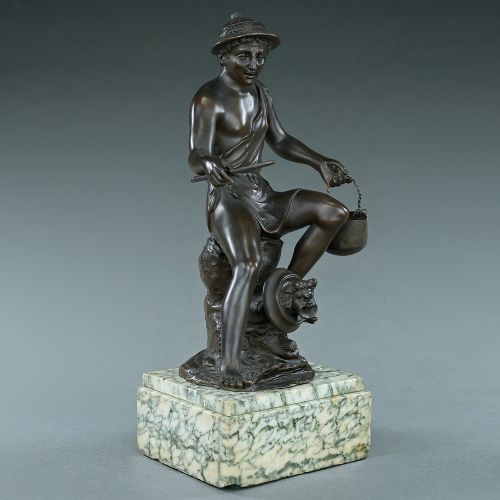
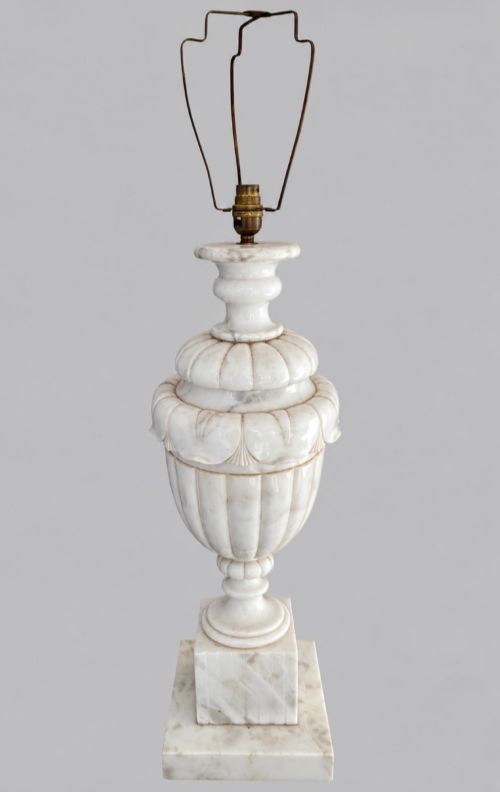
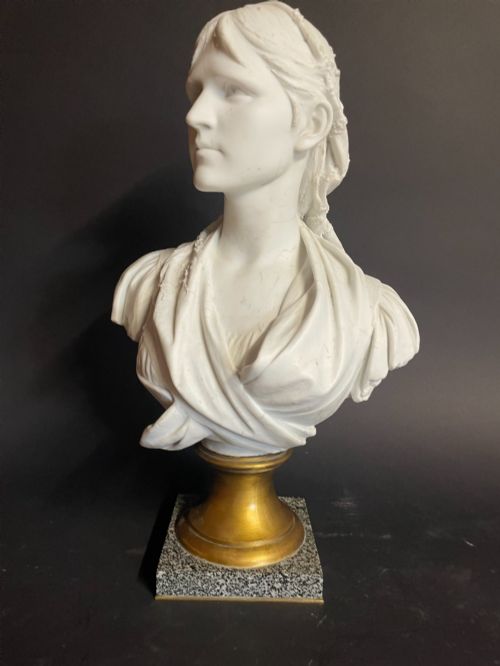
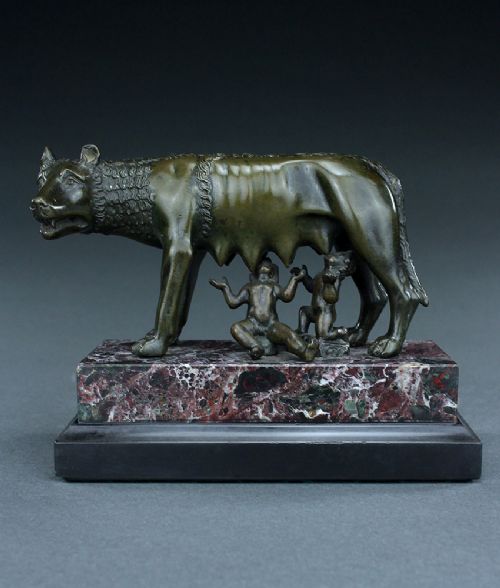
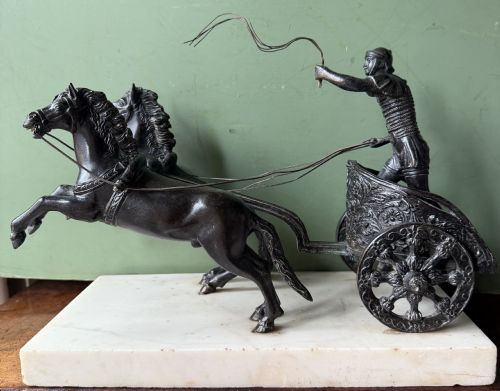
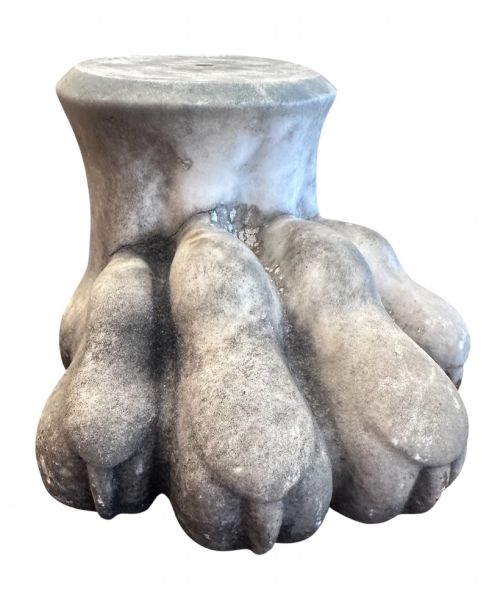
An italian marble base usually supports a sculptural reduction, a cast bronze figure, or an architectural model originating from the grand tour period of the nineteenth century. These heavy plinths anchor decorative objects ranging from small souvenir tazze to substantial marble busts and lamp bases.
Most examples combine carved stone with patinated or silvered bronze elements, reflecting neoclassical and classical revival tastes. The stones themselves vary widely in character, serving to elevate the figural or architectural work placed upon them.
How they were made
Makers shaped the heavy mineral foundations using traditional masonry saws and hand-polishing tools to achieve smooth or highly figured surfaces. Bronze figures and architectural models cast via the lost-wax method were then fitted meticulously to these stone plinths.
Combinations of Carrara, alabaster, vert de mer, and rouge griotte stones appeared alongside giltwood and brass mounts. Artisans selected specific coloured marbles to contrast with dark patinated bronzes or silvered metalwork.
Italian Marble Base Retail Price Guide 2026
Typical asking prices for italian marble base among the pieces listed under this phrase on Sellingantiques today, from the lower quarter to the upper quarter. They describe what is for sale here now, not the wider market.
Listings feature nineteenth-century grand tour souvenirs combining carved alabaster, Carrara marble, and patinated bronze.
What varies in quality
The sophistication of the stone turning and the density of the mineral figure determine the upper tier of these objects. Finely figured specimen marble or intricately carved alabastro egiziano elevates a piece far above simple utilitarian blocks.
Integration between the metal sculpture and the stone mount reveals the skill of the original workshop. Superior examples feature seamless pinning and proportioned plinths that balance the weight of the bronze or tazza above.
Antonio Merente·Verrocchio·Canova·Cellini·Messina Roma·Vincenzo Gemito·Aspetti·Richard Aurili·B Battioli Varese
The Italian Marble Base Glossary
- Grand tour
- Educational travels undertaken by wealthy young europeans to collect classical antiquities and souvenirs. These journeys inspired the bronze reductions and marble mounts seen here.
- Specimen marble
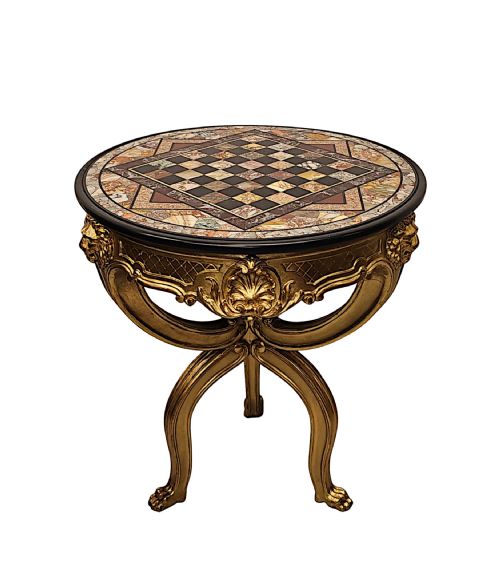
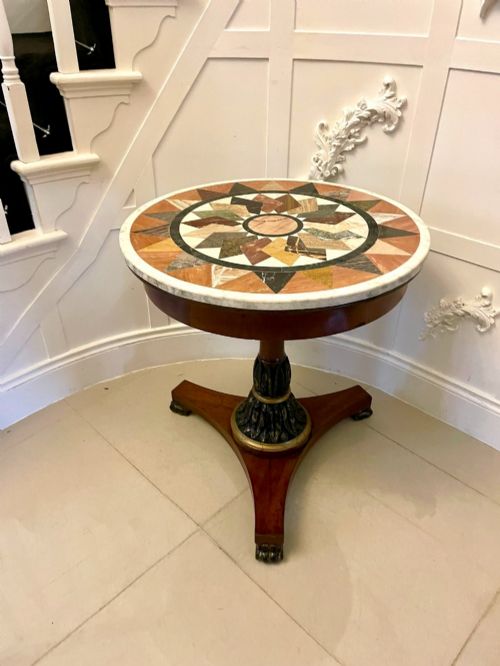
- A composite surface assembled from multiple different coloured mineral samples arranged in geometric patterns. This decorative technique often tops tables and chess boards.
- Tazza
- A shallow cup or vase set upon a stem and a foot, frequently reproduced in bronze or stone during the nineteenth century. These decorative vessels emulate ancient Roman forms.
- Pietra dura
- Inlaid work utilising cut and fitted polished coloured stones to create pictorial designs. Artisans applied this meticulous technique to small decorative plaques and table surfaces.
- Campana urn
- A bell-shaped vessel derived from classical antiquity used for ornamental displays. They appear frequently atop stone and metal plinths.
Italian Marble Base: Frequently Asked Questions
What periods do these marble bases date from?
The listings consist primarily of nineteenth century items, spanning from the eighteen-fifties through the nineteen-hundreds. Later twentieth century coffee tables and art deco decorative objects also appear.
These dates align with the height of revivalist interior decoration and the continuation of grand tour souvenir collection across Europe.
How were these stone and bronze objects used?
Owners displayed these pieces on desks, mantelpieces, and central tables as symbols of classical learning and refined travel. Larger iterations served as lamp bases or functional coffee tables in grand drawing rooms.
Their heavy mineral weight kept tall bronzes and architectural models stable while displaying intricate patination and carving.
How do I care for antique marble and bronze?
Dust the stone and metal surfaces regularly with a soft, dry cloth to prevent grime accumulation. Avoid harsh chemical cleaners that can strip historical patinas from the bronze or etch the polished stone.
Keep the pieces away from direct heat sources and moisture to protect natural adhesives and delicate alabaster elements.
What materials make up these assemblies?
Foundations rely on natural minerals including Carrara marble, rouge griotte, vert de mer, alabaster, and specialised specimen stones. These support works cast in bronze, silvered bronze, brass, copper, and carved wood.
The interplay between colourful stone blocks and dark metal patination defines the visual weight of each piece.