


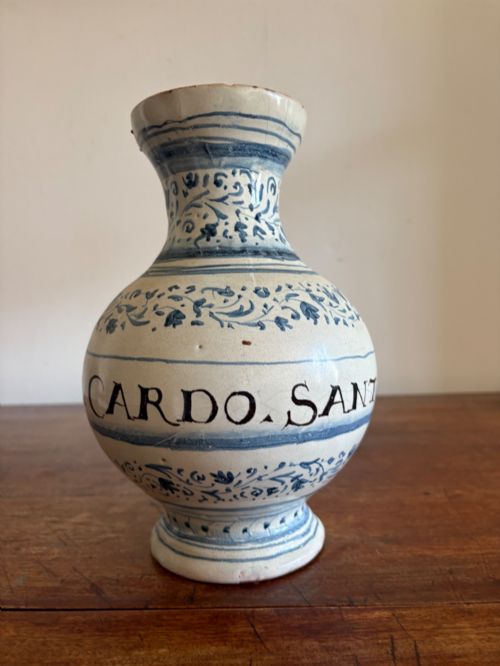


Italian Glazed Earthenware
These pieces of italian glazed earthenware range from tin-glazed pharmacy jars to revival chargers, bringing centuries of colour and form to any room.
Italian Glazed Earthenware
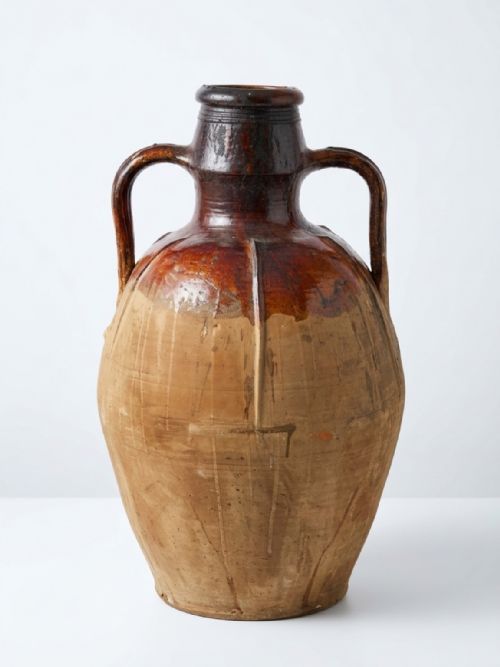
When you search for italian glazed earthenware, you encounter objects shaped by centuries of ceramic tradition, spanning utilitarian vessels and decorative display pieces. The selections include apothecary jars, chargers, wall plaques, and large urns originating from various Italian regions and workshops.
The majority of pieces encountered on this page belong to the nineteenth century, often embracing earlier revivals such as Renaissance Revival and seventeenth-century styles. Alongside these Victorian interpretations, genuine eighteenth-century examples and early twentieth-century works by noted makers appear regularly.
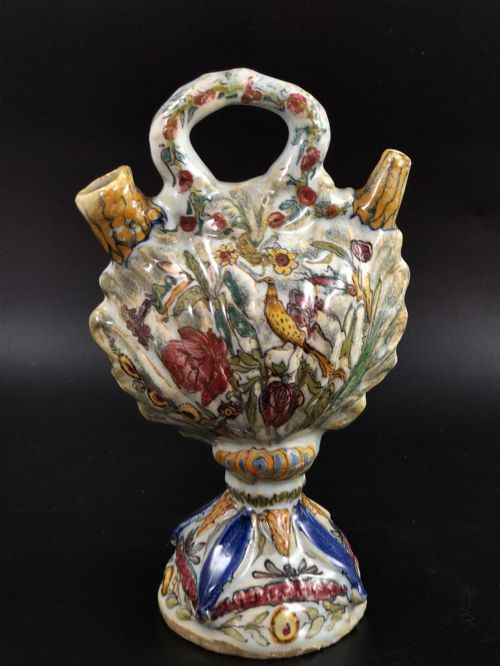
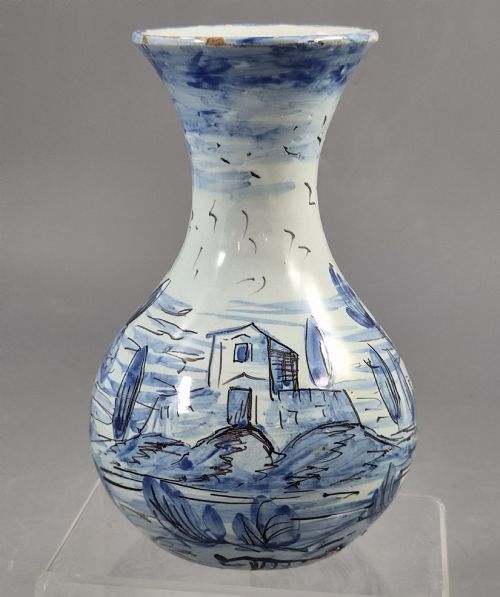
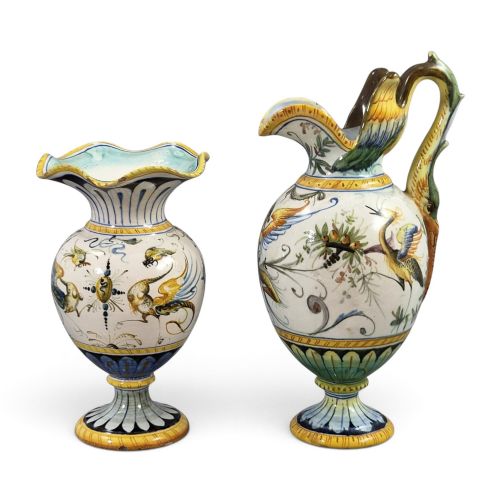
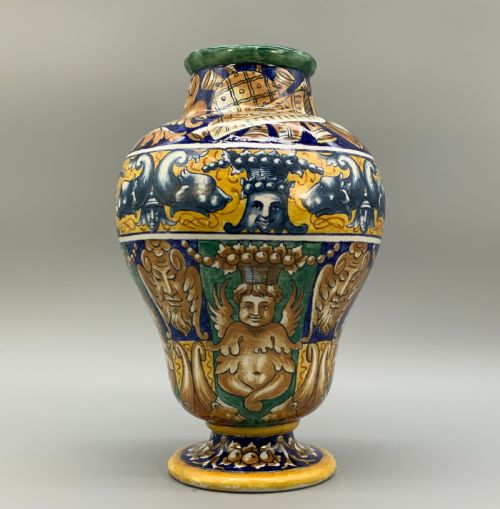
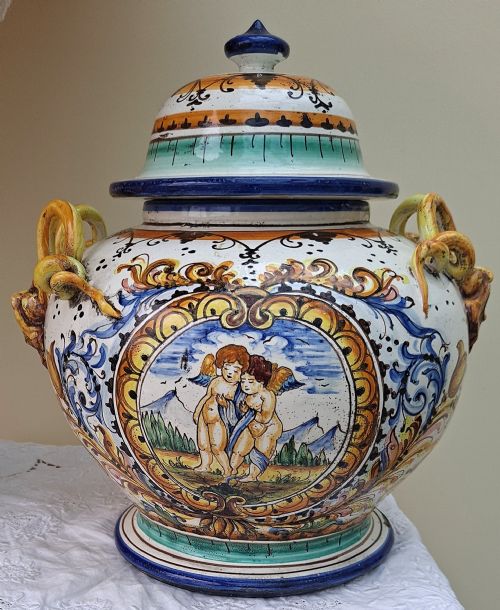
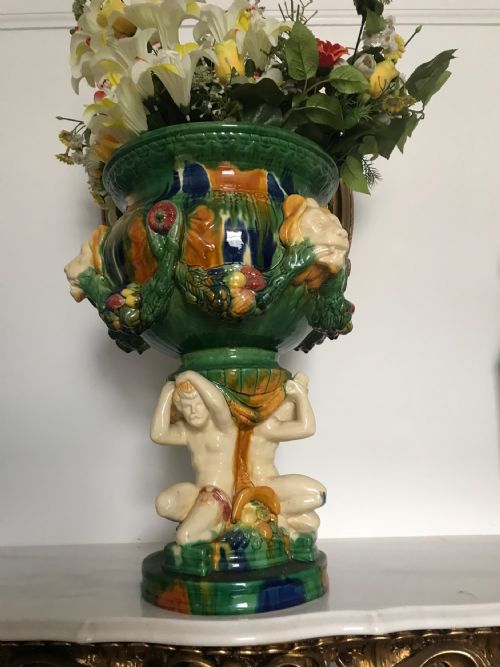
Functional items like albarelli pharmacy jars and pilgrim flasks sit alongside grand chargers depicting classical historical scenes. Collectors also find devotional plaques, garden planters, and cabinet vases displaying traditional blue and white palettes or rich polychrome glazes.
Materials and Technique
Makers formed these objects using local terracotta and earthenware bodies, which were then coated in an opaque white tin glaze to create a smooth surface for painting. Pigments were applied directly to the unfired or biscuit-fired tin glaze, absorbing into the surface before a final transparent lead glaze added gloss during the kiln firing.
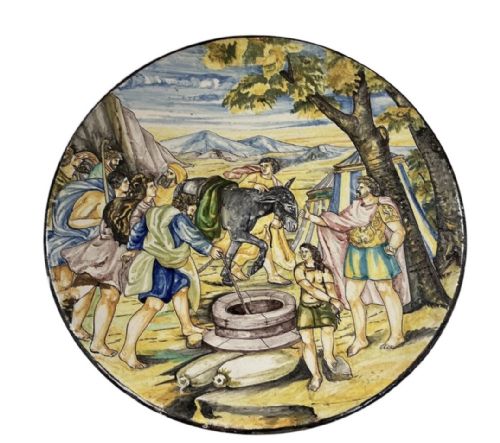
The decorative techniques range from blue and white cobalt painting to intricate istoriato narration, where historical and mythological scenes cover the entire surface of chargers and vases. Hand-painted details reflect both traditional workshop methods and later revivalist experiments in Florence and other ceramic centres.
Spot the occasional theatrical Pulcinella figure hiding among the rows of solemn pharmacy jars and stately urns.
Craft and Expression
The distinction between ordinary and exceptional pieces lies in the crispness of the hand-painted brushwork and the confidence of the narrative design. Master painters achieved depth and clarity in polychrome portraits and classical scenes, whereas lesser examples display hurried execution and repetitive floral motifs.
Glaze consistency and firing success also separate the tiers, with superior items showing minimal distortion, even tin opacity, and vibrant pigment retention without dull patches. The ambition of the form, from simple drug jars to large figural planters, dictates the level of sculptural detail achieved by the potter.
Cantagalli·Gallilleo Chini·Richard Ginori
The Italian Glazed Earthenware Glossary
- Maiolica
- Tin-glazed Italian earthenware painted with metallic oxides on an opaque white ground. This technique flourished during the Renaissance and inspired numerous nineteenth-century revivals.
- Albarello
- A cylindrical earthenware jar used by apothecaries to store drugs and ointments. Originating in the Middle East, the form became a staple of Italian pharmacy wares.
- Istoriato
- A style of ceramic decoration featuring narrative scenes from history, mythology, or the Bible. Painters covered the entire surface of the vessel with figurative compositions.
- Charger
- A large decorative plate intended for display on a wall or dresser rather than for dining. These wide surfaces often showcased the finest painterly skills of a workshop.
- Fiasca da Pellegrino
- A pilgrim flask designed with a flattened body and loop handles for suspension cords. These vessels frequently took moulded scallop-shell forms in Italian production.
Italian Glazed Earthenware: Frequently Asked Questions
What is an albarello used for?
An albarello served as a dry or wet drug jar in historical Italian pharmacies and apothecary shops. Their distinctive waisted shape allowed pharmacists to grip them easily while storing herbs, ointments, and medicinal compounds.
Over time, these utilitarian containers evolved into highly decorative cabinet pieces collected for their painted cobalt and polychrome designs.
How do you date nineteenth-century revival pieces?
Nineteenth-century revival pieces often display clues in their potting weight, glaze chemistry, and the character of the painted marks on the base. Makers like Cantagalli reproduced Renaissance styles with such fidelity that examining the footrim and pigment tones becomes essential.
Comparing the handling of historical motifs against genuine early examples helps clarify whether a piece is an eighteenth-century original or a later Victorian homage.
What distinguishes tin glaze from ordinary pottery glaze?
Tin glaze incorporates oxide of tin into a lead glaze base, transforming a transparent coating into an opaque white surface. This opaque layer acts like a canvas, allowing artists to paint detailed pigments directly onto the unfired surface before glazing.
The resulting finish provides the characteristic milky background seen on traditional majolica chargers and pharmacy jars.
Where were most Italian majolica pieces made?
Production centres were scattered across Italy, with towns like Florence, Savona, Pesaro, and Naples developing distinct regional palettes and decorative traditions. Workshops in Florence and Faenza excelled in both tin-glazed utility wares and elaborate revival pieces.
Each region contributed specific forms, such as the characteristic blue and white drug jars of Savona or the narrative chargers of the Pesaro school.