
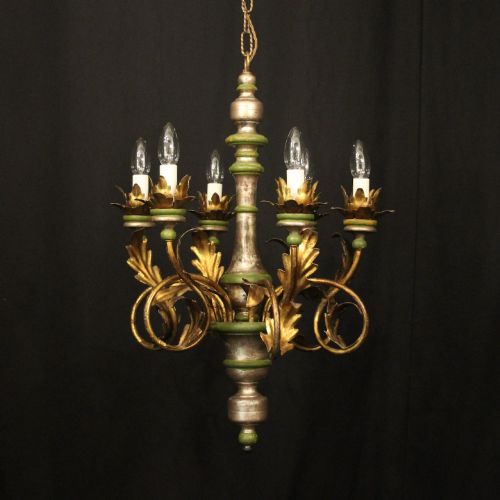
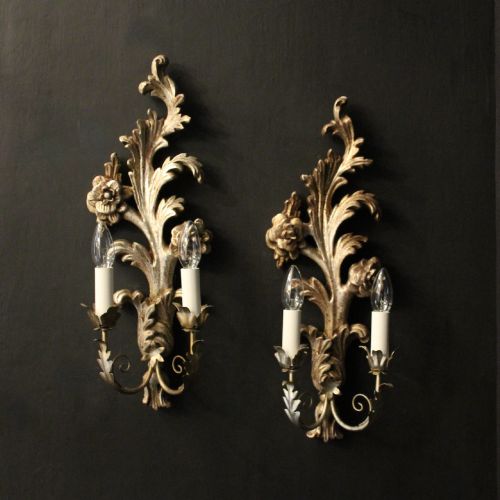
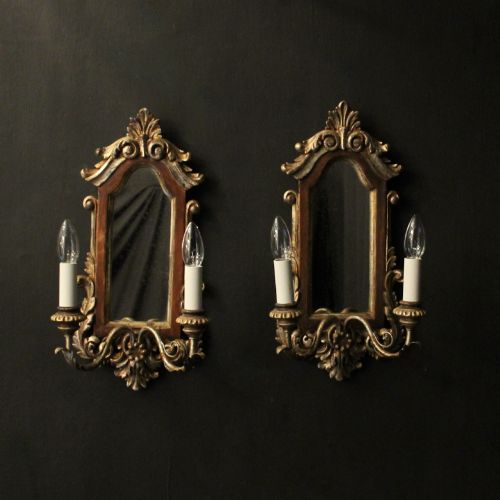
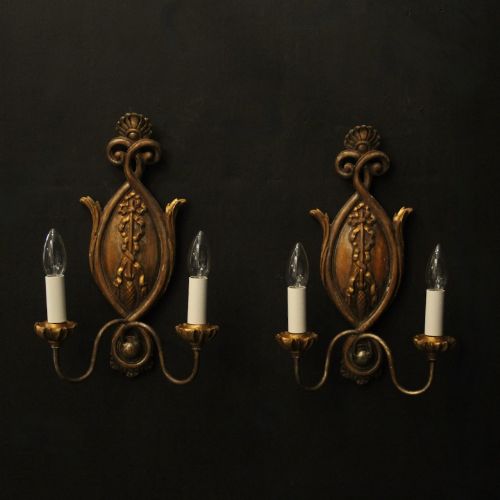
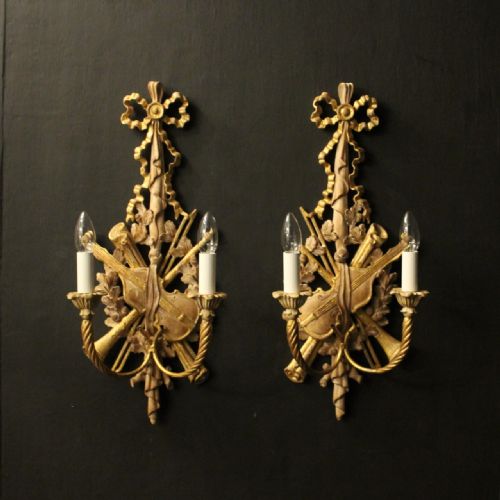


Italian Giltwood Lighting
Italian giltwood lighting brings warmth and architectural weight to a room through carved surfaces and gilded finishes.

Italian Giltwood Lighting
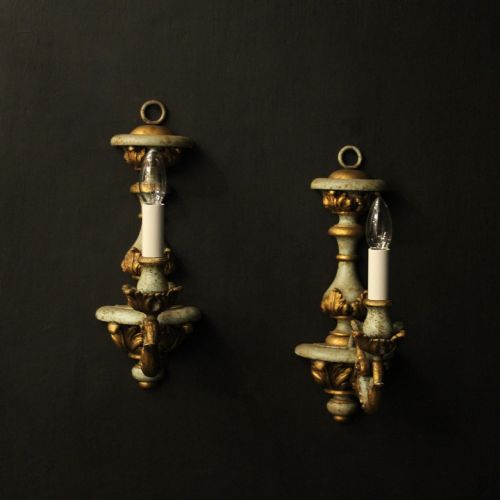
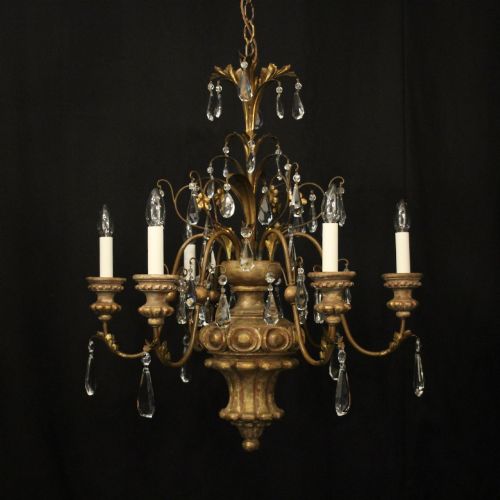
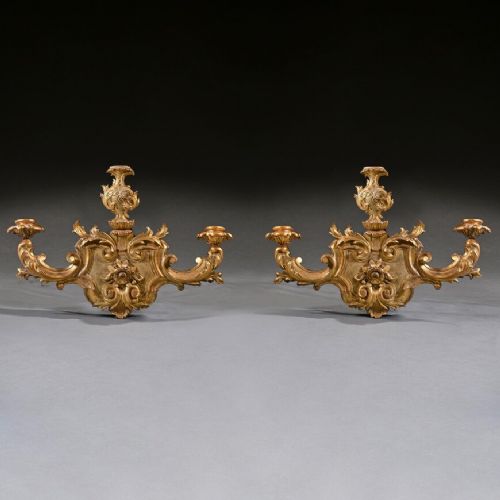
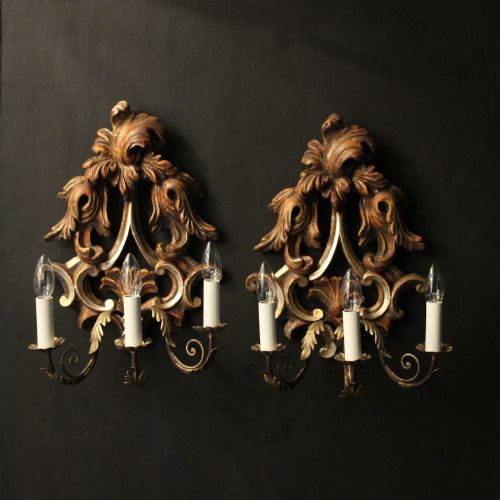
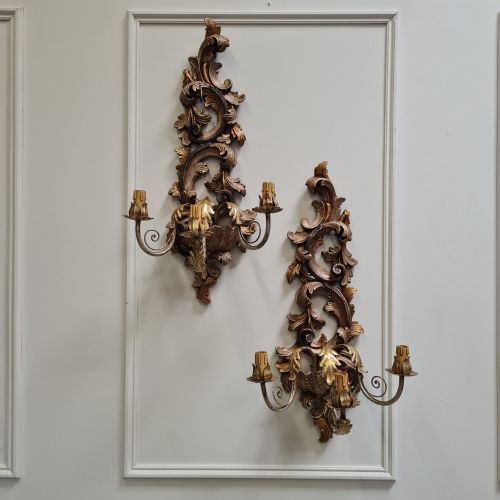
Italian giltwood lighting encompasses a variety of forms designed to illuminate interiors through carved wooden fixtures coated in gold or silver leaf. Buyers searching for these pieces encounter wall lights, twin arm wall sconces, girandoles, and multi-light chandeliers rooted in historical design traditions.
The selections span from seventeenth and eighteenth century examples to twentieth century interpretations, with Florentine workshops contributing numerous twin and triple arm wall lights. Floor lamps, table lamps, standard lamps, and hanging lanterns also appear across the selection.
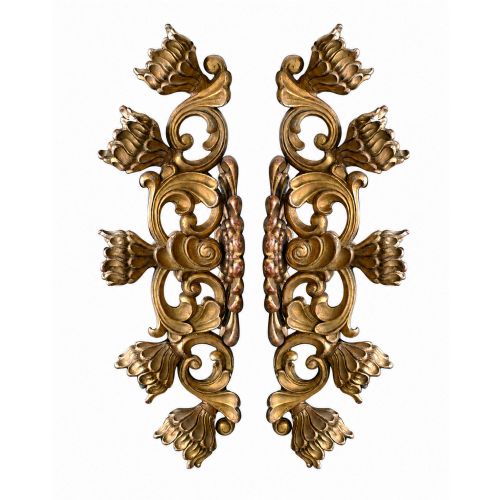
The style vocabulary draws heavily from Baroque, Rococo, and Neoclassical periods, often displaying ornate leaf motifs, scrollwork, and occasionally polychrome or ebonised details. Pairs dominate the offerings, particularly in wall fittings intended for symmetrical placement within a room.
Construction and Materials
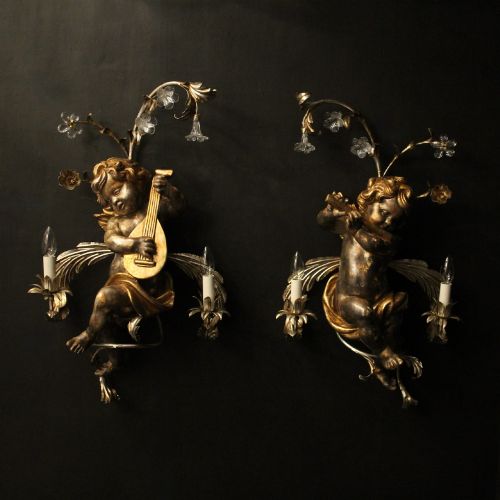
Makers shaped these objects from wood, employing hand-carving techniques to build complex three-dimensional forms such as cherubs, scrolling foliage, and architectural frames. Gesso provided a smooth preparatory layer over the carved timber to receive subsequent applications of metal leaf.
Gold leaf and silver leaf were applied to the prepared surfaces to achieve a reflective metallic sheen, sometimes supplemented by polychrome paint or ebonised sections for contrast. Metal components occasionally reinforced structural points, while glass elements such as Murano drops supplemented the illumination.
Listings feature items spanning the 17th, 18th, 19th, and early 20th centuries, executed in giltwood, gesso, metal, and glass.
Evaluating Quality
The crispness of the hand-carving defines the success of the piece, distinguishing deeply undercut foliage and expressive figures from softer, mechanically rounded contours. The application and preservation of the gold leaf layer dictate the visual richness of the surface under light.
Structural integrity matters significantly in multi-arm chandeliers and wall lights, where joints must support the weight of branches and candle holders over centuries. The historical consistency of the gesso and gilding layers relative to the underlying wood indicates the preservation standard of the object.
The Italian Giltwood Lighting Glossary
- Giltwood
- Timber that has been coated with gold leaf or gold paint. This technique gives wooden carvings the appearance of solid gold while maintaining a lighter structural weight.
- Gesso
- A plaster mixture applied to carved wood to create a smooth surface for gilding. It fills microscopic pores in the timber and allows for fine detail work.
- Girandole
- A decorative wall-mounted bracket holding candles or lights, typically featuring a reflective mirror backplate. They amplify the illumination in a space through reflected light.
- Polychrome
- Painted in several colours. This surface treatment often appears alongside gilding on Italian fixtures to add chromatic depth.
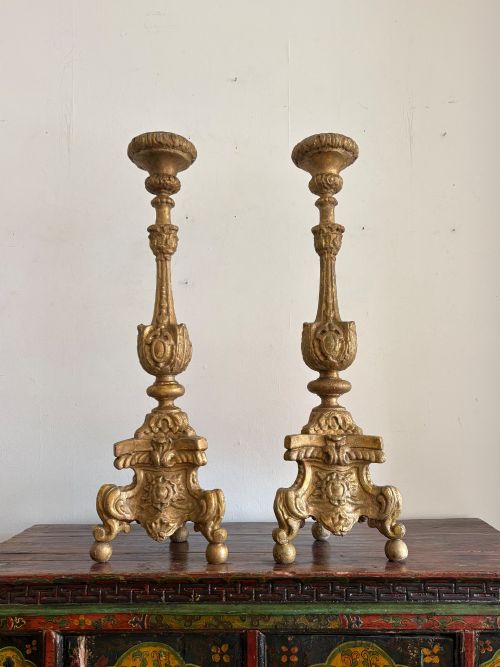
- Altar candlestick
- A tall candle holder designed for ecclesiastical use on or near an altar. These monumental pieces frequently transition into domestic decorative lighting.
Italian Giltwood Lighting: Frequently Asked Questions
How do I hang heavy wall lights safely?
Heavy wall lights require direct anchorage into structural wall studs or masonry using appropriate fixings rated for the weight of the timber and gesso.
Consult a professional electrician and installer to ensure the wall construction can bear the load of multi-arm fixtures.
Can antique chandeliers be converted for modern electricity?
Many antique chandeliers and wall lights undergo careful rewiring to accommodate modern electrical standards without altering the exterior wooden structure.
Working with a specialist restorer ensures that internal wiring remains hidden and safe for daily use.
What is the difference between Baroque and Rococo styles here?
Baroque designs tend to be heavier, more symmetrical, and monumental in scale, emphasising dramatic architectural presence and robust carving.
Rococo pieces introduce lighter, asymmetrical scrollwork, C-curves, and playful naturalistic motifs such as organic leaf patterns.
How should I clean giltwood surfaces?
Giltwood requires gentle dusting with a soft, dry brush or feather duster to remove surface particles without disturbing delicate leaf layers.
Avoid liquid cleaners, moisture, or chemical solvents, as these can strip the gold leaf and underlying gesso from the wood.