

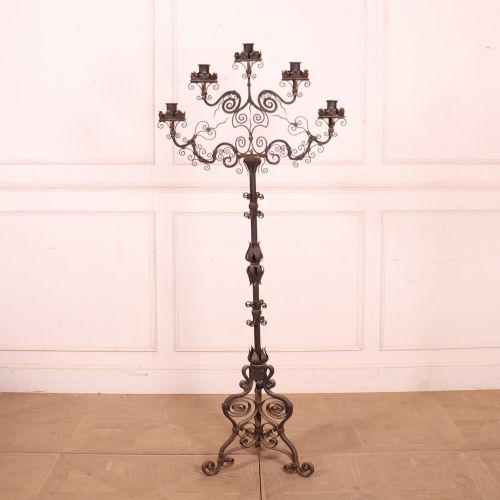


Italian Floor Light
An italian floor light brings striking height and warm illumination to a room, carrying the rich decorative tradition of Italian workshops.
Italian Floor Light
An italian floor light encompasses grand floor-standing candle holders, torcheres, altar candlesticks, and standard lamps from periods spanning the eighteenth century to the mid-twentieth century. Buyers searching this phrase most frequently encounter carved and gilded wood pieces, often following Baroque, Venetian, or Florentine styles.
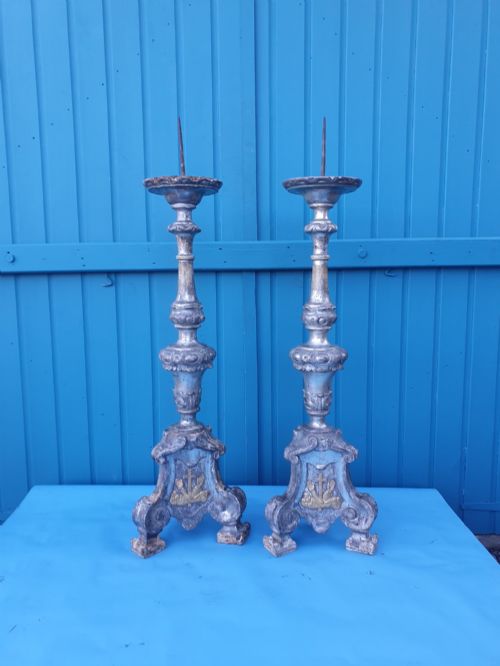
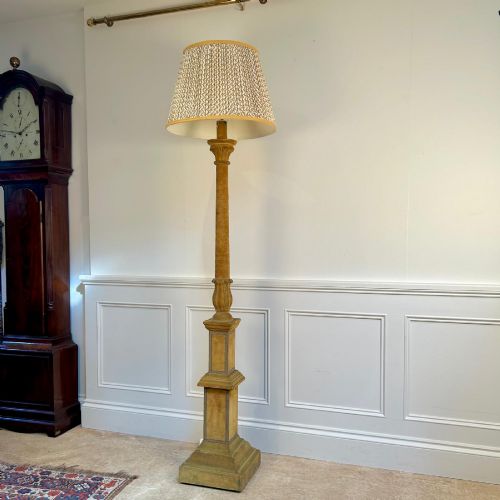
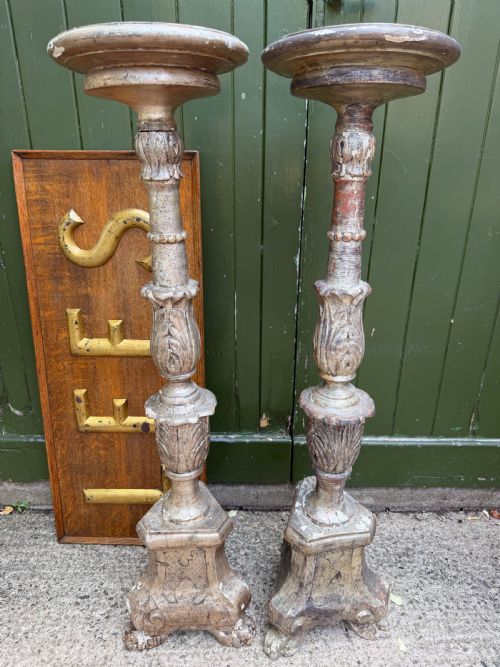
The selection ranges from towering eighteenth-century silvered torcheres and life-size figural standard lamps to 1930s velvet designs and nineteenth-century giltwood pieces. Many survivors began life as church furnishings or altar stands before conversion for domestic illumination.
Origins heavily reflect Italian craftsmanship, with specific regional aesthetics such as Venetian baroque and Florentine carving appearing across the inventory. These tall objects command attention in a space, functioning simultaneously as sculptures and light sources.
Materials and Construction
Makers relied primarily on solid wood, typically pine or other carved timbers, serving as the structural base for intricate ornamentation. Artisans applied layers of gesso to smooth the wooden surfaces before detailing decorative motifs.
Gilding and silvering dominate the finish work, utilising gold leaf, silver leaf, and polychrome paint to achieve opulent visual effects. Certain pieces incorporate marble bases or fabric elements to complement the carved wooden structures.
Italian Floor Light Retail Price Guide 2026
Typical asking prices for italian floor light among the pieces listed under this phrase on Sellingantiques today, from the lower quarter to the upper quarter. They describe what is for sale here now, not the wider market.
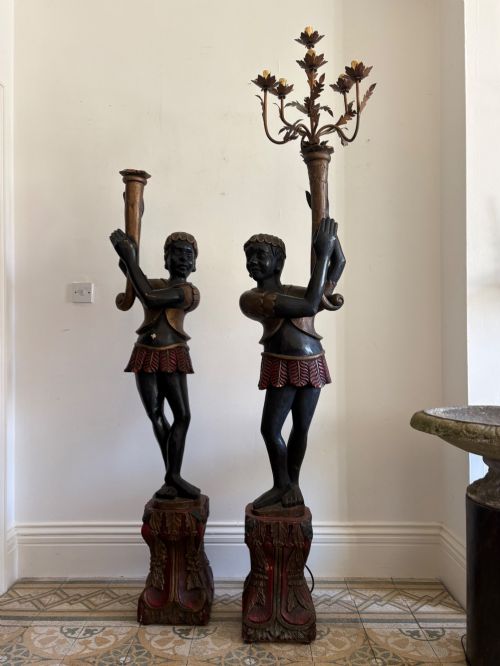
Life-size figural standard lamps introduce an unexpected theatrical presence to a hallway, holding up light with permanent wooden poise.
Assessing Quality
Quality rests heavily on the depth and crispness of the hand-carving, distinguishing master workshops from standard production. Superior examples display fluid movement in scrolls and foliage, whereas lesser pieces appear static or overly uniform.
The integrity of the original surface finishes, including authentic patination on giltwood, gesso, and silver leaf, dictates the standing of a piece. Finer works retain harmonious proportions at significant heights, particularly evident in monumental torcheres and altar stands.
The Italian Floor Light Glossary
- Torchere
- A tall decorative stand originally designed to support a candle or torch. These freestanding pieces often feature elaborate carved wood and gilt decoration.
- Gesso
- A plaster-like mixture applied to wood surfaces to create a smooth base for gilding or painting. It allows carvers to achieve sharp relief details.
- Giltwood
- Wood that has been coated with a thin layer of gold leaf or gold paint. This technique provides a durable, luminous finish characteristic of baroque furnishings.
- Altar-type
- A descriptive term for objects originally fashioned for ecclesiastical settings, such as churches and chapels. These pieces typically display impressive proportions and religious decorative motifs.
- Blackamoor
- A decorative sculptural figure, often depicted in a traditional ethnic stance or costume, utilised in historical furniture design. These figures occasionally form the stem of nineteenth and early twentieth-century floor lamps.
Italian Floor Light: Frequently Asked Questions
What is an Italian floor light?
An italian floor light is a tall decorative lighting fixture or candle stand originating from Italy, encompassing historical torcheres, standard lamps, and altar candlesticks.
These pieces range from ornate eighteenth-century giltwood church furnishings to twentieth-century standard lamps designed for domestic interiors.
How were these tall stands used?
Historical examples served primarily in churches, palazzos, and grand homes to elevate light sources high above the floor for maximum illumination.
Many antique candle holders and torcheres have since been adapted to hold electrical fittings while retaining their original aesthetic purpose.
How do I live with a floor torchere?
These tall fixtures suit rooms with high ceilings where their vertical presence balances spacious interiors and architectural proportions.
Position them in corners or beside large pieces of furniture to provide ambient lighting without overwhelming the floor plan.
How can I tell the periods apart?
Earlier eighteenth-century pieces lean towards heavy Baroque carving, silvered mecca finishes, and ecclesiastical altar forms.
Twentieth-century examples often introduce simpler standard lamp formats, fabric shades, and refined revival styles while maintaining traditional Italian motifs.