
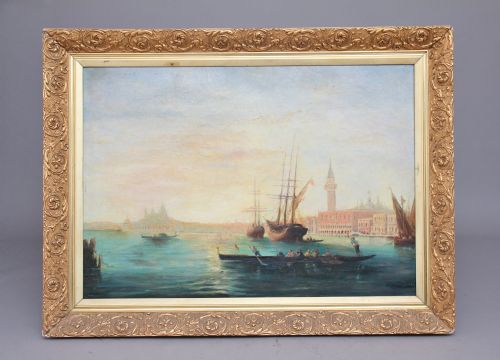


Italian Cityscape Oil Canvas
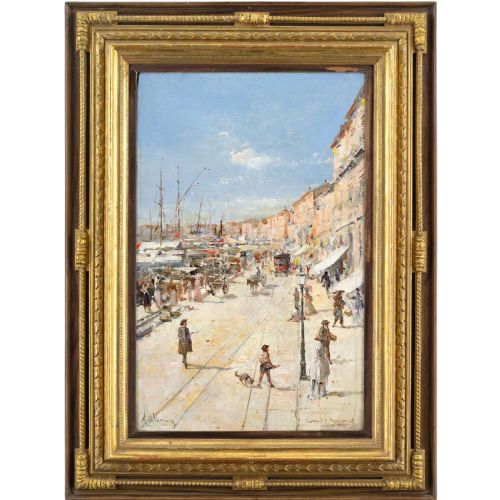
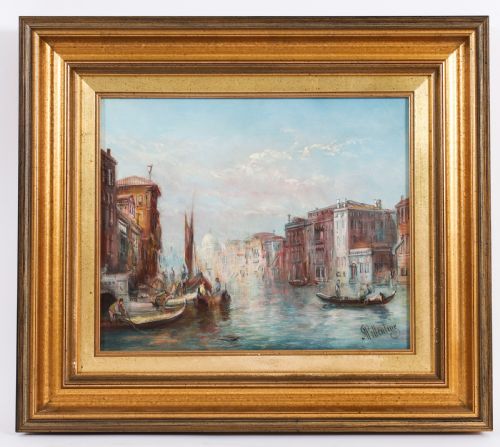
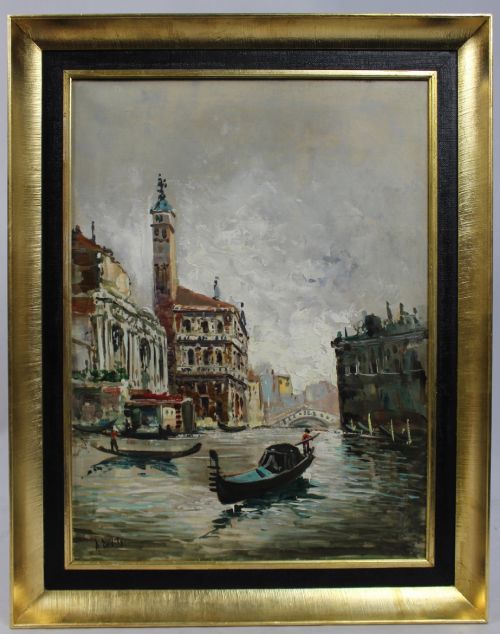
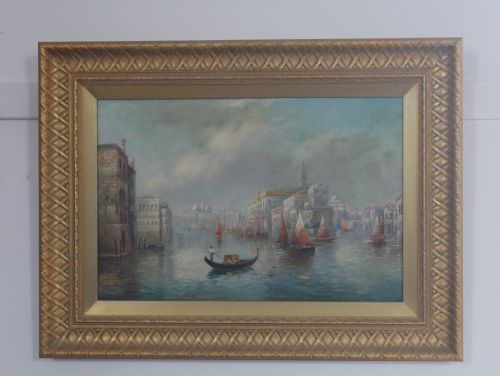
An italian cityscape oil canvas captures the light and architecture of Venice, Messina, and Padua across the nineteenth and twentieth centuries.
Italian Cityscape Oil Canvas
An italian cityscape oil canvas records the canals, palazzos, and lagoons of Italy, most frequently depicting the Grand Canal, the Doge's Palace, and Santa Maria della Salute in Venice. These works range from nineteenth-century romantic and Victorian fine art to mid-century impressionism, spanning dates from the 1870s through the 1960s.
The compositions focus on urban topography, townscapes, and waterways populated by gondolieri and historic mansions. Canvases vary in scale from intimate depictions to large wall art measuring up to fifty by forty inches.
Materials and Technique
Paintings are executed in oil paint directly onto a stretched canvas support, sometimes housed within period wooden frames accented with gesso and gilt or giltwood. The physical application relies on brushwork typical of impressionist and traditional Italian schools.
Pigments capture the distinct atmospheric light of Italian lagoons and city streets, applied by named artists and regional painters working across the Victorian era into the mid-twentieth century.
Listings feature oil on canvas works spanning from the 1870s to the 1960s, encompassing Victorian, romantic, and impressionist styles.
Quality and Execution
Distinction across the range lies in the handling of light, architectural precision, and the strength of the composition in capturing movement on the water or stillness in old stone. Works by established nineteenth-century and early twentieth-century painters demonstrate a confident grasp of perspective and atmospheric depth.
The presence of a signed attribution, original framing materials such as giltwood, and a distinct period provenance elevate individual canvases above anonymous townscape productions.
Augusto Alberici·Alfred Pollentine·Antonio DeVity·Claude Jousset·William Raymond Dommersen·Jane Vivian·Emanuele Cappello·Charles Clement Calderon
The Italian Cityscape Oil Canvas Glossary
- Canvas
- A heavy woven fabric used as a surface for oil painting. It is typically stretched tightly across a wooden frame before pigment is applied.
- Gesso
- A plaster-like mixture applied to wooden frames as a base for moulding and gilding. It provides a smooth surface for decorative finishes.
- Giltwood
- Wood that has been coated with a thin layer of gold leaf or gilt. It frequently frames nineteenth-century fine art pieces.
- Impressionism
- A style of painting focused on accurate depiction of light and its shifting qualities. Mid-century examples appear frequently among these views.
Italian Cityscape Oil Canvas: Frequently Asked Questions
Where were these scenes painted?
The majority of these canvases depict Venetian subjects, including the Grand Canal, the Doge's Palace, and the lagoon. Additional locations include Messina in Sicily and Padua Cathedral.
Views capture recognizable Italian landmarks through nineteenth-century and twentieth-century artistic interpretations.
How should I frame these canvases?
Many works retain their original wooden, giltwood, or gesso frames, which complement the period of the painting. Selecting a complementary period frame protects the edges of the canvas.
Display the painting away from direct sunlight to preserve the oil pigments and any gilded elements on the frame.
What periods do these paintings date from?
The works span from the 1870s through the 1960s, encompassing Victorian fine art, nineteenth-century romanticism, and mid-century impressionism.
Dating is determined by stylistic evidence, signatures, and period materials recorded in the titles.
Are these works signed by artists?
Numerous pieces feature signatures or attributions to notable painters such as Alfred Pollentine, Jane Vivian, and Antonio DeVity. Other canvases remain signed by regional or unidentified artists of the era.
Signatures provide a direct link to the painter and help contextualize the artistic school of the period.