




Italian 18th Century Console
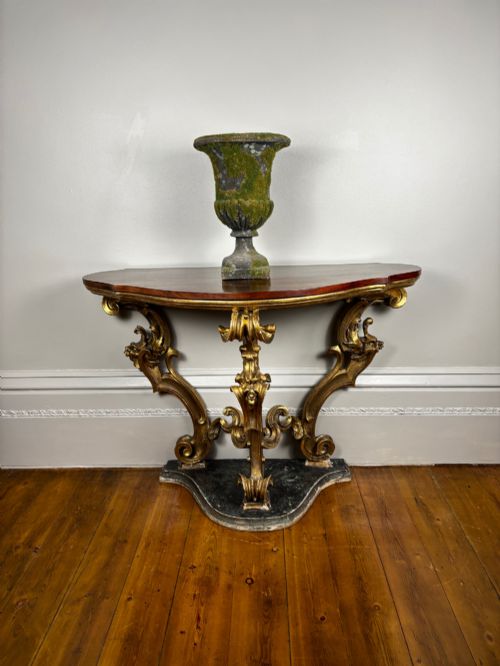
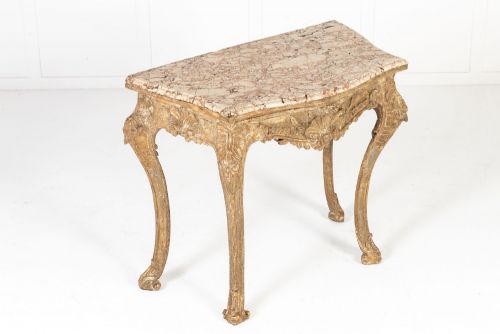
An italian 18th century console brings theatrical carving and marble to a wall, offering a grand surface suited to an entrance hall.
Italian 18th Century Console
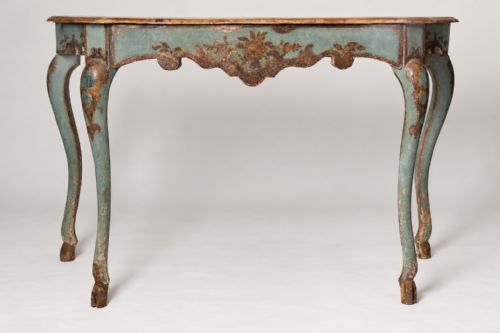
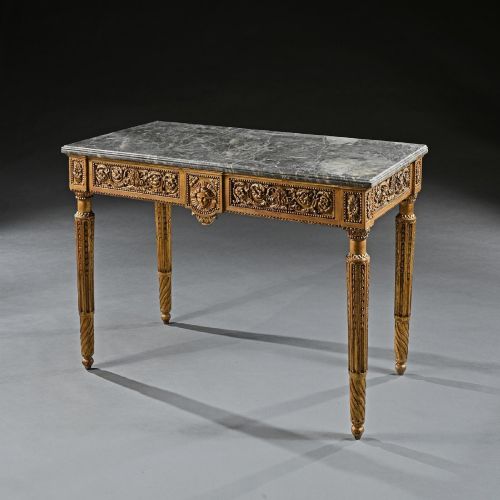
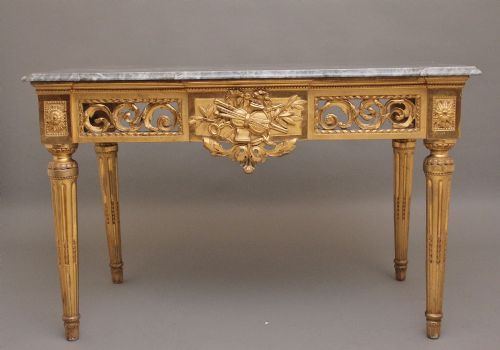
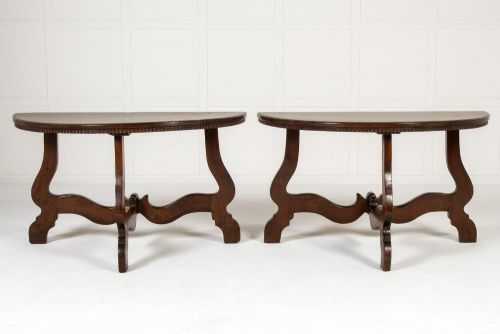
An italian 18th century console is a wall-fixing or demi-lune table designed to stand beneath a mirror or painting in grand rooms. These pieces appear as console tables, centre tables, and games tables, predominantly from the eighteenth century alongside occasional nineteenth-century examples and later revivals.
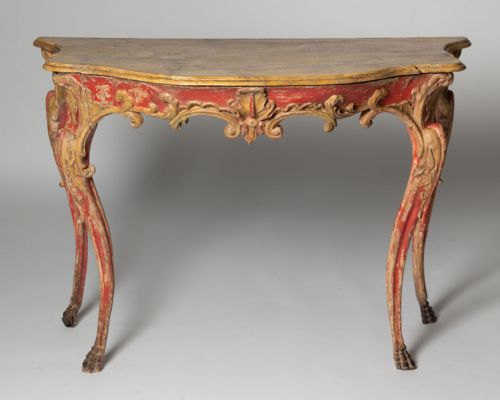
The walnut, elm, cherrywood, and fruitwood versions present rich timber grains, whilst painted or gilded pieces deploy decorative surfaces. Makers shaped these tables with half-round demi-lune formats and long rectangular proportions to fit specific architectural spaces.
The regional schools span Venetian, Neoclassical, Baroque, and Rococo idioms, showing varied levels of ornate scrollwork and symmetry. Buyers encounter matching pairs as well as single examples intended to anchor a room's decorative scheme.
Materials and Construction Methods
Carpenters shaped structural carcases from walnut, elm, cherrywood, fruitwood, and kingwood, employing traditional joinery to support heavy stone elements. Carved wood details provided the base for subsequent gilding, gesso application, or silver gilt finishes.
Surfaces received marble tops, faux porphyry, and painted or gilded layers using gold leaf applied over preparation coats. Artisans carved intricate scrolling foliage, architectural mouldings, and figurative elements directly into the timber frame before surface decoration.
Italian 18th Century Console Retail Price Guide 2026
Typical asking prices for italian 18th century console among the pieces listed under this phrase on Sellingantiques today, from the lower quarter to the upper quarter. They describe what is for sale here now, not the wider market.
Listings feature walnut, cherrywood, elm, and fruitwood alongside heavily gilded and painted wooden surfaces paired with marble.
Distinctions in Execution and Preservation
The depth and crispness of the carved wood separate standard joinery from superior sculptural execution. Giltwood and silver gilt surfaces display varying degrees of original gilding wear and patination across the gesso ground.
The integrity of the marble top and its integration with the wooden base dictate the structural completeness of the piece. Tables retaining their original painted decoration or faux porphyry finishes demonstrate higher fidelity to period decorative schemes.
The Italian 18th Century Console Glossary
- Console table
- A table designed to be fixed against a wall, typically supported by two front legs and secured to the masonry behind.
- Demi-lune
- A half-moon shape characteristic of many console and games tables designed to sit flush against a wall.
- Giltwood
- Timber coated with gold leaf over a prepared gesso ground, creating a reflective metallic surface popular in Baroque and Rococo design.
- Faux porphyry
- A painted decorative finish that imitates the deep purple-red igneous rock prized in classical architecture.
- Gesso
- A plaster-like mixture applied to wood surfaces to provide a smooth base for gilding and fine carving.
Italian 18th Century Console: Frequently Asked Questions
Where should I place an Italian console table?
These tables work best positioned against a prominent wall in a hallway or drawing room, traditionally placed beneath a matching mirror or artwork.
Because many examples feature finished fronts and flat backs intended for wall attachment, they anchor a room without obstructing central floor space.
How do I care for a marble top?
Clean the stone surface using a soft, damp cloth without acidic household detergents that can etch the polished finish.
Use coasters and protective mats to prevent liquid rings and scratches on historical marble and faux porphyry surfaces.
Can I use these tables for daily dining?
Console tables are structurally lightweight and often secured to walls for stability, making them unsuitable for heavy daily loads or seating arrangements.
They function effectively as serving surfaces or display areas for decorative objects rather than robust working furniture.
How do I distinguish Rococo from Neoclassical styles?
Rococo pieces feature asymmetric scrolls, C-scrolls, and exuberant organic carving that emphasise movement and theatrical display.
Neoclassical designs return to straight lines, symmetry, classical architectural motifs, and restrained proportions inspired by antiquity.