





Baroque Giltwood Table
A baroque giltwood table carries the carved weight of Italian and Spanish workshops, bringing gilded timber and marble into a room.
Baroque Giltwood Table
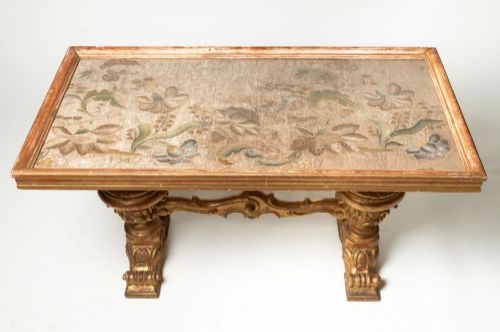
When you search for a baroque giltwood table, you find heavy, carved timber furniture designed primarily as console tables, side tables, and centre tables. These pieces often feature marble tops, resting on lion's paw supports, dolphins, or centaur designs.
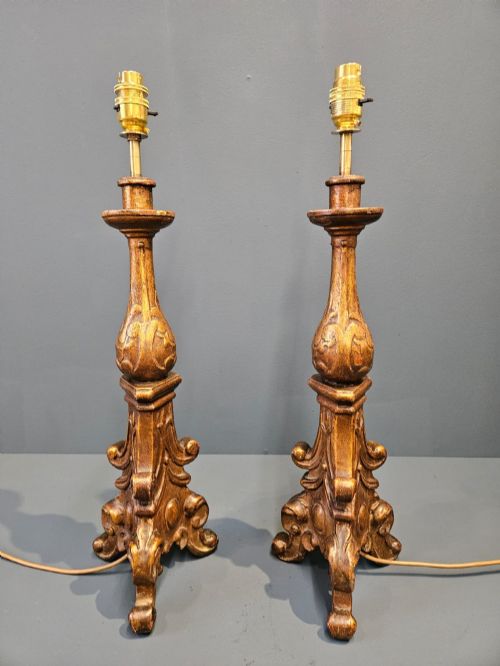
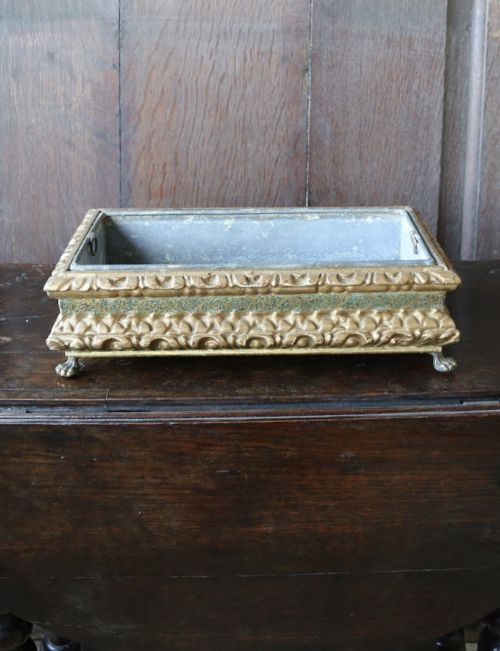
The version you are most likely to meet on this page originates from Italian and Spanish workshops across the seventeenth, eighteenth, and nineteenth centuries. Alongside tables, the selection includes related forms like table lamps, table mirrors, and carved frames sharing the same gilded finish.
Console tables form the core of what turns up, frequently topped with breccia marble and heavily decorated with putti, rams, and maiden heads. They reflect the grand interiors of their period, designed to stand against a wall beneath a matching mirror.
How they were made
Carvers shaped the foundational structure from wood such as lime or general timber, building up intricate relief work before gilding. Artisans applied thin layers of gold leaf over a prepared gesso ground, adhering the precious metal to the carved surface.
Heavy stone tops, particularly marble, were shaped and polished to fit the elaborate wooden bases. Metal brackets and brass fittings sometimes reinforced the joints of these large console and centre tables to support the weight of the stone.
Baroque Giltwood Table Retail Price Guide 2026
Typical asking prices for baroque giltwood table among the pieces listed under this phrase on Sellingantiques today, from the lower quarter to the upper quarter. They describe what is for sale here now, not the wider market.
Several tables feature carved dolphins and fierce lions keeping watch beneath heavy stone.
What varies in quality
The depth and vigour of the hand carving separate simpler pieces from masterworks. Crisp undercut foliage and sharply defined figures like lions' paws or putti demonstrate superior workshop skill compared to softer, shallower relief work.
The integrity of the original gesso and gold leaf surface dictates the visual strength of a piece. Finer examples retain their historic gilding with minimal intervention, while inferior or heavily restored surfaces lose the crispness of the original carved details.
Pauly et Cie
The Baroque Giltwood Table Glossary
- Giltwood
- Wood that has been coated with gold leaf. This finish defines the reflective, luminous appearance characteristic of baroque furniture.
- Gesso
- A plaster-like mixture applied to wood as a smooth base for gilding. It allows carvers to achieve sharp details before applying gold leaf.
- Console table
- A table designed to stand against a wall, frequently supported by sculptural brackets or legs. They often carry heavy marble tops.
- Breccia marble
- A type of marble composed of broken fragments cemented together in a matrix. It appears frequently on the tops of grand console tables.
- Putto
- A figure of a small chubby male child, often winged, used in decorative art. They appear frequently in the carved woodwork of this period.
Baroque Giltwood Table: Frequently Asked Questions
Are marble tops original to these tables?
Many tables retain their original stone tops, particularly breccia marble slabs fitted to heavy console bases. Stonework was a key element of grand seventeenth and eighteenth-century designs.
Some pieces have replacement marble due to historic breakage over the centuries. Check the fit and edge finish of the stone against the wooden frame to understand its history.
Where should I place a console table?
Console tables sit flat against a wall, traditionally placed beneath a matching mirror or painting. They suit hallways, drawing rooms, and large living spaces.
Because they often feature flat backs intended to rest against a wall, they rarely float in the middle of a room unless designed as a centre table.
How do I distinguish eighteenth and nineteenth-century pieces?
Eighteenth-century examples typically display hand-carved details with organic tool marks and older gesso application. The wood underneath shows the dark patination of age.
Nineteenth-century revival pieces, including those in the Baroque Revival style, often feature heavier proportions and crisper, more repetitive machine-assisted or deep-cut carving.