


Isfahan Medallion Rug
An isfahan medallion rug brings central Persian artistry into a room, offering intricate design and enduring textile heritage.
Isfahan Medallion Rug
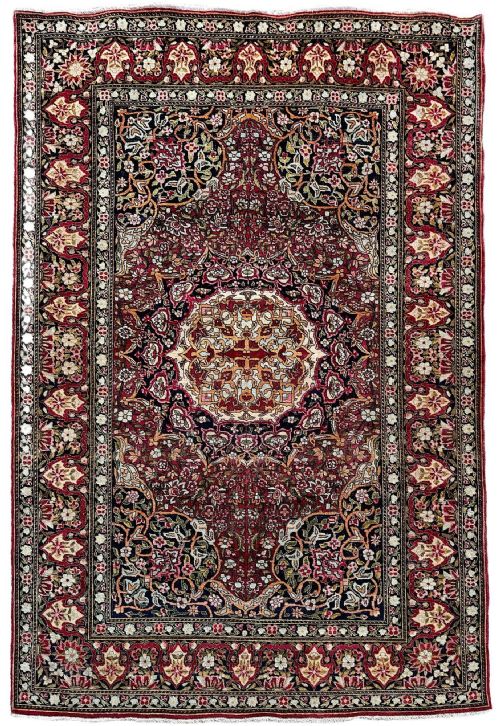
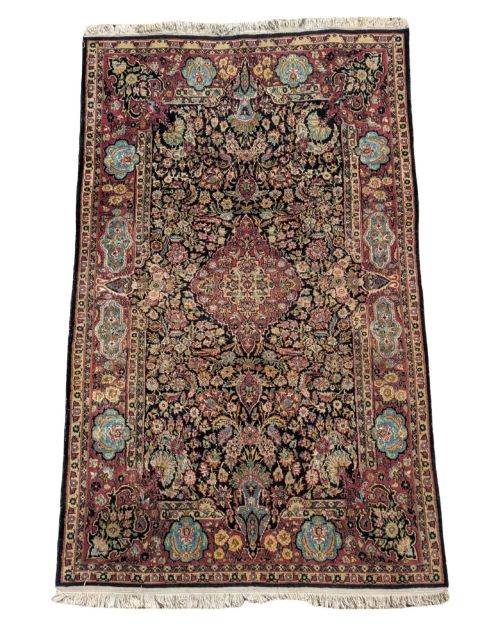
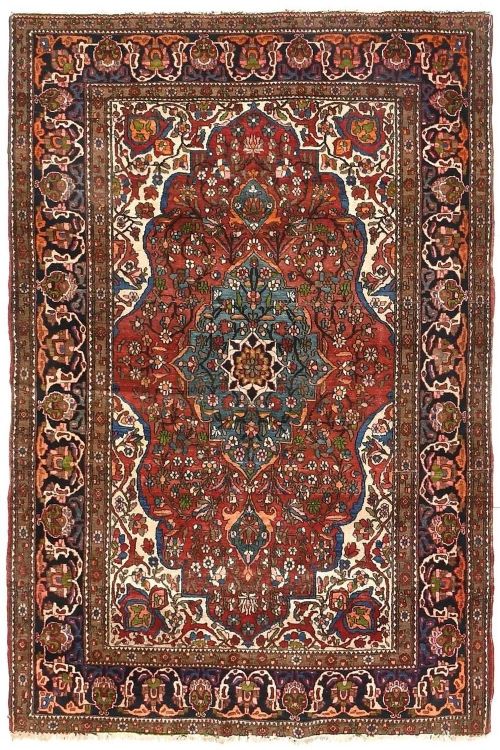
An isfahan medallion rug represents a distinct tradition of central Persian weaving, known for formal central motifs and balanced symmetry. These floor coverings appear across formats ranging from smaller area rugs to room-sized carpets.
The pieces available here originate from the late nineteenth century through to the early decades of the twentieth century. Traditional Persian styles and Safavid design influences dominate this group, reflecting historical aesthetic codes.
Buyers will encounter items described simply as rugs or larger carpets, often measuring around two metres in length alongside grander room-scale examples. Central Persian origin unites them all, anchored by the classic medallion layout.
Materials and construction
Weavers utilised natural fibres including wool, cotton and occasional silk highlights to achieve texture and structural integrity. Wool typically forms the dense pile, whilst cotton provides a stable foundation for the intricate knotting.
Silk highlights appear in specific examples, adding luminous contrast to the wool ground. These materials were dyed in rich colours to support the detailed classical Persian patterns recorded in the titles.
The listings span from eighteen ninety to nineteen thirty, incorporating wool, cotton and silk materials across traditional Persian styles.
Assessing quality in the range
Quality differences emerge in the precision of the central design and the fineness of the weave. Pieces distinguished as very fine or featuring silk highlights demonstrate elevated technical execution.
Preservation of the pile and the depth of the colour palette also differentiate examples across the period spanning eighteen ninety to nineteen thirty. The clarity of the classic small medallion design remains a key indicator of refinement.
The Isfahan Medallion Rug Glossary
- Medallion
- A central ornamental motif placed in the middle of the field. This design element anchors the visual symmetry of the textile.
- Pile
- The upright yarn that forms the textured surface of the carpet. Wool and silk are commonly used for this upper layer.
- Foundation
- The underlying structure of warp and weft threads that support the knotted pile. Cotton is frequently utilised for this framework.
- Safavid style
- An aesthetic tradition referencing the classical Persian art of the Safavid dynasty. It inspires the detailed floral and geometric motifs seen in these rugs.
Isfahan Medallion Rug: Frequently Asked Questions
How do I date an isfahan medallion rug?
Dating relies on stylistic indicators, construction methods and recorded production periods spanning from the late nineteenth century through to nineteen thirty. Dealers attribute dates by comparing weave density and material usage against known historical examples.
Changes in dye palettes and design clarity also help narrow down the decade of manufacture. Consulting the listed circa dates provides a reliable timeframe for each specific piece.
Where were these carpets originally made?
These pieces originate from central Persia, specifically associated with the historic city of Isfahan and its surrounding workshops. This region has a long-established reputation for producing finely knotted urban carpets.
The regional style is defined by precise botanical motifs and balanced medallion layouts. Central Persian provenance ensures a distinct technical standard within the broader category of oriental rugs.
How should I care for an antique rug?
Protecting a wool and cotton textile involves regular gentle vacuuming without a rotating brush bar to prevent fibre damage. Professional cleaning tailored to antique oriental carpets maintains the integrity of natural dyes and foundation threads.
Positioning the rug away from direct, harsh sunlight prevents uneven fading of the rich colours. Using a quality underlay provides cushioning and stops the carpet from slipping on hard floors.
What does a silk highlight mean?
Silk highlights refer to the selective use of silk yarn within a predominantly wool pile to emphasise specific design details. This technique catches the light and adds a subtle luminous quality to the central medallion or floral elements.
Such additions indicate a higher grade of production intended for discerning patrons. They enhance the visual depth of the textile without altering its primary foundation.