


Ironstone Covered Dish
An ironstone covered dish brings heavy earthenware utility and crisp nineteenth-century pattern to the table.
Ironstone Covered Dish
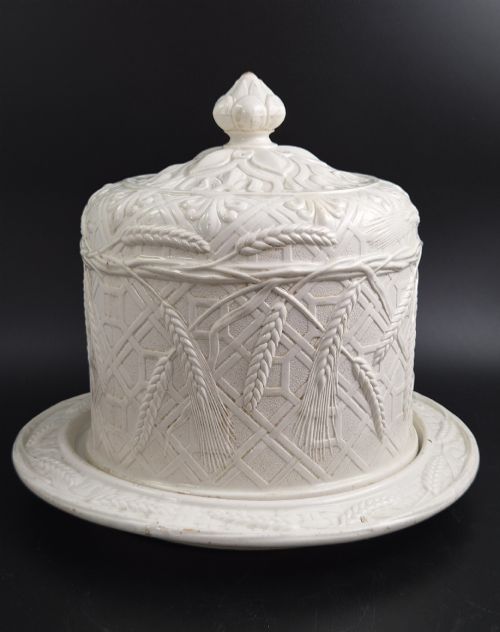
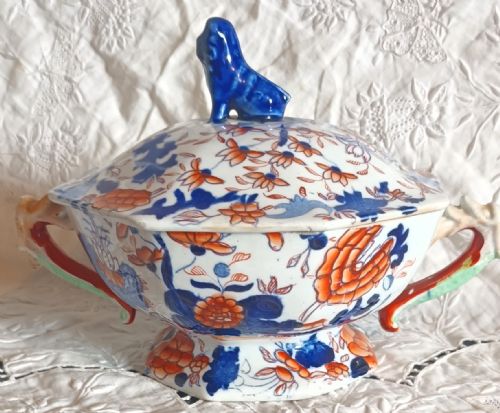
When you search for an ironstone covered dish, you encounter substantial serving vessels designed for nineteenth-century dining tables. These pieces encompass large soup tureens, cheese domes with matching stands, vegetable tureens, and smaller sauce boats complete with lids.
The selections span the Georgian and Victorian eras, running from early nineteenth-century Regency examples down to the later decades of the century. You meet plain white utilitarian items alongside heavily decorated pieces bearing Imari palettes and English Chinoiserie motifs.
Forms vary from grand covered bowls intended for family feasts down to individual sugar vessels and soap dishes. The underlying material remains heavy ceramic earthenware throughout, shaped into practical lidded forms that survive from past centuries.
Materials and manufacture
Potters built these vessels using dense ironstone ceramic, a heavy earthenware body fired to achieve durability. Glaze seals the porous clay body, providing a smooth surface that withstands daily service.
Decoration relies on transfer printing and hand-applied enamel colours, sometimes enriched with gold leaf or gilt details. Certain patterns use rich mulberry or blue and white transfer prints, while others employ vibrant Mandarin palettes and Japanese basket designs.
Materials span ironstone ceramic, earthenware, glaze, enamel, and gold leaf, formed into tureens, cheese domes, and sauce boats.
Assessing quality and craftsmanship
Finer examples display crispness in transfer printing and precision in hand-painted enamel colours. Superior pieces often incorporate moulded details such as lion mask handles, wheat and lattice reliefs, or bamboo motifs.
The presence of matching lids, ladles, and stands elevates a piece considerably. Condition of the glaze and retention of gilt or gold leaf separate standard utilitarian wares from top-tier display items.
Mason's Ironstone·Copeland·Coalbrookdale
The Ironstone Covered Dish Glossary
- Ironstone
- A heavy, durable ceramic earthenware patented in the nineteenth century to provide a tough alternative to porcelain. It resists chipping and forms the sturdy body of these covered dishes.
- Tureen
- A deep covered bowl designed for serving soups, sauces, or vegetables at the table. These vessels often include matching ladles and undertrays.
- Cheese Dome
- A large domed cover with a matching stand, utilised for storing and presenting cheese on the sideboard. They frequently feature moulded agricultural or botanical decoration.
- Transfer Print
- A method of applying detailed monochromatic or coloured patterns to ceramic by pressing a paper design onto the biscuit or glazed surface. Blue and mulberry are common tones found on nineteenth-century wares.
- Chinoiserie
- European decorative style imitating Chinese artistic traditions, featuring imaginary landscapes, figures, and pavilions. It appears frequently on early nineteenth-century serving vessels.
Ironstone Covered Dish: Frequently Asked Questions
What is an ironstone covered dish used for?
These lidded vessels served practical dining functions in the nineteenth century, holding hot soups, sauces, vegetables, or cheese at the table. Larger examples accommodated family portions, while smaller versions managed table condiments.
Today, collectors utilise them as decorative centrepieces, storage containers, or standalone display items in traditional and modern dining rooms.
How can I tell the period of these dishes?
Georgian pieces often display elaborate Chinoiserie patterns and rich hand-painted enamel palettes associated with early nineteenth-century production. Maker marks on the underside provide definitive clues to date of manufacture.
Victorian items frequently feature crisp white ironstone bodies with moulded wheat and lattice motifs, or transfer-printed scenes in blue and mulberry tones.
Are lids and ladles always original to the tureen?
Lids generally match the ceramic body and pattern of the base tureen, sharing the same glaze and earthenware characteristics. Ladles are less common survivors and add significant completeness to a set.
Inspect the fit of the lid and the consistency of the transfer print or glaze colour to confirm that components belong together.