
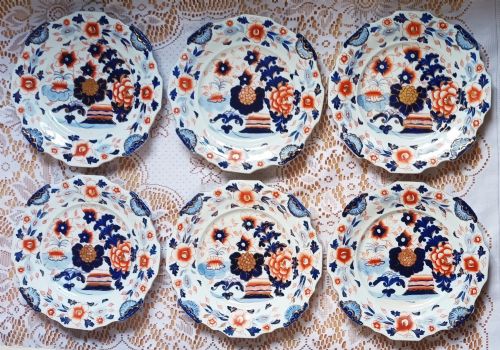


Ironstone Ceramic Plates
Ironstone ceramic plates deliver robust utility and striking Orientalist decoration for the dining table.
Ironstone Ceramic Plates
Ironstone ceramic plates bridge the gap between everyday earthenware and fine porcelain by offering heavy, durable bodies suited to hearty meals. Collectors encounter these pieces in forms ranging from small tea plates and dessert dishes to large meat platters and soup bowls.
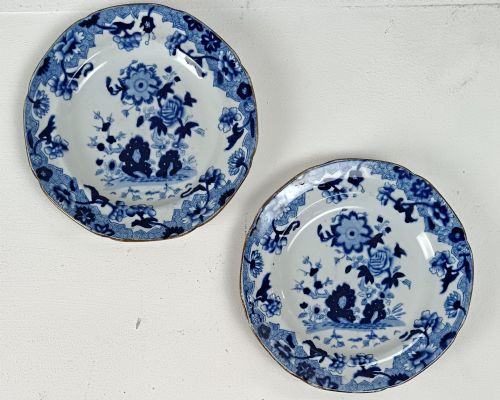
The selection on this page spans the nineteenth century, including Georgian, Victorian, and Edwardian eras. Many examples display rich transfer-printed or hand-painted patterns inspired by Asian motifs.
Functional tableware pieces such as drainers, cheese dishes, and comports appear alongside standard dining services. These items served busy country houses and domestic kitchens alike.
How they were made
Potters formulated ironstone using dense mixtures of earthenware clay, feldspar, and slag to create a hard-wearing ceramic body that resisted chipping during daily service. This sturdy matrix allowed makers to form large meat platters and heavy chargers without sacrificing structural integrity.
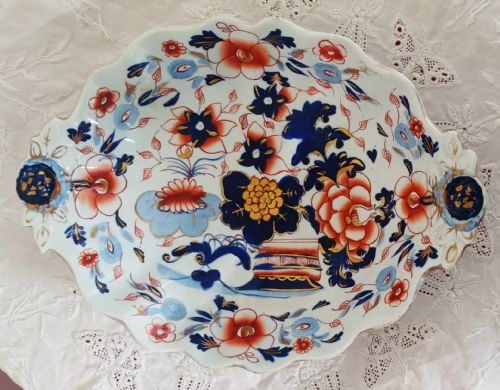
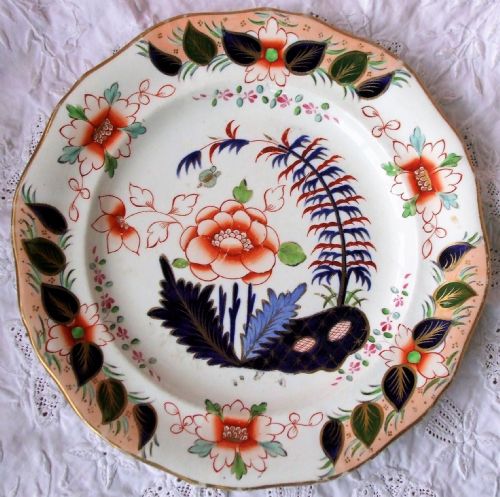
Glazing and surface decoration followed high-temperature firing, utilising enamel colours, gilding, and gold leaf to render intricate Chinoiserie scenes and botanical motifs. Skilled hands applied blue and white transfers or painted vibrant orange and yellow grounds directly onto the ceramic surface.
Listings feature ironstone and earthenware materials decorated with enamel, glaze, and gold leaf.
What varies in quality
The refinement of the ceramic body and the precision of the glaze set individual pieces apart. Finer examples display smooth, even surfaces that hold complex painted details without blurring.
Artistic execution dictates distinction across the range. Hand-painted enamels and intricate gilding executed by skilled decorators elevate standard utility wares into striking cabinet pieces.
Spode New Stone·John Davenport of Longport·John Ridgway·C.J. Mason
The Ironstone Ceramic Plates Glossary
- Ironstone China
- A heavy durable ceramic patented in the nineteenth century to imitate porcelain. It combines earthenware properties with high strength.
- Chinoiserie
- European artistic styles reflecting Chinese motifs and landscapes. These decorative schemes appear frequently on nineteenth-century plates.
- Charger
- A large decorative plate used for service or display rather than individual dining. They often feature vibrant hand-painted patterns.
- Comport
- A raised dish or bowl designed for serving fruit or dessert. These footed pieces sit above the main table level.
- Drainer
- A perforated ceramic insert placed inside meat platters to separate juices from the joint. They match the surrounding service patterns.
Ironstone Ceramic Plates: Frequently Asked Questions
What is ironstone ceramic?
Ironstone ceramic is a dense, heavy earthenware developed to provide an affordable and durable alternative to imported Chinese porcelain.
Potters designed these sturdy bodies to withstand daily dining and heavy kitchen use while accepting rich colour transfers.
How do I date these plates?
Dating relies on maker marks, pattern names, and stylistic shifts between the Georgian, Victorian, and Edwardian periods.
Early nineteenth-century pieces often display hand-painted Chinoiserie motifs, whereas later Victorian items frequently utilise commercial transfer-printing techniques.
Can I use them daily?
These pieces were built for robust domestic service and handle regular use well.
Careful hand washing protects the delicate hand-painted enamel colours and gold leaf details from harsh modern detergents.
What are Japanese patterns?
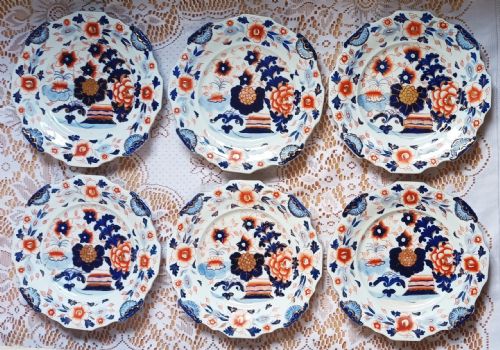
Japan patterns refer to nineteenth-century European interpretations of Japanese Imari porcelain designs.
These motifs typically feature striking combinations of iron-red, cobalt blue, and gilding on heavy ceramic bodies.