
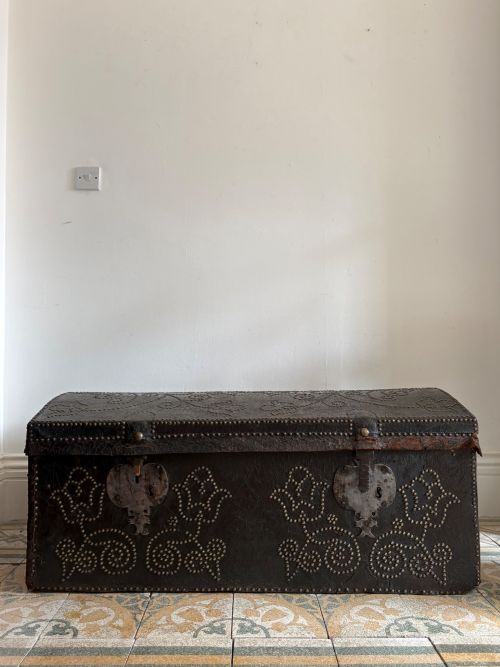
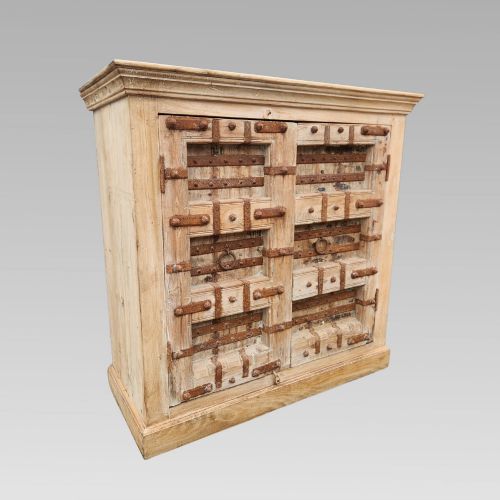


Iron Studded Chest
An iron studded chest delivers rugged utility paired with centuries of craftsmanship, offering robust storage for the modern home.
Iron Studded Chest
An iron studded chest functions primarily as a sturdy storage receptacle, incorporating metal reinforcement for security and transport. The selection ranges widely across geographic origins and centuries, covering domestic and travel forms.
The versions most commonly met on this page include dome top trunks, leather covered coffers, and bound wooden storage boxes. These pieces span from the seventeenth century through to the Victorian era, showing diverse regional vernaculars.
Makers utilised various timber substrates such as teak, pine, oak, and hard wood, encasing them in protective hides and securing them with metal mounts. Such diversity reflects utilitarian demands across European, Asian, and colonial workshops.
How iron studded chests were made
Carpenters constructed the primary carcase from woods like pine, oak, teak, or hardwood, often shaping them into dome top or flat lid profiles. Metal bindings and iron studs were then applied by hand to reinforce the structural corners and joints against heavy use.
Hides, leather, and steel caskets received similar treatment, with craftsmen fixing metal strapping and decorative studs directly onto the organic exterior surfaces. Wrought iron handles and brass fittings completed the assembly, securing the contents for travel or domestic storage.
One industrious merchant box even doubles as a miniature strongroom, complete with specialised compartments for ancient coin sorting.
What varies in quality
The primary distinction lies in the integrity of the original construction and the survival of surface materials like leather, hide, and painted finishes. Pieces retaining their original wrought iron mounts, carry handles, and structural timber display superior heritage value.
Execution of the metalwork and the precision of the stud placement dictate the refinement of the piece. Master craftsmen achieved greater harmony between the functional iron reinforcement and the decorative wooden or leather carcase.
Seabrook of St Pauls
The Iron Studded Chest Glossary
- Dome top
- A rounded lid construction designed to shed water and increase internal capacity. This profile appears frequently on seventeenth and eighteenth century travelling trunks.
- Coffer
- A heavy chest traditionally used for holding valuables or documents. These objects often feature dense iron binding and secure locking mechanisms.
- Hide
- Animal skin prepared for preservation and used as an exterior covering on boxes and trunks. It provides a durable, tactile surface that accepts metal studding.
- Wrought iron
- Iron beaten into shape by hand while hot, yielding a fibrous and durable material. It forms the structural bands and decorative studs on many early storage pieces.
- Zenibako
- A traditional Japanese merchant money box. These functional containers utilise specialised internal compartments for currency storage.
Iron Studded Chest: Frequently Asked Questions
What were iron studded chests used for?
These pieces served primarily as secure containers for transporting valuables, clothing, and documents during travel. Their robust construction protected contents from the rigours of transit across land and sea.
In domestic settings, they transitioned into blanket boxes and storage coffers positioned within bedchambers and halls. Their heavy metal reinforcement offered a reliable deterrent against theft and accidental damage.
How do I date an iron studded chest?
Dating relies heavily on examining the construction methods of the timber carcase and the style of the ironwork. Earlier examples from the seventeenth and eighteenth centuries often display hand-forged wrought iron and pinned joinery.
Later Victorian and nineteenth-century pieces frequently incorporate machine-cut elements and standardised fittings. Regional traits, such as Spanish leatherwork or Anglo-Indian construction, also help narrow down the period of origin.
Where should I place an iron studded chest at home?
These chests function effectively as coffee tables in a sitting room, providing both a stable surface and concealed interior storage. Their strong visual presence anchors a room, working well against neutral walls.
In a bedroom or hallway, they serve as blanket boxes or entryway benches. Placing them out of direct sunlight helps preserve original leather, hide, and painted finishes.
How do I care for leather and iron on a chest?
Leather and hide surfaces require gentle dusting and occasional conditioning with appropriate museum-grade waxes to prevent drying and cracking. Avoiding excessive moisture is essential for preserving organic materials.
Metal components benefit from light cleaning to remove dust without disturbing the aged patina of the iron. Keeping the pieces in stable environmental conditions prevents the wood beneath from warping.