

Iron Stick Rack
An iron stick rack brings order to a hallway, holding wet umbrellas and walking canes in cast metal.
Iron Stick Rack
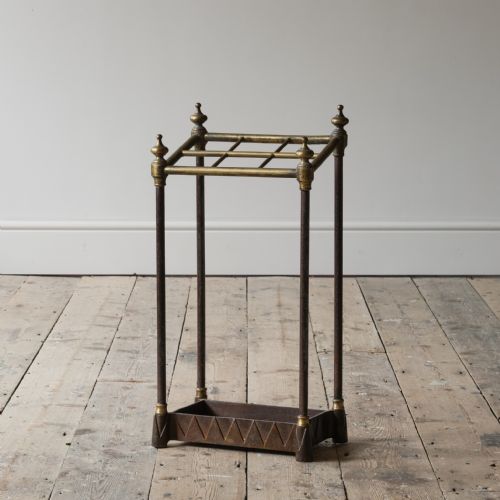
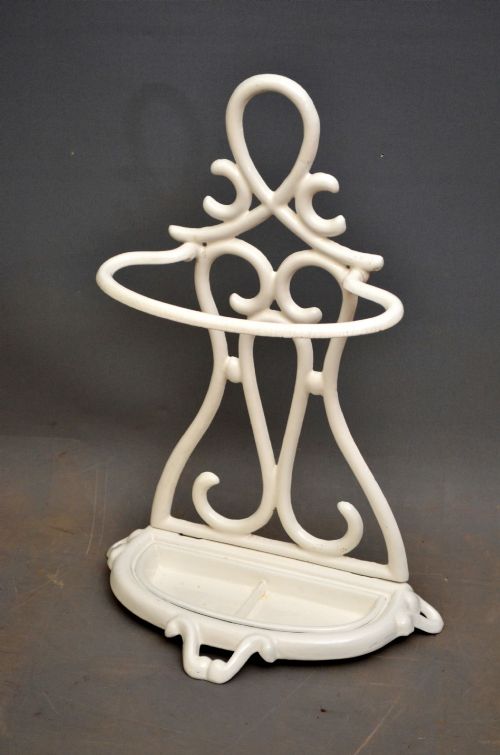
An iron stick rack is a functional hall furnishing designed to hold umbrellas, walking canes and parasols. The pieces gathered under this search phrase appear most frequently in Victorian, Edwardian and early twentieth century variations.
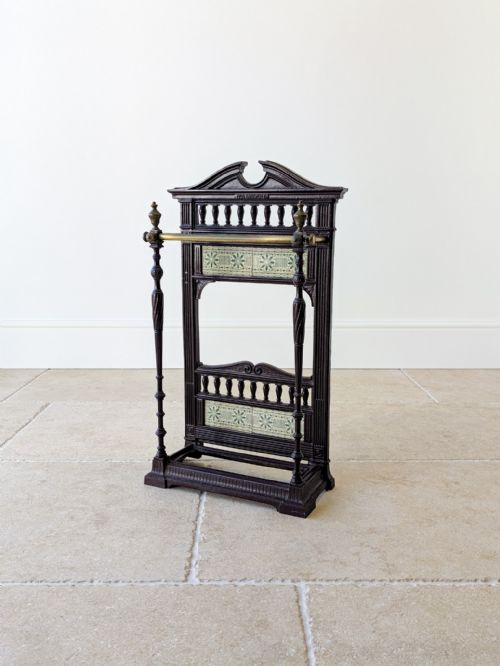
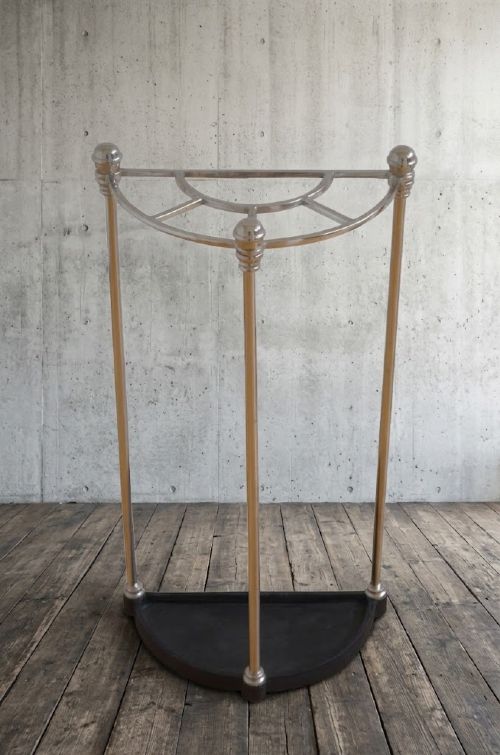
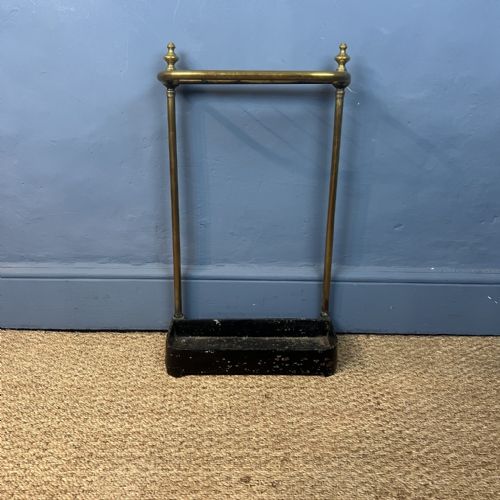
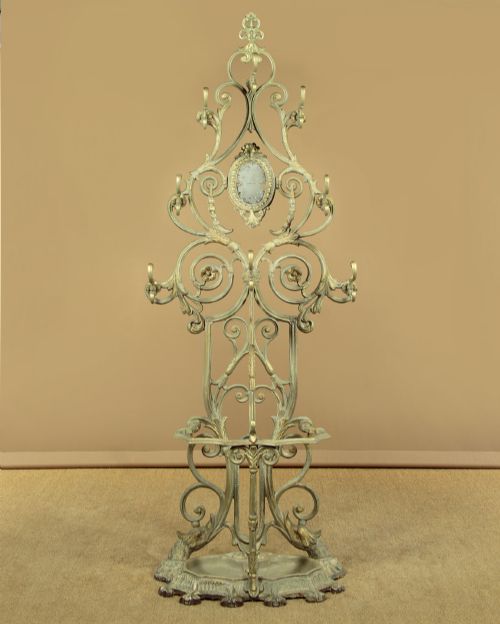
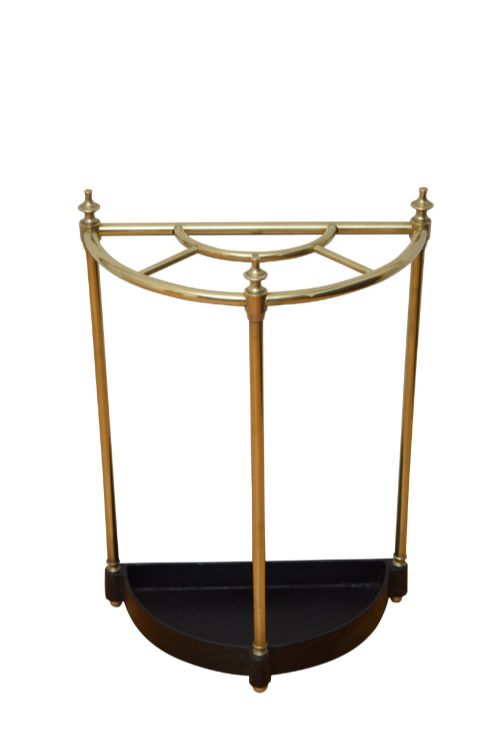
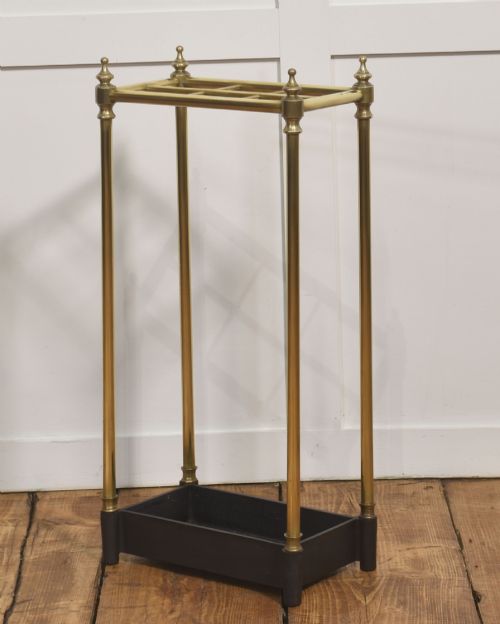
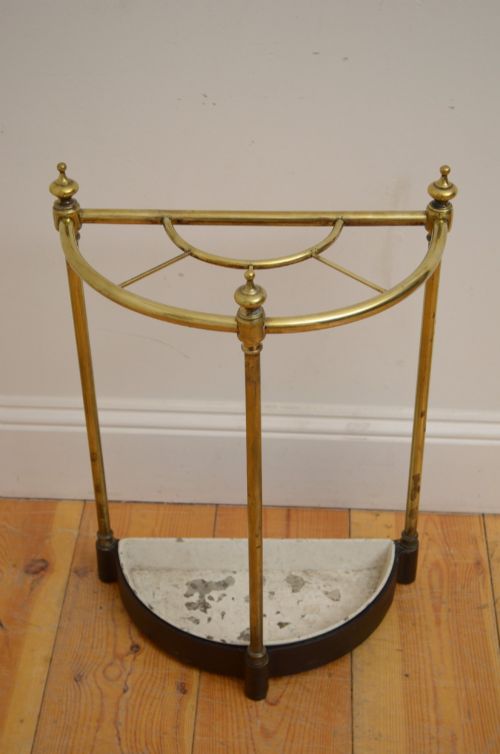
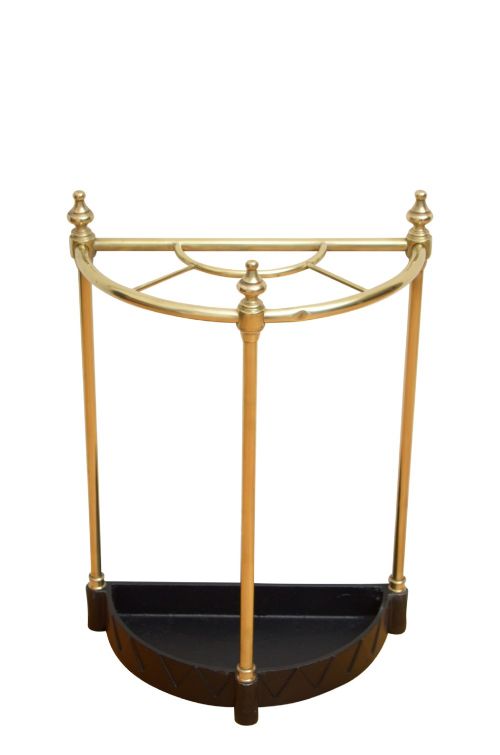
The objects take several forms, including dedicated umbrella stands, semi-lune wall-hugging frames, and larger combined hall stands incorporating coat hooks and mirrors. Many examples date from the nineteenth century through the nineteen-thirties, spanning periods from the Aesthetic Movement to Art Deco.
Materials and construction
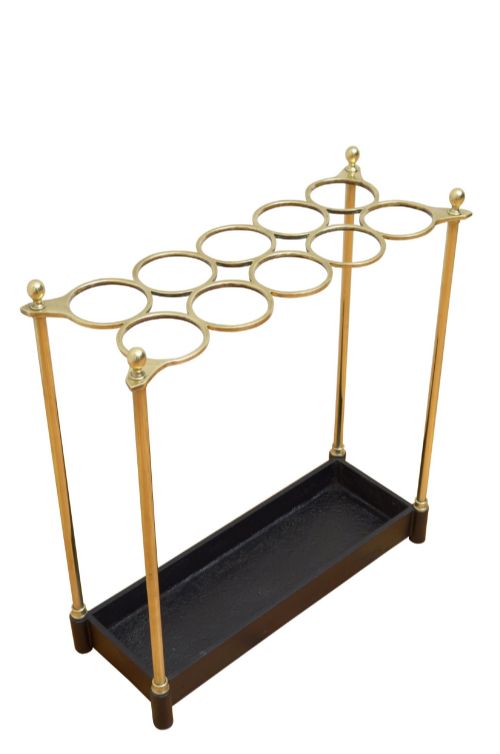
Makers utilised cast iron for structural durability and heavy bases, often combining it with brass rails, decorative ball finials and tubular metal components. Some examples incorporate ceramic liners, glass elements, or white enamel finishes to catch water drippings from wet umbrellas.
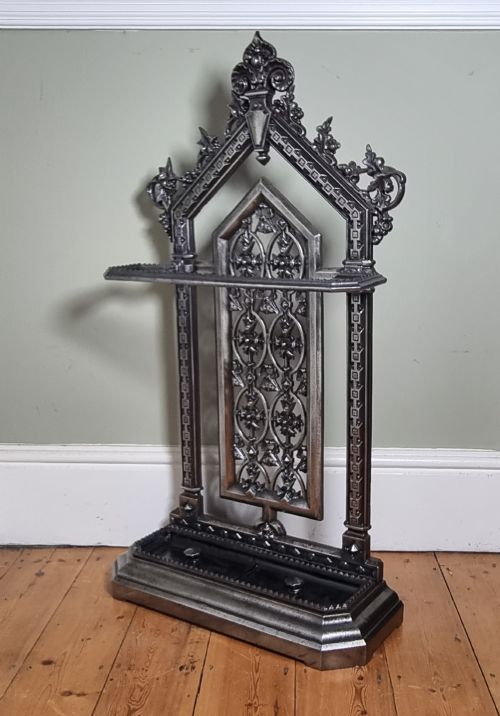
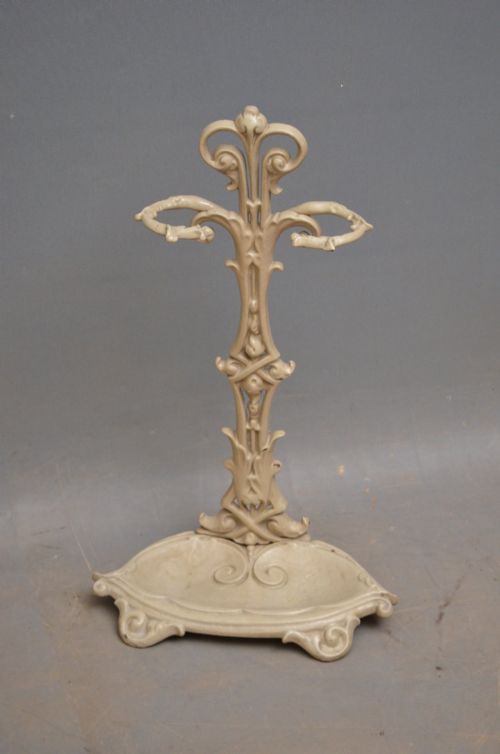
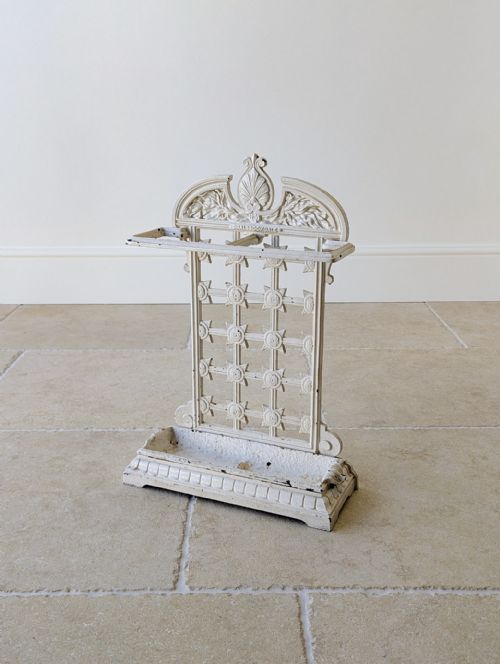
Foundries employed casting techniques to shape intricate patterns, producing stylized flora, faux bamboo mouldings, and geometric divisions. Finished items received painted surfaces, nickel plating, or polished brass highlights depending on the aesthetic of the period.
Listings include cast iron, brass, glass, enamel, and ceramic components across Victorian, Edwardian, and Art Deco styles.
Judging execution
The standard of an iron stick rack is revealed in the crispness of the casting and the weight of the metal. Finer pieces display sharply rendered botanical motifs, clean lines in the brass divisions, and solid construction without crude seams.
Maker attribution and registered design marks elevate certain examples above standard foundry output. The presence of integrated drip trays, robust finials, and well-preserved original finishes or enamel work indicates superior original manufacture.
Coalbrookdale·Falkirk Ironworks·A. Kenrick & Sons
The Iron Stick Rack Glossary
- Demi-lune
- A half-moon shape used for stick stands designed to sit flat against a hallway wall. This configuration saves floor space in narrow corridors.
- Cast iron
- An iron-carbon alloy poured into moulds to create rigid forms. It provides the heavy foundation required to support damp walking sticks.
- Aesthetic Movement
- A late nineteenth century design style emphasising visual beauty over narrative subject matter. Pieces from this movement often feature stylized natural forms.
- Faux bamboo
- A decorative moulding technique carved into metal or wood to mimic natural bamboo segments. It appears frequently on nineteenth century French hall furniture.
- Finial
- A decorative ornament fixed to the top corner or terminal of a metal frame. These elements serve to cap vertical rods and balance the overall silhouette.
Iron Stick Rack: Frequently Asked Questions
How do I stop rust on an iron stick rack?
Keep the metal dry and apply a light coat of wax or microcrystalline paste to protect the surface from moisture transferred by wet umbrellas.
Avoid placing the stand in damp environments and dry the drip tray regularly to preserve the original iron and brass finishes.
Did these stands always have drip trays?
Many cast iron and brass stands incorporated removable metal trays or ceramic liners at the base to catch water. Some simpler frames relied on floor placement or matching floor trays.
Surviving examples occasionally retain their original trays, which helps maintain their original utility.
How do I date an iron stick rack?
Dating relies on stylistic clues, registration marks, and the combination of materials such as brass, cast iron, and nickel plating. Victorian examples often display Gothic or Aesthetic motifs, while nineteen-thirties pieces show Art Deco geometry.
Foundry stamps and design numbers can also narrow the production era to specific decades.