

Iron Hall Stick Stand
An iron hall stick stand brings practical organisation to an entrance hall while showing the robust metalwork of the nineteenth and early twentieth centuries.
Iron Hall Stick Stand
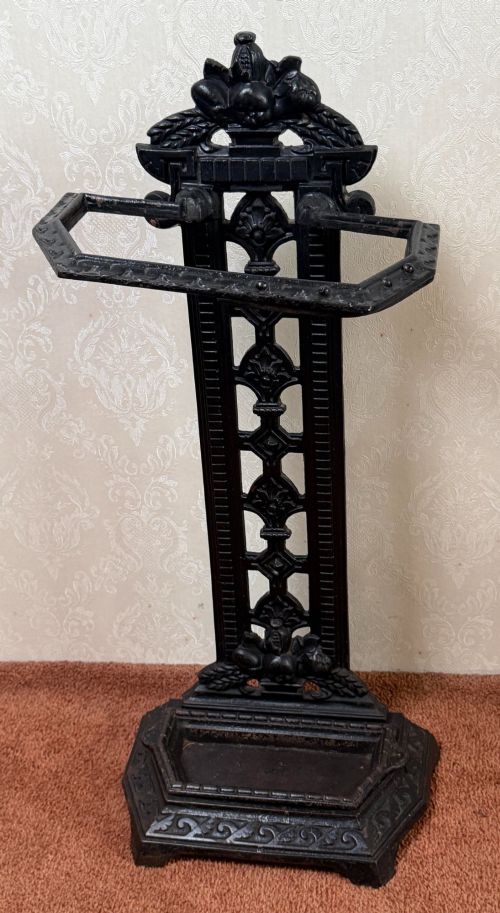
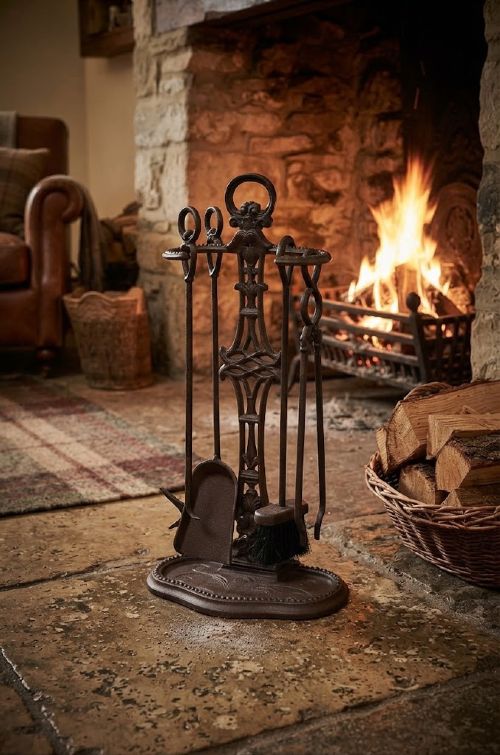
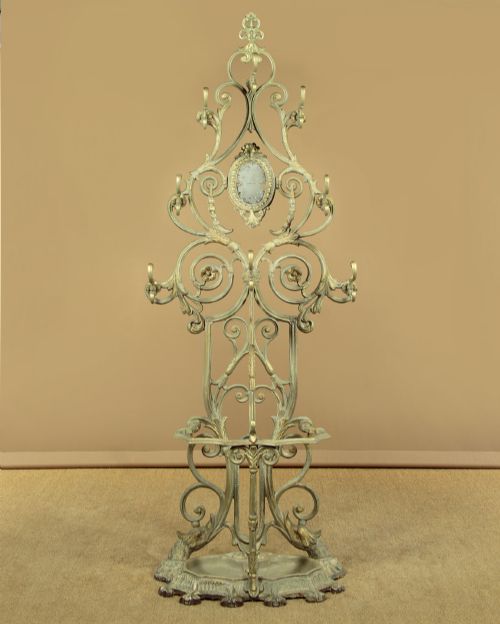
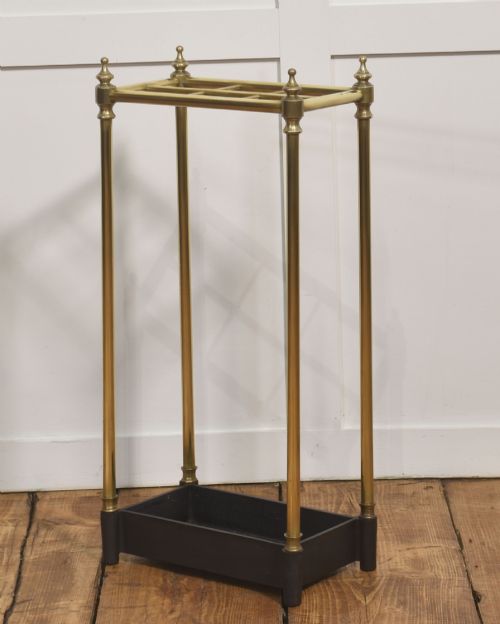
An iron hall stick stand is a heavy-duty hall furnishing designed to hold walking sticks, umbrellas, and occasionally fire tools or hats. These items appear primarily in Victorian, Edwardian, and Art Deco styles, often taking the form of freestanding umbrella racks or combined hall stands.
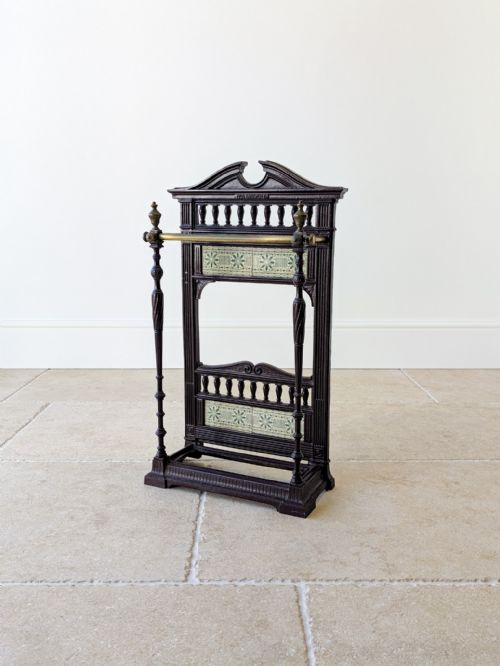
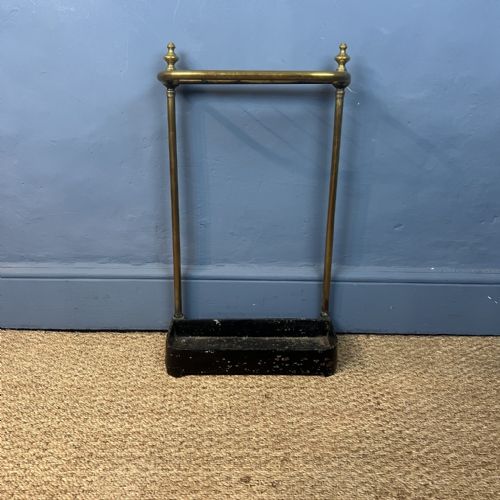
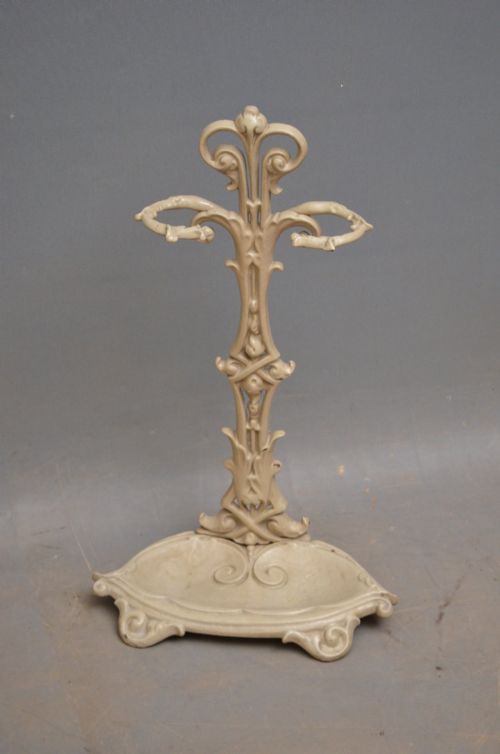
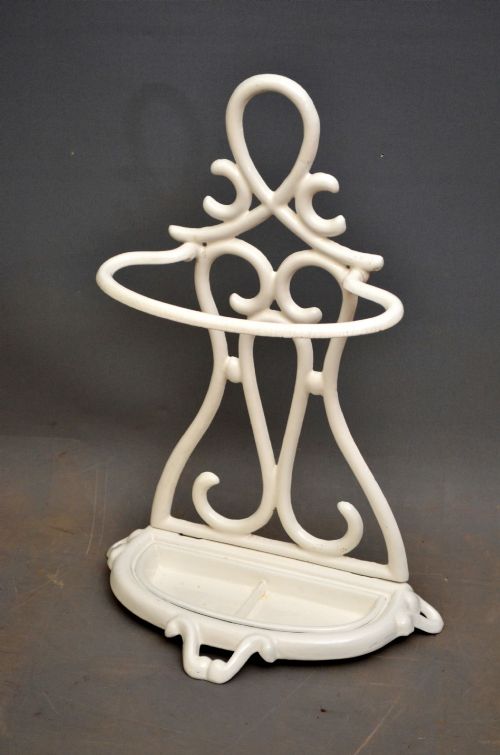
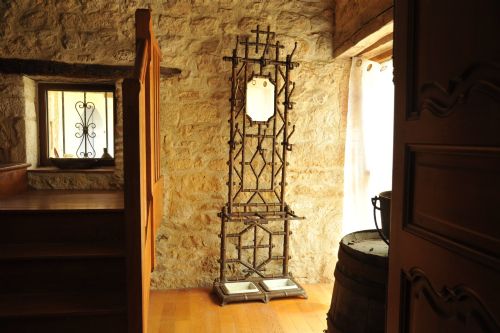
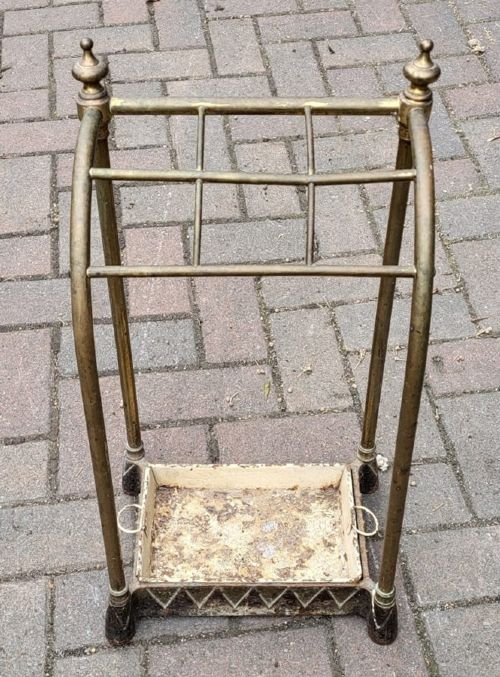
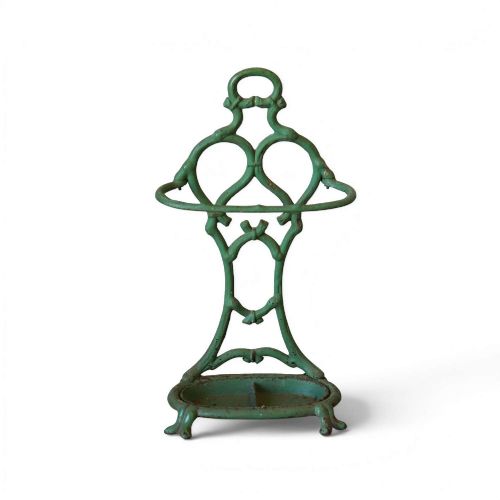
The versions most commonly met on this page are cast iron frames dating from the nineteenth century, finished with black paint or white enamel. Many incorporate brass rails, drip pans, or stylistic elements from the Aesthetic Movement and French Art Nouveau.
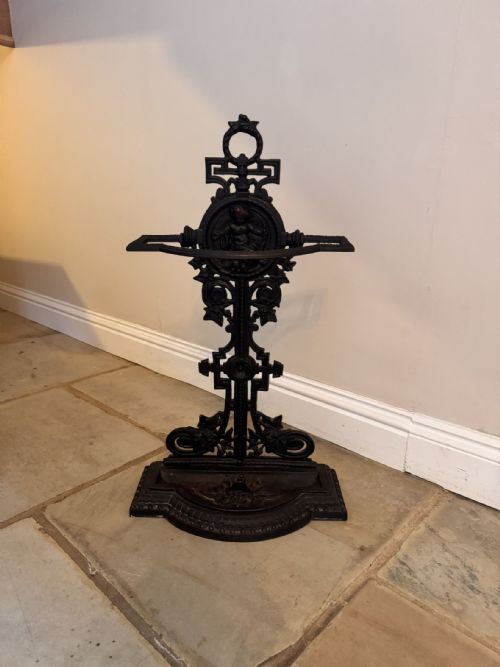
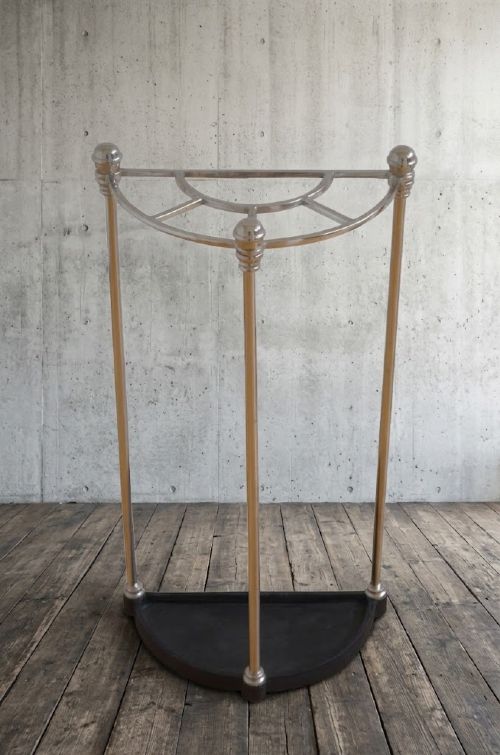
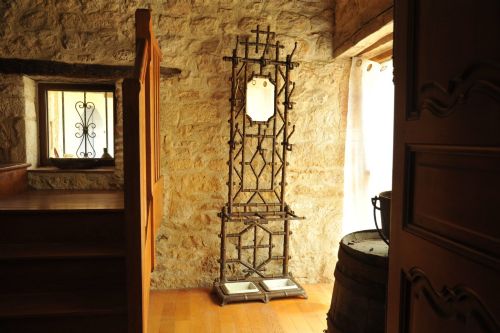
Origins range from English foundries such as Coalbrookdale and Falkirk to French workshops producing faux bamboo designs. Pieces take Demi-Lune shapes, rectangular racks, or figural compositions depicting subjects like William Wallace.
How they were made
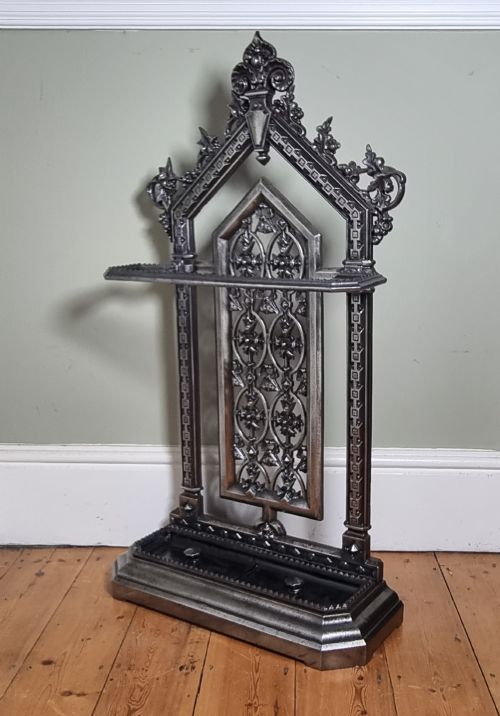
Makers utilised sand casting to produce the rigid iron frames, pouring molten metal into moulds to create intricate openwork patterns, foliage, or figural motifs. This technique allowed for the mass production of durable hall furniture with high decorative detail.
Makers integrated brass rods, copper elements, and steel components into the iron structures to provide contrasting metal accents. Removable metal or ceramic drip trays were positioned at the base to catch water from wet umbrellas.
Finishes were applied manually, ranging from simple black paint and nickel plating to protective white enamel coatings. Some designs utilised faux bamboo moulding directly cast into the iron to imitate organic materials.
Periods represented span from the 1860s through the Victorian and Edwardian eras into the Art Deco 1930s.
What varies in quality
Quality separates objects by the crispness of the casting and the depth of relief in the ironwork. Finer examples retain sharp detailing in complex patterns like faux bamboo or figural scenes, whereas lower-grade pieces show blurred edges from worn moulds.
The reputation of the foundry dictates distinction, with marked pieces from makers like Coalbrookdale or Falkirk commanding greater interest. The inclusion of original drip pans and supplementary brass divisions also elevates a piece above standard utility items.
Coalbrookdale·Thomas Jeckyll·Falkirk Ironworks·Falkirk Foundry·Shoolbred·Kenrick
The Iron Hall Stick Stand Glossary
- Demi-Lune
- A half-moon shape used for stick stands designed to sit flat against an entrance wall. This profile saved floor space in narrow Victorian hallways.
- Drip pan
- A shallow metal or ceramic tray placed at the base of the stand to collect water from wet umbrellas. Original trays matching the frame are specific indicators of completeness.
- Aesthetic Movement
- A late nineteenth-century design style focusing on visual beauty rather than narrative purpose. Pieces from this movement often feature stylised natural forms and linear framing.
- Faux bamboo
- A decorative moulding technique that imitates the segmented stalks of natural bamboo. Foundries cast this pattern directly into iron structures during the late Victorian period.
- Coalbrookdale
- A prominent English ironworks known for ornate cast iron garden and hall furniture. Marked pieces from this foundry represent high periods of Victorian metal manufacturing.
Iron Hall Stick Stand: Frequently Asked Questions
What periods do these iron stick stands come from?
The pieces span the nineteenth and early twentieth centuries, with a heavy concentration of Victorian and Edwardian examples. Art Deco and Art Nouveau designs appear alongside mid-nineteenth-century industrial foundry work.
Date ranges are usually established through foundry stamps, registration marks, or stylistic indicators typical of specific decades like the 1870s or 1900s.
How were these stands used in period homes?
Households placed them in entrance halls and vestibules to store walking sticks, wet umbrellas, and occasionally riding crops. Combined hall stands also featured hooks for coats and hats.
The metal drip pans caught rainwater to protect wooden hallway floors from moisture damage.
How do I care for an antique iron stand?
Maintenance requires dry dusting and occasional gentle cleaning to preserve painted or enamelled surfaces. Moisture should be kept away from unpainted iron to prevent surface oxidation.
Original drip pans should be emptied and dried regularly if the stand remains in active daily use.
How do I identify a foundry mark?
Foundry marks and registration numbers are typically cast directly into the reverse or base of the iron frame. These raised letters or diamond-shaped lozenge marks indicate the manufacturing date and maker.
Familiar names like Coalbrookdale or Falkirk appear on the heavier Victorian pieces produced in large industrial foundries.