



Iron Candle Holder
An iron candle holder brings industrial weight and hand-forged character into a room through centuries of utilitarian metalwork.
Iron Candle Holder
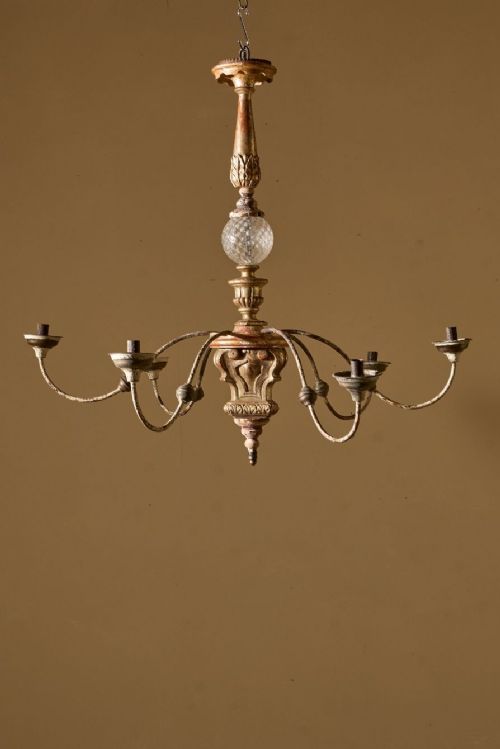
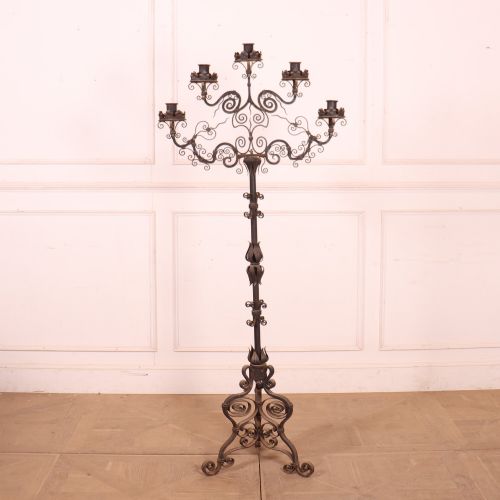
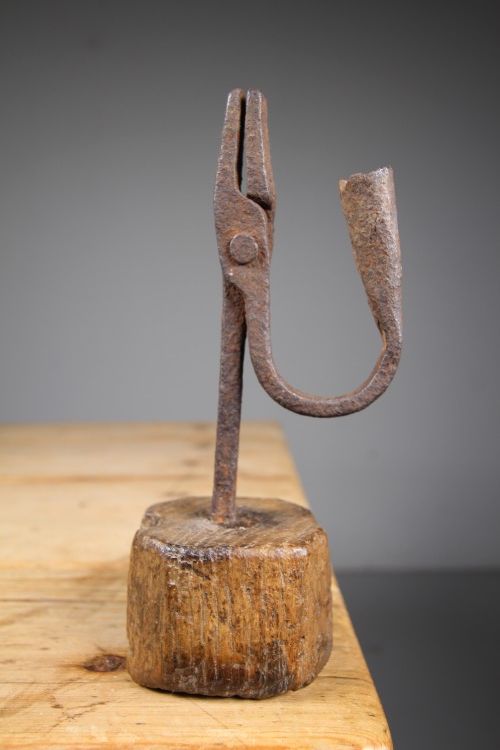
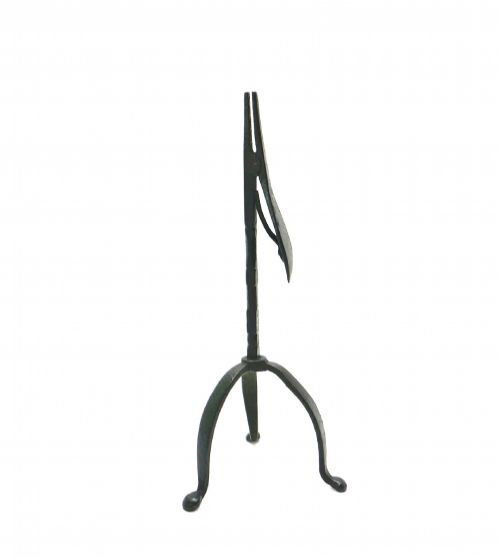
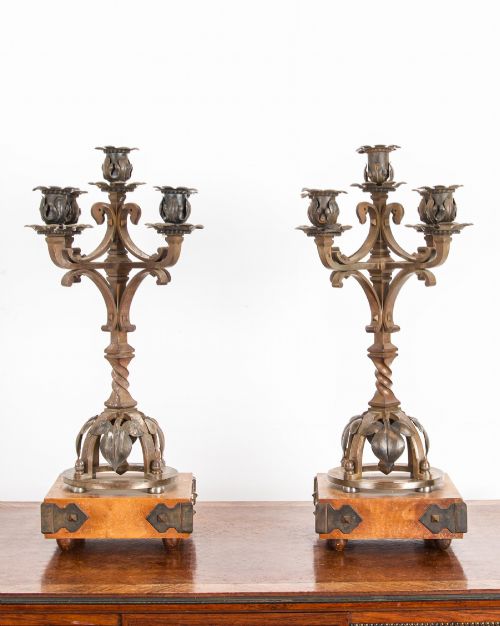
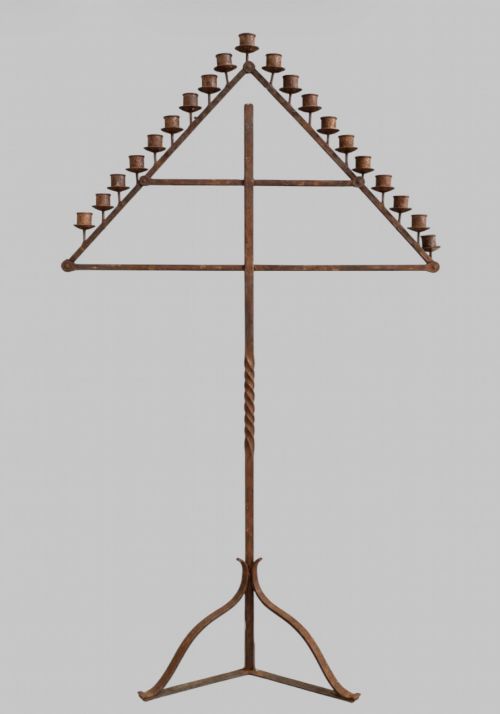
An iron candle holder encompasses a broad functional vocabulary spanning floor-standing standards, table candlesticks, wall sconces, chandeliers, and dual-purpose rushlight combinations. The selection ranges from domestic 18th-century English and Welsh rush nips on hewn timber bases to 19th-century pricket sticks and architectural 20th-century floor candelabras.
The version most commonly met on this page is the 18th-century wrought iron table or bench standing candle holder, frequently engineered with spring actions or combined rush nips. Buyers also regularly encounter later continental interpretations, including Amsterdam School and Art Deco designs from the early decades of the 20th century.
The inventory draws on domestic utilitarian lighting alongside larger ecclesiastical or architectural pieces. From simple spiral candlesticks to heavy multi-branch chandeliers, these objects reflect the evolution of artificial illumination before the arrival of gas and electricity.
Materials and construction
Wrought iron and steel form the backbone of these pieces, shaped at the anvil through heating, hammering, twisting, and riveting by blacksmiths. Tool marks, visible seam lines, and irregularities in the metal reveal the manual labour involved in creating each functional stem or scrolling bracket.
Many early examples incorporate secondary materials such as turned oak, pine, or fruitwood bases that anchor the heavy iron uprights. Combinations with brass, bronze patina, and gilt metal appear in later decorative items, bridging utilitarian blacksmithing with refined domestic metalware.
Listings feature wrought iron alongside wood, brass, steel, and glass across domestic and architectural forms.
Evaluating craftsmanship
Quality rests in the economy and confidence of the blacksmith's hand, where clean proportions and purposeful joinery separate standard utilitarian output from accomplished work. Superior examples display balanced counterweights, carefully formed springs, and harmonious scrolls that serve their mechanical purpose without clumsiness.
The integrity of the surface skin dictates visual success in older ironwork, favouring pieces retaining their original dark oxidised patination rather than aggressive cleaning or modern re-painting. The integration of mixed materials, such as well-turned timber foundations or crisp brass accents, adds textural depth that elevates the piece.
Hugo Berger Goberg
The Iron Candle Holder Glossary
- Rushlight
- A simple lighting device made by stripping the pith of a rush and soaking it in animal fat before clamping it in a pivoted metal lever. These holders often incorporate a socket for a tallow candle alongside the rush nip.
- Pricket
- A sharp vertical spike on a candlestick designed to skewer the base of a candle to hold it upright. This form predominates in ecclesiastical and older domestic altar pieces.
- Torchere
- A tall decorative stand or candlestick designed to support a light source at a higher elevation. They frequently appear in pairs from later decorative periods.
- Rushnip
- The spring-loaded or counterweighted jaw mechanism of a rushlight holder that grips the dried rush stem. Surviving examples demonstrate ingenious early domestic engineering.
- Amsterdam School
- An early twentieth-century architectural and design movement characterised by expressive brickwork, organic forms, and sculptural metalwork. Pieces from this tradition combine iron with warm brass elements.
Iron Candle Holder: Frequently Asked Questions
How do I date an iron candle holder?
Dating relies on observing construction methods, tool marks, and overall form, as hand-forged wrought iron exhibits different characteristics across centuries. Eighteenth-century pieces often show primitive hand-file work and integral spring mechanisms, whereas 20th-century items reflect stylistic movements like Art Deco or the Amsterdam School.
Examining the base also helps establish age, as timber supports, hewn blocks, and turned fruitwood mounts evolved alongside prevailing domestic furniture styles.
What is a rushlight combination?
A rushlight combination is a dual-purpose lighting stand featuring both a spring-loaded metal clip for burning rush pith and a standard socket for a tallow candle. This dual function provided households with economic flexibility depending on fuel availability.
These hybrid implements are heavily represented among 18th-century Welsh and English listings on the market.
How were floor candlesticks used?
Floor-standing candlesticks and torcheres illuminated large rooms, halls, and ecclesiastical spaces before the widespread adoption of multi-point ceiling fixtures. Their elevated height cast light further across stone or timber floors.
Today, they function well as sculptural floor pieces or architectural accents in large reception rooms.
How should I clean antique iron?
Historic ironwork should retain its dry, dark surface patina rather than being polished to a bright steel finish. Gentle dusting with a soft brush and occasional microcrystalline wax treatment will protect the metal from active corrosion.
Avoid liquid cleaners or abrasive pads that strip away centuries of stable oxidation.