
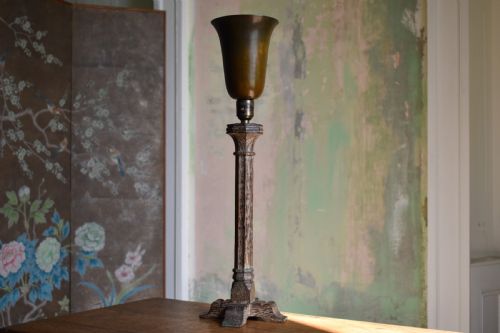
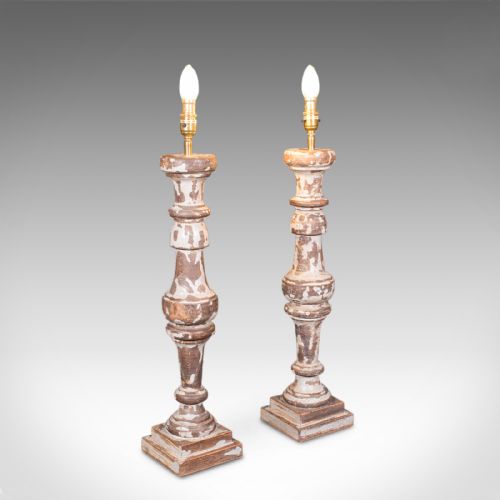
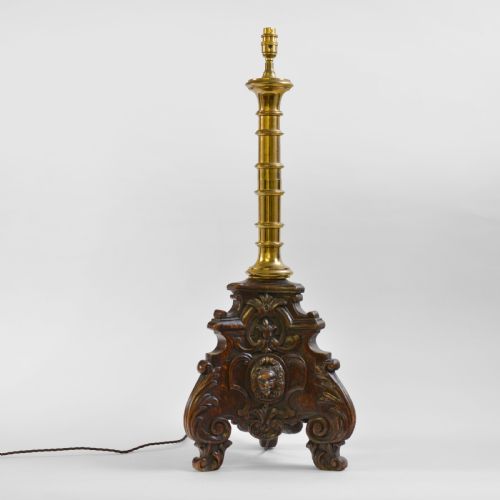


Wooden Base Candlestick
These wooden base candlestick selections offer warm organic textures and period character to illuminate any interior space.
Wooden Base Candlestick
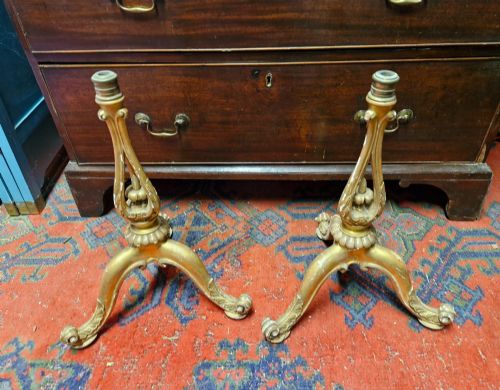
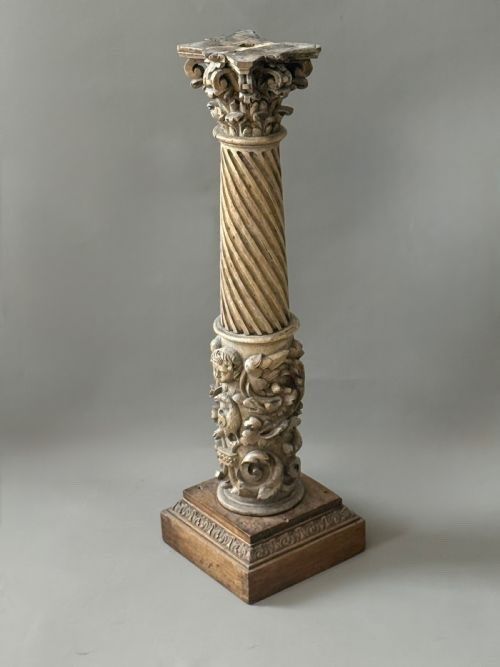
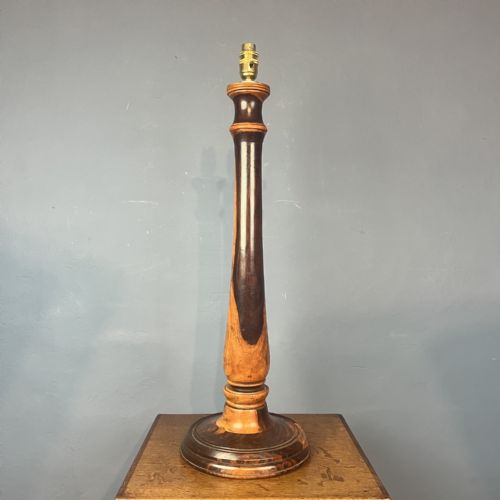
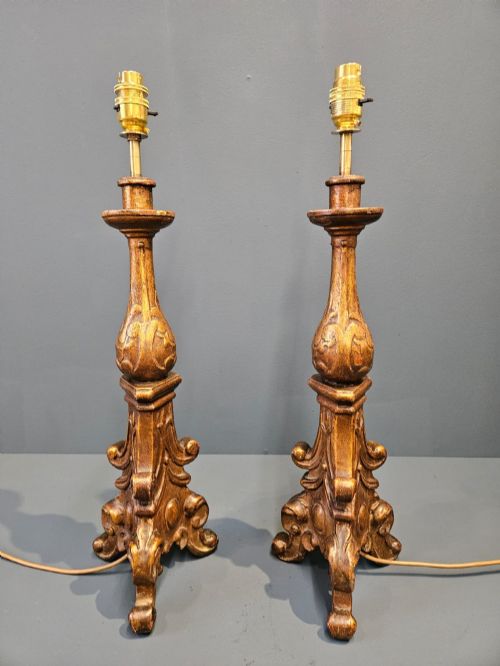
A wooden base candlestick encompasses turned timber supports, carved figures and architectural pillars adapted from earlier lighting forms. When you search for a wooden base candlestick, you encounter functional domestic items alongside substantial floor standards and converted table lamps.
The selections span centuries of craftsmanship, ranging from seventeenth-century Flemish oak and continental baroque carvings to nineteenth-century painted pine and Victorian timber gilt pieces. Simpler turned columns sit alongside ornate figural sculptures and tripod supports.
Origin points vary widely across English workshops, continental European studios and Anglo-Indian or Kashmiri traditions. Buyers often select these pieces to anchor a room with tactile materiality and historical depth.
Materials and construction methods
Carpenters and turners utilised dense native and exotic hardwoods including oak, lignum vitae and pine for structural stability. Wood was frequently hand-carved, lathe-turned or built up on socle bases.
Many surfaces received decorative treatments such as gesso, silver leaf, gilding, polychrome paint or marbleising effects. Iron components occasionally provided structural reinforcement or functional elements like spiral prickets.
Listings feature oak, pine, lignum vitae and giltwood materials across the seventeenth, eighteenth and nineteenth centuries.
Qualities that distinguish finer examples
The refinement of the hand-carving and the integrity of the original timber substrate dictate the distinction between standard production and exceptional craftsmanship. Crisp detailing on figural sculptures or architectural mouldings demonstrates superior workshop output.
The preservation of original surface finishes, whether early paint, gilding or polished grain, heavily influences the character and integrity of the piece. Retaining authentic patination without intrusive modern restoration preserves the historic value.
The Wooden Base Candlestick Glossary
- Pricket stick
- A candlestick featuring a central spike designed to secure a wax taper rather than a socket. These often derive from ecclesiastical furnishings.
- Socle base
- A short plinth or pedestal supporting a column, figure or candlestick. It elevates the main body and provides visual stability.
- Lignum vitae
- An extremely dense and heavy wood derived from tropical trees, prized by turners for durability. It frequently exhibits a dark, rich grain.
- Giltwood
- Timber that has been coated with a thin layer of gold leaf or gesso and gold paint. It reflects candlelight effectively in domestic interiors.
- Tripod base
- A three-legged support system providing balance for tall standards or candlesticks. This configuration appears frequently on nineteenth-century pieces.
Wooden Base Candlestick: Frequently Asked Questions
How do I date a wooden candlestick?
Dating relies upon identifying tool marks, wood species, and stylistic indicators such as baroque or neoclassical turning patterns. Examining the wear around the base and socket also reveals age.
Construction techniques shift across centuries, moving from heavy hand-hewn seventeenth-century oak to more refined Victorian turning and finishing methods.
Were these originally lamps or candlesticks?
Many examples began as traditional candlesticks or pricket sticks before being later adapted for electrical wiring. Others started as standard lamps or architectural pillars.
Conversions are common, particularly with nineteenth and early twentieth-century pieces that transition smoothly into modern domestic lighting.
How should I clean a painted wooden base?
Dust gently with a dry, soft brush to protect fragile surface treatments like silver leaf or historic paint. Avoid chemical solvents that strip patination.
Preserving the original finish requires minimal intervention, leaving the accumulated character of the timber intact over decades of handling.
What is the difference between a standard lamp and a candlestick?
Standard lamps stand significantly taller, typically resting on the floor to illuminate a wider area of a room. Candlesticks and table lamp bases are scaled for tabletops and sideboards.
Both forms share similar turned or carved wooden structural profiles depending on their period of origin.
Are painted finishes original?
Many nineteenth-century pieces feature period painted or marbleised surfaces applied during manufacture. Kashmiri and continental pieces frequently display colourful handpainted motifs.
Distinguishing between original historic paint and later decorative over-painting requires close inspection of the underlying crackle and wear patterns.