


Irish Mahogany Console
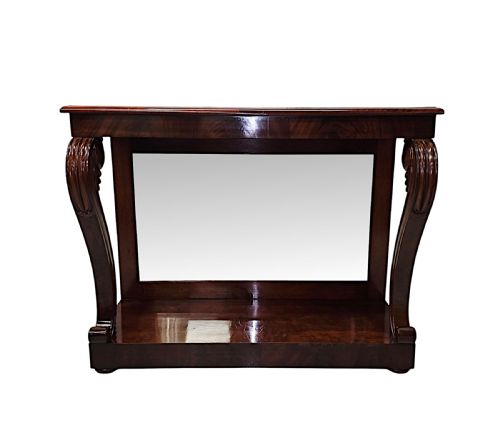
Irish mahogany console tables combine bold timber with vigorous carving, offering robust elegance for grand interiors.
Irish Mahogany Console
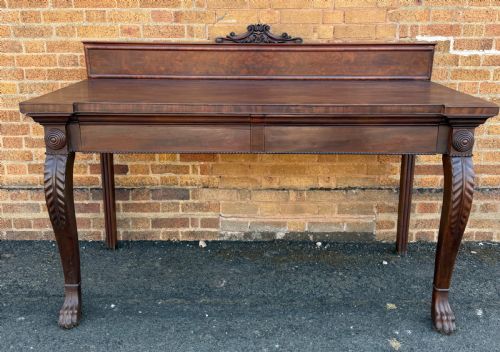
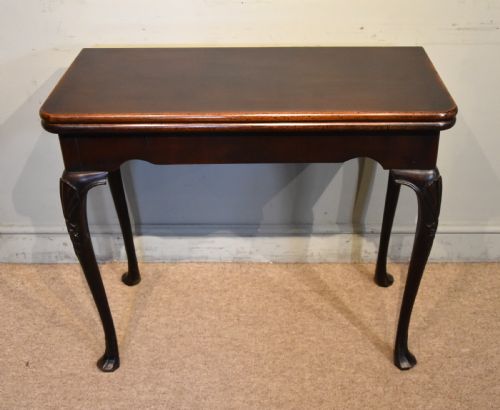
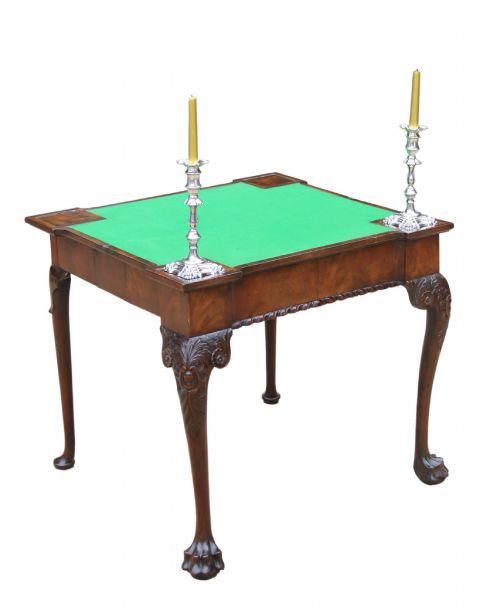
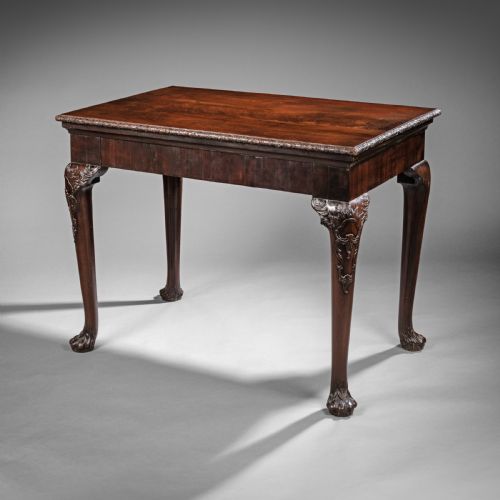
When you search for an irish mahogany console, you encounter tables shaped by Georgian, Regency, and William IV aesthetics, spanning the eighteenth and nineteenth centuries. These pieces function primarily as serving tables, side tables, or games tables with concertina actions and foldover leaves.
The examples most commonly met on this page date from the Georgian and nineteenth-century periods, often exhibiting regional Irish traits like deep carving and generous scale. Makers and workshops such as Gillingtons of Dublin and Robert Strahan and Co shaped the character of these items through specific stylistic choices.
Beyond standard side pieces, the category encompasses marble-topped variants, silver tables, and triple-top card tables. Each variation maintains a heavy reliance on rich timber grounds, whether kept plain or enhanced by satinwood inlay.
Materials and Construction Methods
Makers relied on dense mahogany as the principal structural and visual timber, frequently utilising its grain to create patterned surfaces on top boards and friezes. Secondary woods support internal frames while brass hardware occasionally secures folding mechanisms and internal fittings.
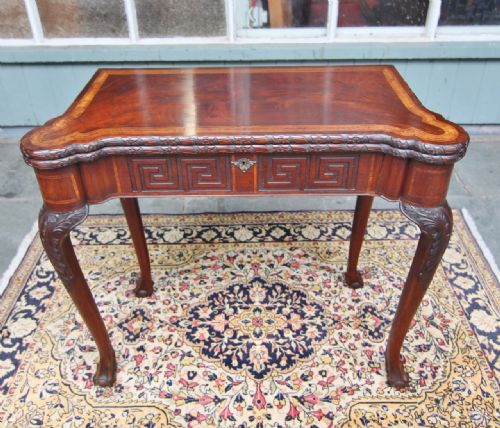
Surface enhancement often involved satinwood inlay to create geometric borders or contrasting panels on tabletops. Certain iterations integrate marble slabs into the top surface, altering the weight and functional capacity of the console.
Listings feature mahogany, satinwood inlay, marble, and brass across Georgian and nineteenth-century periods.
Distinctions in Execution
The standard of carving dictates much of the visual distinction between individual consoles, separating robust provincial work from sophisticated urban cabinet-making. Deeply carved foliage, masks, and claw-and-ball feet demonstrate superior workshop capability.
Proportion and scale govern the success of these tables, with imposing serving tables requiring balanced framing to support heavy timber tops. The integration of complex mechanics, such as concertina actions on card tables, further separates simpler pieces from advanced workshop productions.
Gillingtons of Dublin·Hicks of Dublin·Robert Strahan and Co·Mack Williams and Gibton
The Irish Mahogany Console Glossary
- Concertina action
- An expanding frame mechanism that allows a card table to pull forward and open evenly on an internal framework, supporting a foldover leaf without straining the rear legs.
- Demi-lune
- A half-moon shape used for the top and frame of console and games tables, allowing them to sit flush against a wall when closed.
- Satinwood inlay
- Contrasting blonde wood inserted into darker mahogany surfaces in linear or figural patterns, common in later Georgian and Regency work.
- Serving table
- A large side table designed for dining rooms to hold platters and silver, functioning as a precursor to the sideboard.
Irish Mahogany Console: Frequently Asked Questions
What is an Irish mahogany console?
An irish mahogany console is a heavy timber table produced in Ireland during the eighteenth and nineteenth centuries, featuring robust proportions and carved details.
These pieces served various domestic functions, acting as serving surfaces, display tables, or multipurpose card and games tables in formal rooms.
How do I date an irish mahogany console?
Dating relies on stylistic shifts from the restrained lines of early George II pieces to the bold carving of Irish Chippendale and the classical restraint of the Regency period.
Hardware, timber selection, and construction methods such as concertina actions also provide clear chronological markers for the active workshop periods.
Were these tables used for dining?
Larger examples functioned as serving tables in dining spaces to hold heavy dishes and silver items before the widespread adoption of the sideboard.
Smaller formats operated in hallways and drawing rooms as side tables, tea tables, or dedicated games surfaces with foldover leaves.
What styles define these consoles?
Common stylistic categories include Georgian, George III, George II, William IV, and Irish Regency, often displaying regional decorative preferences.
Carved ornamentation, heavy timber tops, and occasional marble insertions or satinwood inlays distinguish these regional interpretations from English equivalents.