




Intaglio Seal Fob
An intaglio seal fob is a small desk or pocket accessory used to impress wax, combining functional engraving with miniature sculpture.
Intaglio Seal Fob
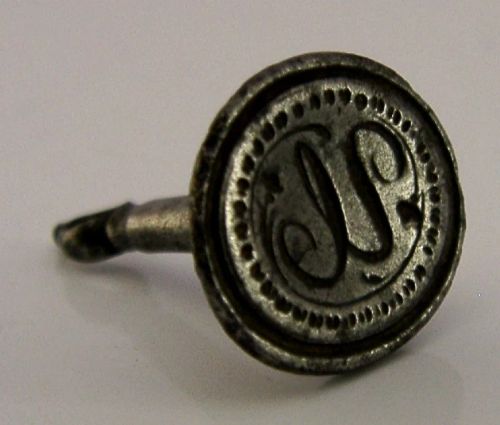
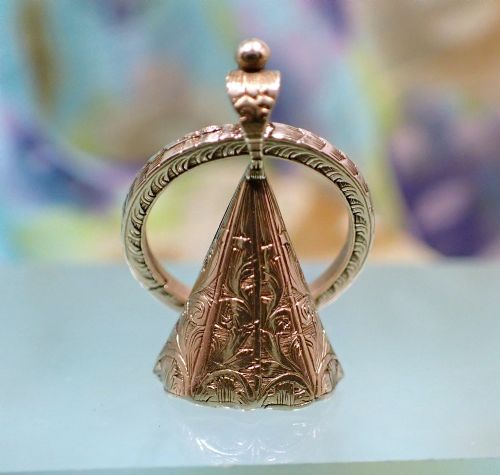
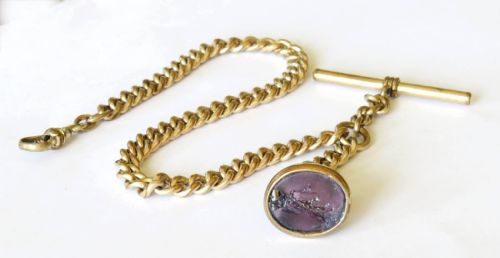
An intaglio seal fob is a personal stamp designed to impress wax, usually attached to a watch chain or worn as a pendant. When you search for an intaglio seal fob, you encounter pieces that range from Georgian gold cased designs to Victorian examples set with hardstones. The most common form on this page is the single-stone pendant or swivel seal carrying an intaglio motif.
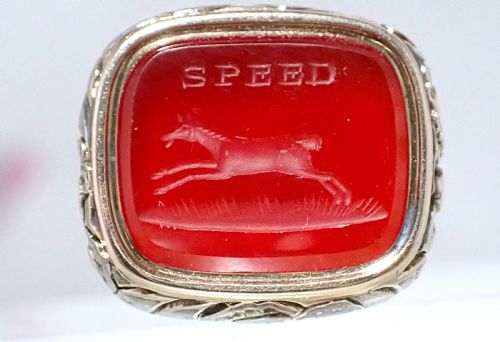
The materials and subjects vary widely, drawing on Georgian and Victorian styles that utilise carnelian, bloodstone, chalcedony, and steel. Many pieces feature carved initials, crests, classical figures, or animals such as horses and elephants. These items reflect both the practical administrative needs of the period and the decorative tastes of the wearer.
How they were made
Makers fashioned these pieces from precious metals including 9ct gold, 15ct gold, rolled gold, and steel, often combining them with hardstone bases. The stone faces were hand-engraved in reverse, known as intaglio, so that the resulting wax impression appeared in relief. Ornate mounts and swivel mechanisms required careful metalwork and soldering by skilled jewellers.
Stones such as carnelian, bloodstone, chalcedony, and rock crystal were cut and polished to fit securely into metal bezels. In some instances, ceramics such as black basalt were utilised alongside traditional metals to form the body of the seal.
Materials documented across the inventory include carnelian, bloodstone, chalcedony, rock crystal, sardonyx, and black basalt set in gold and steel.
What varies in quality
The fineness of the intaglio engraving dictates much of the distinction between pieces, ranging from simple monograms to detailed classical figures and portraits like William Shakespeare. The weight and purity of the metal casing, whether solid 15ct gold or gilt metal, further separates standard examples from exceptional items. Additionally, the clarity and depth of the hardstone determine the visual impact of the carved motif.
The complexity of the mount also plays a part, with ornate cast frames and spinning mechanisms representing higher craftsmanship than plain bezels. Preservation of the original stone surface without heavy scratching indicates better care and superior initial material selection.
Wedgwood and Bentley
The Intaglio Seal Fob Glossary
- Intaglio
- A design carved into the surface of a stone or metal so that the impression is in relief. This technique is fundamental to all seal fobs.
- Fob
- A short chain or ribbon attached to a pocket watch, or the ornament hanging from it. Seal fobs served as both decorative charms and functional tools.
- Carnelian
- A reddish-orange variety of quartz mineral. It is one of the most frequently encountered stones in these seal listings.
- Bloodstone
- A dark green chalcedony flecked with red jasper spots. Collectors value it for its distinct natural patterning.
- Swivel seal
- A type of fob where the seal rotates within its frame, often holding multiple different stones or faces.
- Black basalt
- A fine-grained, hard black stoneware. It was utilised by makers like Wedgwood for producing moulded seal matrices.
Intaglio Seal Fob: Frequently Asked Questions
How were seal fobs actually used?
Owners used them to impress hot sealing wax on correspondence and documents, securing the contents and authenticating the sender's identity. The engraved stone acted as a personal signature in wax.
They hung from watch chains or pocket chains, making them readily accessible throughout the day for daily correspondence.
What materials do I find most often?
The listings show a prevalence of carnelian and bloodstone set in yellow gold, ranging from rolled gold to solid 9ct and 15ct metal.
Steel and chalcedony also appear regularly, alongside occasional ceramic or gilt metal pieces from the Georgian and Victorian eras.
How can I tell a Georgian seal from a Victorian one?
Georgian examples often feature closed-back settings, distinctive Georgian yellow gold hues, and crisp neoclassical or heraldic motifs. The metalwork tends to be hand-wrought and specific to the eighteenth or early nineteenth century.
Victorian pieces frequently display heavier cast ornamentation, sometimes incorporating multiple stones on a swivel or charm bracelet, reflecting changing industrial and aesthetic standards.
Can I still use an antique seal fob with modern wax?
Yes, the hardstone intaglios remain robust enough to impress modern sealing wax without damage. Many collectors continue to use them for personal letters and gift wrapping.
Care should be taken to clean any old wax residue gently from the engraving using a soft brush rather than harsh tools.