



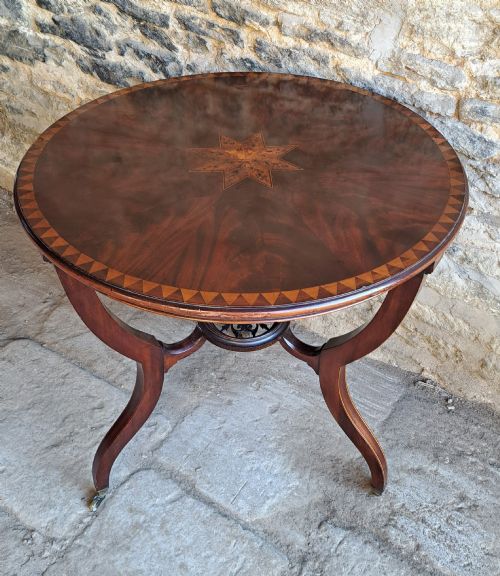

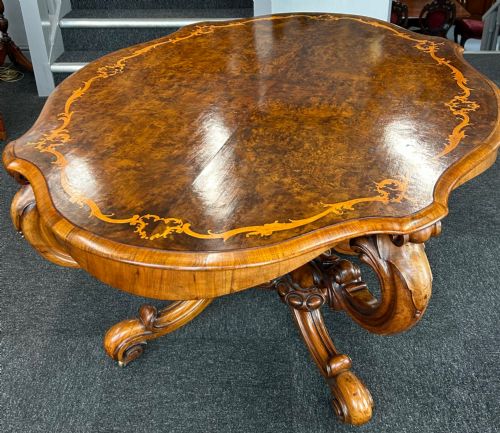


Inlay Parlour Table
An inlay parlour table brings nineteenth and early twentieth century craftsmanship into a room, offering a decorative surface suited to daily use.
Inlay Parlour Table
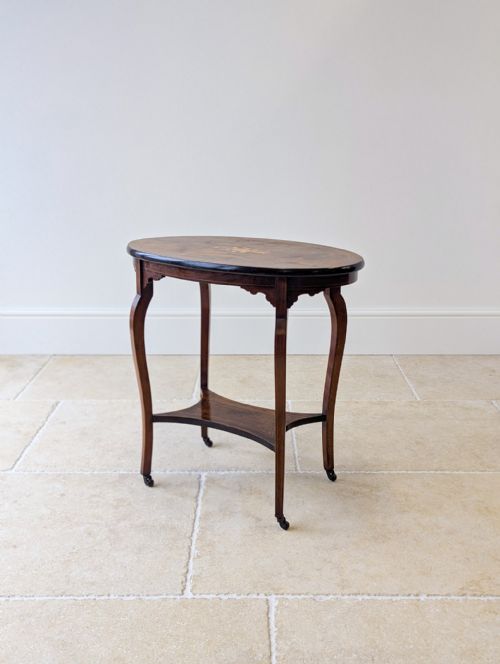
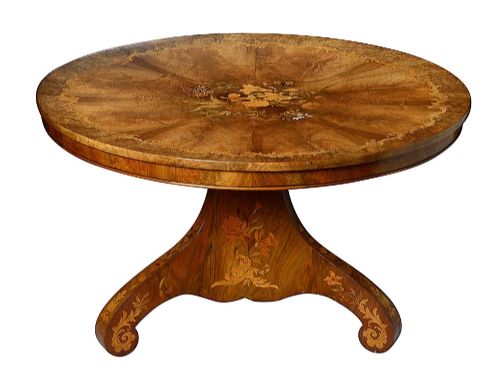
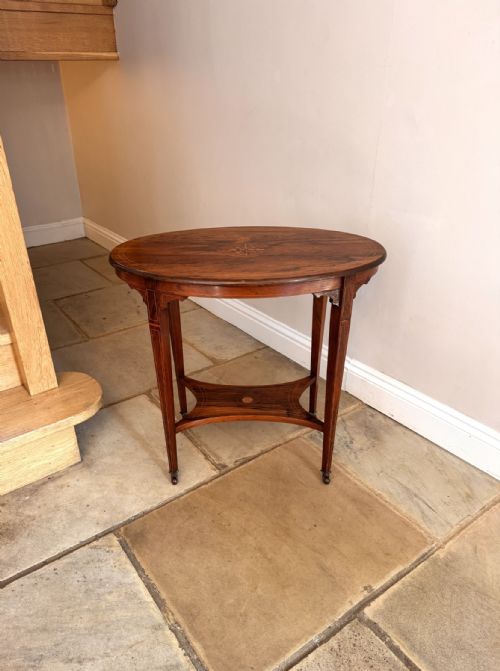
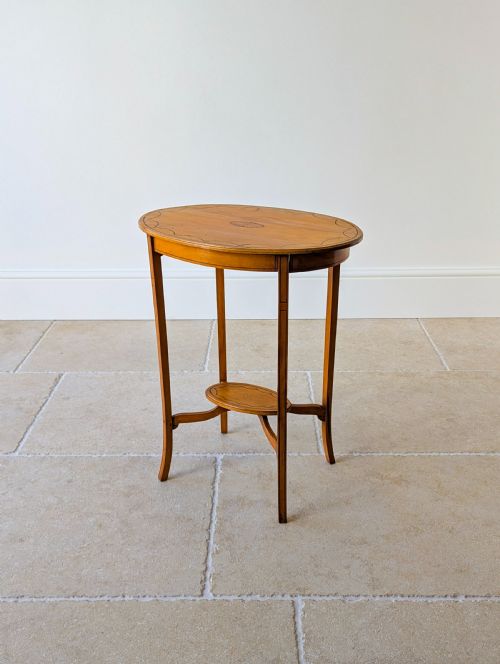
An inlay parlour table appears across Victorian and Edwardian periods, taking forms such as centre tables, occasional tables, side tables, and games tables. These pieces originate from English and French workshops working in domestic spaces during the nineteenth and early twentieth centuries.
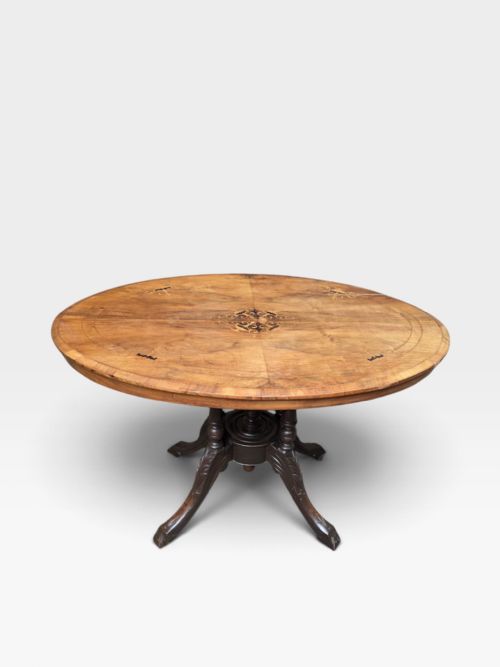
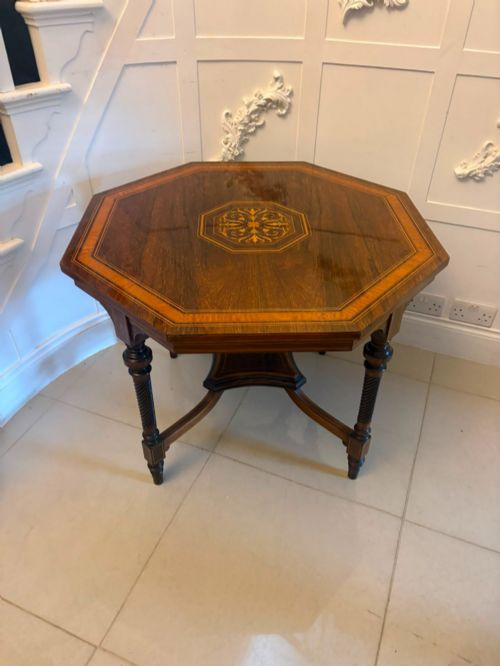
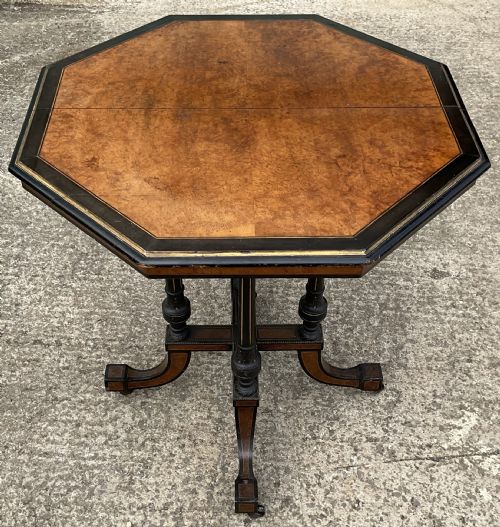
The version most commonly met on this page is the walnut or mahogany centre table or occasional table, often featuring oval or octagonal tops. Makers utilised various woods to construct surfaces intended for display and everyday utility in the Victorian parlour.
Materials and Technique
Cabinet makers built these tables using primary timbers like walnut, mahogany, rosewood, satinwood, and kingwood, frequently applying burr veneers to create figured surfaces. Structural stability relied on dense hardwoods underneath decorative veneers.
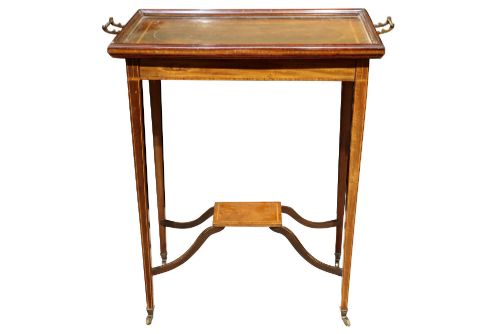
Decoration incorporated marquetry inlay alongside boxwood and brass elements, embedding contrasting woods directly into the surface timber. Workshops shaped edges into tray tops, shaped outlines, or geometric octagonal forms.
Inlay Parlour Table Retail Price Guide 2026
Typical asking prices for inlay parlour table among the pieces listed under this phrase on Sellingantiques today, from the lower quarter to the upper quarter. They describe what is for sale here now, not the wider market.
Materials recorded include coromandel, kingwood, ebonized wood, and brass alongside standard cabinet timbers.
Evaluating the Pieces
Quality rests upon the precision of the marquetry inlay and the choice of timber, with burr walnut and figured satinwood denoting superior examples. Finer pieces demonstrate seamless integration of contrasting woods and careful selection of grain patterns.
Construction methods also separate the range, visible in stable pedestal bases, basket bases, or multi-tiered supports. Tables showing refined proportions and balanced French Louis XVI style or Victorian Rococo Revival details command attention.
James Winter
The Inlay Parlour Table Glossary
- Marquetry Inlay
- Decorative patterns formed by fitting contrasting pieces of wood veneer into a prepared ground. This technique creates pictorial or geometric designs across table tops.
- Occasional Table
- A small, movable table designed for a specific, intermittent domestic use. These pieces function beside seating or in corners of a parlour.
- Centre Table
- A freestanding table intended to stand away from walls and be viewed from all sides. They often feature pedestal or basket bases.
- Burr Walnut
- Wood harvested from walnut tree growths that produces intricate, swirling grain patterns. Cabinet makers utilised these veneers on top surfaces for visual depth.
- Satinwood
- A durable, yellowish timber prized for its smooth sheen and pale colour. It appears frequently in Edwardian pieces for stringing and decorative panels.
Inlay Parlour Table: Frequently Asked Questions
Where did these tables sit?
An inlay parlour table stood in the principal reception room of a Victorian or Edwardian home, positioned centrally or near seating.
Owners used them for displaying decorative items, holding books, or serving tea during social calls.
How do I date a table?
Dating relies on combining timber choices, decorative styles, and structural forms recorded across the periods. Victorian examples often display burr walnut or rosewood, while Edwardian pieces frequently utilise mahogany or satinwood.
Stylistic markers such as Aesthetic Movement details or French Louis XVI influence provide further chronological context for each piece.
How should I care for one?
Maintenance involves keeping the timber away from direct heat sources and strong sunlight to prevent the veneers from drying out. Regular dusting with a dry cloth preserves the polished surface.
Applying occasional appropriate wax feeds the antique wood without building up heavy residues.